See Printable Version Email This Page to a Friend

Feature from Environmental Building News
June 1, 2005

Hospital, Heal Thyself:
Greening the Design and Construction of Healthcare Facilities

Part of the Cleveland Botanical Garden, the Elizabeth and Nona Evans Restorative Garden serves a number of nearby hospitals and long-term care facilities. Dirtworks, P.C., designed this fully accessible wall with local stones, diverse plantings, and water features to encourage touching, smelling, and hearing.

What we do to our environment, we do to ourselves, the saying goes. Nowhere is this principle played out more dramatically than in our hospitals, where doctors and nurses work the front lines against environmental illness, treating patients for cancers caused by exposure to toxic materials, asthma triggered by breathing dirty air, and heat stroke brought on by heat waves made more severe by climate change.

Sadly, the connection between hospitals and illness does not end with treatment. Even as healthcare professionals go to heroic lengths healing the sick among us, the very buildings in which they work forestall and unravel their efforts. Burning fossil fuels to power healthcare facilities contributes to climate change, allowing disease vectors to invade new habitats. Relying on ozone-depleting refrigerants to cool them increases the potential for skin cancer. Using mercury-based instruments to measure body temperature and blood pressure contributes to air and water pollution, increasing rates of brain damage from mercury poisoning. Clearing rainforests to provide wood for furniture contributes to the extinction of species that might have yielded life-saving medications. Furnishing interiors with materials manufactured using carcinogens perpetuates the spread of cancer; such materials are common even in radiation and chemotherapy treatment rooms.

There is clearly room for improvement in the performance of our healthcare facilities. By considering the environmental and health implications of design and construction decisions, we can bring the performance of healthcare facilities more closely in line with the industry’s mission to restore and safeguard health. If we trust our doctors to “first, do no harm,” as the healthcare creed counsels, it seems only fair to expect the same of our hospitals.

Building on Common Ground

“The healthcare industry is always worried about saving lives, because that’s their prime directive,” says Robin Guenther, AIA, principal of Guenther 5 Architects in New York City. This priority can drive medical professionals to view any other agenda suspiciously, as potential competition for resources that could otherwise be put to direct medical use. Concurrently, “there’s an idea that sustainability means deprivation and doing with less,” she says, “and that runs headlong into this culture of never sparing resources to get the job done.” This interpretation of sustainability has led some health professionals to resist the idea of designing healthcare facilities to be more environmentally responsible.

But improving health is also at the heart of green building. Reducing the VOC emissions of interior finishes and bringing daylight deep into a hospital, for example, may improve the health of both patients and staff. Likewise, reducing energy use by sourcing locally harvested materials or specifying more efficient equipment reduces regional air pollution and the effects of climate change, improving the health of communities and the Earth as a whole. With other green building and healthcare professionals, Guenther is working to make the connection between these disciplines more explicit, “taking people in baby steps down that path, to see that it’s all one thing. The moment they have the cathartic ‘Aha!’ is when they’ll never forget the connection again,” she told EBN. “Sustainability is not something you add onto your building; it’s really intrinsic because of its connection to saving lives.”

The History and Future of Greening the Healthcare Industry

The connection between the healthcare industry and the environment was illuminated in 1994, when the U.S. Environmental Protection Agency (EPA) identified medical waste incineration as the largest source of dioxin, considered to be the most potent human carcinogen ever manufactured. The irony of this situation inspired the formation of Health Care Without Harm (HCWH), a nonprofit that now boasts more than 375 member groups in 40 countries.

Another milestone in the push to green the healthcare industry was the 1998 memorandum of understanding between the American Hospital Association and EPA, which laid out three goals for the healthcare industry: to eliminate mercury-containing waste, to reduce the overall volume of waste, and to identify hazardous substances for pollution-prevention opportunities. This agreement launched the nonprofit Hospitals for a Healthy Environment (H2E), a joint project of the American Hospital Association and EPA, along with HCWH and the American Nurses Association.

Within the last five years, interest in greening healthcare has moved beyond operations to encompass the design and construction of healthcare facilities themselves. To guide a new sustainable design category in its annual awards program, the American Society for Healthcare Engineering (ASHE) published the Green Healthcare Construction Guidance Statement in January 2002. It is considered the first document to incorporate health considerations into design guidance. Noting that preventing disease is preferable to treating disease, it advises that “a precautionary and preventive approach is an appropriate basis for decisions regarding material selection, design features, mechanical systems, infrastructure, and operations and maintenance practices.” An updated version of this statement, released in October 2004, is available on ASHE’s website.

Prompted by an impending healthcare construction boom in response to California’s new seismic regulations, Gail Vittori, co-director of the Center for Maximum Potential Building Systems in Austin, Texas, convened a group of green building and health experts in 2003 to develop a more prescriptive set of design guidelines. This work was initially sponsored by the Merck Family Fund, with the New York State Energy Research and Development Authority (NYSERDA) and H2E subsequently joining as sponsors. The collaboration resulted in the Green Guide for Health Care, which was released in pilot form in late 2004.

Though modeled, with permission, on the U.S. Green Building Council’s LEED® Rating System, the Green Guide does not involve third-party certification. It is also broader than LEED, identifying environmental considerations in the planning, design, construction, operations, and maintenance of healthcare facilities and summarizing how each consideration relates to health and well-being. For details, see EBN Vol. 14, No. 1. More than 4,500 people have downloaded the full document, and 26 projects are currently undergoing pilot rating, according to Vittori. Participants in the pilot program are encouraged to engage in the Green Guide Forum, a Web-based discussion where project-team members exchange knowledge and relate experiences. The Forum is intended both to support participants and to inform refinements to the Green Guide.

More than 30 healthcare facilities are registered through LEED, and two have achieved certification: Boulder Community Foothills Hospital in Boulder, Colorado, became the first LEED-certified hospital when it earned a Silver rating in 2003, and the Patrick H. Dollard Discovery Health Center earned Certification in 2004 (see description in the BuildingGreen Suite Case Studies database). USGBC is developing an application guide to tailor LEED to healthcare facilities, which should ease the rough fit between LEED, which was designed for use with office buildings, and the unique characteristics of healthcare facilities. A pilot version is anticipated in mid-2006, says Vittori, who has chaired the LEED committee on the Application Guide for Healthcare since its formation in January 2004.

Meanwhile, the next version of the AIA Guidelines for the Design and Construction of Healthcare Facilities is also under development and due out in 2006. Parts or all of the AIA Guidelines have replaced individual state codes in 42 U.S. states, according to Guenther, who is participating in the revision. While the current version includes only one paragraph about green design—focused on energy conservation—the next version will include an entire chapter on therapeutic environments and sustainability issues. A draft of the new text reads, in part: “Healthcare facilities shall be designed within a framework that recognizes the primary mission of health care (including ‘first, do no harm’) and considers the larger context of enhanced patient environment, employee effectiveness, and resource stewardship.” While the new text will not prescribe any minimum thresholds for green design, its attention to these issues indicates the growing recognition of the connection between design decisions and health.

America’s last hospital-building boom occurred just after World War II, according to Guenther, and much of that building stock is in need of renovation. A range of other forces is further stressing our healthcare facilities. “Rapid technological advances, advances in information systems, changes in medical practices, evolving regulatory mandates, decreases in financial resources, shortages in healthcare professionals, aging baby boomers, worn-out facilities, and an increasingly competitive market have all impacted activities and demand on the physical infrastructure,” says Dina Battisto, assistant professor of architecture and health at Clemson University in Clemson, South Carolina.

As a result of these factors, a new construction boom is upon us. The U.S. is currently spending $17 billion on healthcare construction each year, according to Rosalyn Cama, FASID, president of the interior design firm Cama, Inc. By 2010, that number is expected to reach $25 billion, she says, so this is the time to rethink the way we design and build our healthcare facilities. “If we miss this golden opportunity, we’re going to have a lot of facilities built the wrong way,” Cama told EBN.

Evidence-Based Design

The 470,000 ft2 (44,000 m2) Dell Children’s Medical Center of Central Texas, on the brownfield site of a former airport in Austin, is scheduled for completion in 2007. Planned to achieve LEED Platinum certification, the design includes extensive daylighting, regional materials, and rainwater collection. The terraced courtyard and therapy pool shown in this rendering make up one of several interior courtyards.

Anyone who has looked into the design and performance of healthcare facilities recently will have encountered the idea of evidence-based design, or designing healthcare facilities in response to research connecting the physical environment to measurable outcomes, such as patient healing rates and staff retention rates. “Evidence-based design has been around since the 1980s,” says Guenther, “but it hasn’t had strength in the design process.” Leading the charge in giving that research currency in hospital design is the nonprofit Center for Health Design, in Concord, California, whose mission is “to transform healthcare settings into healing environments that improve outcomes through the creative use of evidence-based design.”

In 2000, the Center launched the Pebble Project, a plan to engage healthcare providers both in putting existing research to use and in contributing to the pool of evidence. Before building a new facility or undertaking a major renovation, each participating healthcare provider examines and measures current conditions, identifies desired improvements, and turns to existing research to inform the new design. As part of the program, the provider also “agrees to measure the effects and report the results honestly in a peer-reviewed journal,” according to Cama, who serves as the chair of the Center’s board of directors. The Center hopes that, like pebbles thrown in a pond, these research projects will create a ripple effect in the healthcare community.

In September 2004, the Center published a landmark report titled The Role of the Physical Environment in the Hospital of the 21st Century: A Once-in-a-Lifetime Opportunity. The report summarizes the findings of more than 600 rigorous studies that have established a connection between design decisions and clinical outcomes. “A growing body of scientific literature is confirming that the conventional ways that hospitals are designed contribute to stress and danger, or, more positively, that this level of risk and stress is unnecessary: improved physical settings can be an important tool in making hospitals safer, more healing, and better places to work,” according to the report. Funded by the Robert Wood Johnson Foundation, the report was written by Roger Ulrich and Xiaobo Quan of the Center for Health Systems and Design at Texas A&M University’s College of Architecture and Craig Zimring, Anjali Joseph, and Ruchi Choudhary of the Georgia Institute of Technology’s College of Architecture.

Although evidence-based design is not explicitly connected to green design, the shared goals of health and productivity lead to overlap in the supported design strategies. “There’s almost nothing in evidence-based design that doesn’t have some intersection with sustainability,” Guenther told EBN, noting that the reverse is also true. The combination of evidence-based design and green design could open the door to significant, and measurable, improvement in the performance of healthcare facilities. “These two movements need one another,” she says: “Together, they are formidable.”

What Makes Healthcare Unique?

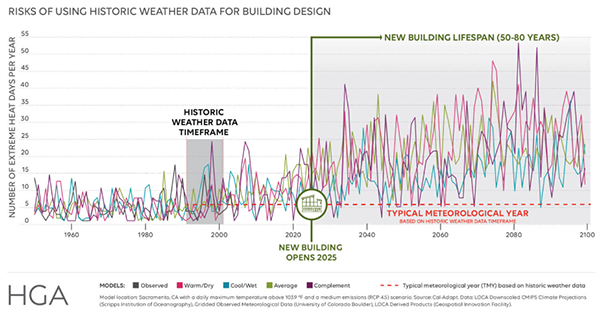
To a large extent, healthcare facilities can be thought of as just another building type. In that sense, most strategies from the green building canon apply to a hospital just as they do to a school, home, or office building. Efficient lighting installed in any of these buildings reduces its energy demand, low-flow toilets reduce its water consumption, and paint without VOC emissions improves the quality of its air. In fact, some spaces within healthcare facilities, such as administrative offices and patient waiting areas, are quite similar to administrative spaces and lobbies in conventional office buildings.

But healthcare facilities also stand apart from other building types. First, they’re big. At 168,200 ft2 (15,626 m2), the average inpatient healthcare facility is more than 11 times the size of the average commercial building, according to the Energy Information Administration’s 1999 Commercial Buildings Energy Consumption Survey. Healthcare facilities are also highly regulated and expensive to build. They often operate around-the-clock, and they experience long ownership. They use tremendous amounts of energy and need backup power for emergencies, they require a lot of water, and they create huge amounts of waste, some of it hazardous or infectious. They are stressful environments, and many of their occupants have depressed immune systems. Perhaps most important, they function explicitly to restore and protect health. Because of these characteristics, some green building strategies carry greater challenges, importance, or payback in healthcare facilities than they do in other buildings.

Indoor Environmental Quality

Because restoring and safeguarding health is the unequivocal purpose of healthcare facilities, indoor environmental quality is generally considered the critical issue in greening healthcare design. Providing a healthy and pleasant indoor environment is also important in the recruitment and retention of employees—especially nurses, whose national average turnover rate currently stands at 20% each year. Based on a preliminary assessment of the credits being attempted under the pilot Green Guide, “the IEQ section is way ahead of other sections,” says Vittori. Especially important are daylight and views to the outside, bright light and darkness, and proper acoustics. Material selection, discussed below, and ventilation, discussed in the section about energy, also affect the building’s indoor environmental quality.

Operational since August 2003, the Boulder Community Hospital’s 154,000 ft2 (14,000 m2) Foothills campus in Boulder, Colorado, was the first healthcare project to earn LEED certification. The facility reduces potable water consumption through xeriscaping and waterfree urinals, and it provides a supportive indoor environment through low-emitting materials, daylighting, and spectacular views.

Daylight and views. Exposure to daylight and views of the natural environment are proving important for patients’ well-being and capacity to heal. “Investigators have consistently reported that stress-reducing or restorative benefits of simply viewing nature are manifested as a constellation of positive emotional and physiological changes,” according to the 2004 Center for Health Design report, which goes on to note that when patients view nature, “stressful or negative emotions such as fear or anger diminish while levels of pleasant feelings increase.”

The stress reduction resulting from daylight and views also benefits hospital employees. An unpublished 1996 master’s thesis found that intensive-care-unit nurses whose breakroom had a view to the outside experienced reduced stress and made, on average, 40% fewer mistakes than their coworkers whose breakroom had no windows. “These have life-or-death outcomes,” notes Vittori. “It’s very sobering.” For more information on the promise of green design for healing and productivity, see EBN Vol. 13, No. 10.

Bright light and darkness. The Center for Health Design report also points out that bright light, either natural or artificial, can reduce depression and agitation, improve the quality of sleep, and shorten hospitalizations for dementia and seasonal affective disorder (SAD).

Darkness can be just as important as light, and proper timing is required to balance human circadian rhythm. For patients, this means providing light during the day and darkness at night—no small feat in a building that operates around the clock. For staff, this means fostering alertness at all times. In a credit explicitly addressing circadian rhythm, the Green Guide suggests that healthcare organizations eliminate rotation shift work (where an individual’s work schedule rotates among day, evening, and nighttime shifts), which disrupts the body’s ability to establish routines in sleep and alertness.

Acoustics. Proper acoustics are also important to patients and staff, as loud noises and vibrations can interfere with both rest and work. The Center for Health Design report cites several studies that correlate noise with decreased oxygen saturation; increased blood pressure, heart rate, respiration rate, and stress; and interrupted sleep. Unfortunately, hospitals are typically noisy, with sounds ranging from paging systems and alarms to ice machines, cardiopulmonary monitors, and pneumatic tubes. Hard surfaces, typical in hospital settings, are easier to clean but also less effective at absorbing sound waves. They “cause sounds to echo, overlap, and linger or have long reverberation times,” according to the report, which suggests reducing noise sources, providing single-occupancy patient rooms, and selecting sound-absorbing ceiling tiles and, where possible, sound-absorbing flooring materials.

Materials

The healthcare community is also turning its attention to the materials used in its buildings and the health implications of the production, use, and disposal of those materials. The Green Guide includes credits related to reducing pollution from mercury, dioxin, and di(2-ethylhexyl) phthalate (DEHP).

Mercury. Despite its role as a reproductive toxin and neurotoxin, mercury is still commonplace in the healthcare industry. A sampling of mercury-containing products includes some thermometers, blood-pressure devices, fluorescent lamps, cleaners, and batteries. H2E has made the elimination of mercury from the healthcare industry one of its primary goals. “There’s still work to be done,” says Laura Brannen, executive director of H2E, “but we have really changed the way people think about mercury. If a mercury thermometer breaks, now people freak out and close down the room. Ten years ago, people swept it up, threw it in a red bag, and, often, incinerated it.” More than 100 facilities have received H2E’s Making Medicine Mercury Free award, and, according to HCWH, more than 1,000 U.S. healthcare institutions have committed to eliminating mercury from their facilities.

Dioxin and DEHP. HCWH and H2E have been working to phase out the use of chlorinated plastics in healthcare facilities because these materials can produce dioxin if they are burned. Polyvinyl chloride (PVC), the most common chlorinated plastic, can be found in medical products ranging from blood bags, gloves, and identification bracelets to wall-protecting guards and flooring.

The concern over PVC derives from its connection not only to dioxin, but also to DEHP, a phthalate plasticizer used to make PVC more flexible. DEHP is listed by the U.S. National Toxicology Program as a probable human carcinogen and endocrine disruptor that causes reproductive problems, making it especially dangerous for male babies and fetuses. Because DEHP can leach out of medical equipment, and into patients, the U.S. Food and Drug Administration advised in 2002 that “precautions should be taken to limit the exposure of the developing male to DEHP.” This concern applies specifically to medical products, not building materials. But, Guenther told EBN, “people are saying, if it’s bad for this purpose, maybe we should be finding alternatives across the board.” See page 4 for more on phthalate plasticizers.

“I tell clients they don’t have to decide if they agree or disagree with the science of PVC,” Guenther says. “People don’t need to take a position, but they need to watch what’s going on in the marketplace. The environmental movement is having an impact on the way PVC is seen in the world, and that can have repercussions in the way people view their buildings.” Guenther also pointed out that the long ownership of healthcare facilities makes clients skittish about using controversial materials. “Healthcare owners can’t disconnect from the downstream impact of these building materials.” Due in part to their experience with lead paint and asbestos abatement, she notes, “I think they’re a little risk- averse. Insofar as there are high-performance, cost-competitive materials that don’t have that uncertainty, it just seems to me to be using the air of precaution—not even scientific precaution, just business precaution—to look at those alternatives.”

Waste

According to H2E, the healthcare industry in the U.S. generates more than 2.4 million tons (2 million tonnes) of waste per year, or 1% of all municipal waste. Healthcare waste can be separated into four main categories, according to H2E’s Brannen: regulated medical waste (also called red-bag waste or biohazard waste), which has the potential to transmit disease; hazardous chemical waste; waste that can be recycled or reused; and everything else, or conventional solid waste.

Waste minimization. Very few healthcare facilities are aware of how much waste they produce or how much it costs, Brannen told EBN. “They’re paying the bills, but they’re not capturing the information and analyzing it.” Undertaking a waste assessment, a Green Guide operations prerequisite, can point to opportunities to reduce the amount of waste leaving a healthcare facility.

If waste is separated correctly—that is, if all recyclable material is removed from the solid waste and if all conventional solid waste is removed from the regulated medical waste—recycling should account for at least 30–40% of all healthcare waste, by weight, according to Brannen. Hazardous chemical waste should account for less than 1%, and regulated medical waste should make up about 6–15%. The Green Guide includes one credit for bringing that amount below 10%. Since disposing of regulated medical waste typically costs ten times as much as disposing of conventional solid waste, ensuring accurate separation can yield dramatic financial savings in addition to the environmental benefits.

A healthcare facility can reduce its waste stream most obviously through purchasing decisions—by preferring durable, recyclable products with minimal packaging, for example. A healthcare facility can also limit waste through operations policies—by training staff in proper waste separation, for example, or by donating medications just past their expiration date for use in Third World countries. Designing healthcare facilities in anticipation of the need to separate waste is also important, and often overlooked. According to Guenther, lack of space is the number one obstacle for hospitals trying to implement recycling programs. “A hospital might have four or five bays for receiving,” says Brannen, “but the corresponding trash area might have one bay.” Designing conference rooms and nurse stations to facilitate the collection or shredding of confidential paper can also make a big impact on recycling rates, she says.

Safer disposal technologies. The industry has come a long way in just a few years in improving the disposal of medical waste. In 1996, the U.S. had about 5,600 medical incinerators. Today, that number has dropped below 100. Most of the incinerators that were shut down couldn’t meet EPA regulations for control technologies, says Brannen, and released pollutants, including mercury and dioxin, into the air. Facilities today are reducing the amount of waste they produce, doing a better job of separating it, and using better technologies to handle it. Sterilizing regulated medical waste in onsite autoclaves, for example, allows healthcare facilities to handle it as conventional solid waste.

Energy


The 120-acre (50 ha) Great River Medical Center campus in Burlington, Iowa, is home to the nation’s largest lake-coupled ground-source heating and cooling system. The top photo shows the system during construction. Operational since April 2000, the system has resulted in a 37% reduction in annual energy costs, according to KJWW Engineering Consultants, who designed the system. The 15-acre (6 ha) artificial lake also provides stormwater retention, water for site irrigation, and a serene view for patients.

Healthcare facilities use lots of energy—about double that of office buildings, on a per-unit-area basis, on average, and several times more for equipment-intensive facilities. Together, healthcare facilities account for 9% of all commercial energy consumption in the U.S., according to the Energy Information Administration. Because these buildings carry so many other expenses, however, energy typically represents a small fraction of the total operating costs. “When you look at a hospital operating budget, they’re spending thousands of dollars per square foot on labor each year and only dollars per square foot on energy,” says Kim Shinn, director of sustainable design at TLC Engineers in Nashville, Tennessee. “It’s hard to get them to do green things even when we can show some payback.”

Another reason energy efficiency has received little attention within the healthcare community is because, unlike indoor environmental quality or materials considerations, it is not directly connected to the health of a building’s occupants. But burning fossil fuels contributes to health hazards ranging from air pollution to climate change. “There’s talk in the healthcare industry now about needing to pay attention to those connections in how they fulfill their mission,” says Steven Guttmann, P.E., principal at Guttmann & Blaevoet Consulting Engineers in San Francisco, California. “When you look at it in the context of sustainability and the healthcare mission, energy is an important value.”

Space heating, space cooling, lighting, and medical and office equipment are the four most energy-intensive activities in hospitals, according to the Energy Information Administration. Much of a hospital’s heating and cooling load is driven by ventilation. “The prevailing attitude in healthcare design has been to increase ventilation rates to improve indoor air quality,” says Guenther. “It’s just wild what‘s happened in terms of space and cost for electrical and mechanical systems,” she says, noting that mechanical infrastructure can represent nearly half the entire construction cost of a hospital. The best way to minimize the energy impact of high ventilation rates is to use recovered energy to pre-heat or pre-cool outside air, says Guttmann.

Many of the energy-saving opportunities in hospital mechanical systems are no different from those in other building types, except that the high demand gives these strategies added importance. Guttmann notes opportunities in variable-frequency-drive chillers, oversized cooling towers, variable-flow pumps, and ground-source heat-pump systems. Commissioning also carries added importance. “It’s been said that no single effort brings as much energy savings to a hospital as commissioning (and re-commissioning of existing facilities),” says Shinn. Hospitals are differentiated, however, by their high, continuous demand for electricity, hot water, and cooling, and by their need for redundancy and emergency backup power. These factors support the use of technologies, such as combined heat and power (CHP) and thermal storage, that might not be cost-effective in other buildings.

With CHP (also known as cogeneration), a facility burns a fuel—typically natural gas, to limit onsite emissions—and utilizes both the electricity and the excess heat that would otherwise be wasted. Waste heat can also provide cooling through the use of absorption chillers. “CHP allows you to wring more energy out of that prime fuel,” says Guttmann. CHP has an added benefit of increased reliability, which is especially important in hospitals. The Green Guide offers up to four credits for using CHP systems.

With thermal storage, energy is stored during off-peak hours in the form of chilled water or ice, allowing that energy to be recovered during peak periods, when electricity is in greater demand and more expensive.

Everything from desktop computers to major diagnostic machines, such as MRIs, falls into the building’s process load, which can be considerable in healthcare facilities. “For an equipment-intensive hospital, the process load could be equal to the building-system load,” according to Guttmann. Both the construction and operations portions of the Green Guide include a point for purchasing efficient process-load equipment. Unfortunately, the efficiency of most medical equipment is not rated, hampering the specification of efficient products. “EPA is in the initial research stages right now to determine if Energy Star® should enter the market for certain kinds of medical equipment,” according to Clark Reed, EPA’s national healthcare manager for Energy Star.

In late 2001, Energy Star launched an energy-performance rating tool for acute-care hospitals. The top 25% of hospitals, in terms of energy efficiency, are eligible to receive the Energy Star label. The designation applies only to a specific year, “so previous winners need to reapply to keep their designation current,” according to Reed. Although only 44 hospitals across the country have earned the Energy Star label, according to Reed, about a third of the acute-care hospital market has used the rating system for guidance. EPA more recently released a similar tool for medical office buildings.

Water

Only about 30% of a typical hospital’s water use is domestic, used for toilets, sinks, and showers, according to Vittori. Because of the low percentage of domestic water used in hospitals, some of the usual water-conserving strategies, such as installing low-flow toilets or sensor-controlled faucets, don’t have as large an effect on total water consumption as they do in other buildings.

Water-conserving strategies must also be evaluated for their effect on convenience and health. Flow restrictors, for example, can trap bacteria, says Vittori, so “they just don’t work for a hospital.” She hopes the growing demand for green healthcare facilities will motivate product manufacturers to meet unique needs with innovation. The fact that appropriate flow restrictors are not readily available, for example, “doesn’t mean there couldn’t be one designed, she says, “but no one has posed that challenge to the industry.” Foot- and knee-controls for faucets, on the other hand, are appropriate for hospitals and are gaining significant market penetration (see EBN Vol. 8, No. 6).

Other water uses in healthcare facilities range from sterile processing and cooling towers to radiology and landscape irrigation. Among the Green Guide’s construction prerequisites is one for eliminating the use of potable water for once-through cooling for equipment. The Green Guide also includes credits for reducing the use of potable water for building-system equipment and landscape irrigation and for providing for the continuous measurement of 11 distinct uses of potable water within the project. Like a waste audit, a water audit too can illuminate the best places to focus attention while helping the industry track its progress.

Healing Gardens

The Elizabeth and Nona Evans Restorative Garden in Cleveland, Ohio, was designed to provide contemplative space for visitors with a range of special needs.

Healing gardens have recently become vogue in healthcare design. These spaces are also known as restorative gardens, therapeutic gardens, meditative gardens, and places of respite—sometimes depending on the space’s particular purpose. With all of these terms, though, “we’re talking about creating a supportive environment that helps make people healthful, whole, and well again,” says David Kamp, ASLA, president of the landscape architecture firm Dirtworks, P.C., in New York City and an original member of the Green Guide steering committee. “Throughout history, we have often looked to nature when we don’t have answers and don’t have cures,” he says. “I think the pendulum is swinging back to nature.”

These spaces serve multiple purposes to a variety of people. A single garden can be a place to celebrate and a place to grieve, notes Kamp, a place to have a difficult conversation and a place to think about that conversation. “They provide wonderful distractions” for patients and staff alike, he says. The Green Guide includes a credit for dedicating 5% of the building’s program area to “places of respite with direct connection to the natural environment” and ensuring that at least one outdoor, nonsmoking space is provided for staff away from patients and visitors. Healing gardens come at a cost, acknowledges Jerry Smith, ASLA, senior landscape architect at Karlsberger, which specializes in healthcare design. But, he notes, “philanthropic organizations are so wonderfully receptive to a garden, as opposed to a piece of machinery. These are the easiest things to get donor opportunities to provide.”

As with other green design strategies, healing gardens are most successful when they result from early, integrated planning. “I don’t want to think of them as isolated components of the design,” says Kamp: “We need to weave them into the architecture.” To get the most benefit out of healing gardens, healthcare professionals must also engage in the design process. “When a landscape architect enters the realm of healthcare, that person is really assisting the healthcare profession in meeting its goals,” says Kamp. Patients undergoing treatment for AIDS and cancer can be sensitive to the sun, and strong fragrances are nauseating to others. “Each profession is a keeper of specific knowledge, and that dialogue can contribute to a much greater experience.”

Final Thoughts

The design of healthcare facilities is now at a juncture. As we envision a new generation of healthcare facilities, we are also learning more about how to use green design strategies to improve patient health and well-being, as well as staff performance and satisfaction. Healing gardens and daylighting, among other green features, are becoming increasingly common in healthcare facilities as details about their health and performance benefits are documented and disseminated.

At the same time, we are learning more about the less direct connections between buildings and health. And we are beginning to recognize larger environmental issues as health concerns. As these connections become more clear—as more people experience the cathartic “Aha!” that Guenther describes—the range of environmental concerns, including the efficient use of energy and water, will gain traction within the health community. Through careful design, construction, and operations, our healthcare facilities can reduce their contribution to human and ecological sickness and more fully embody their mission to heal.

For more information:

American Society for Healthcare Engineering
Chicago, IL
www.ashe.org

The Green Healthcare Construction Guidance Statement can be downloaded from the ASHE website (follow the links to “products”).

The Center for Health Design
Concord, CA
925-521-9404
www.healthdesign.org

The Role of the Physical Environment in the Hospital of the 21st Century: A Once-in-a-Lifetime Opportunity and several other reports can be downloaded or ordered from the Center for Health Design website.

Center for Maximum Potential Building Systems
Austin, TX
512-928-4786
www.cmpbs.org

Green Guide for Health Care
www.gghc.org

The entire Green Guide can be downloaded from this website.

Health Care Without Harm
Arlington, VA
703-243-0056
www.noharm.org

Hospitals for a Healthy Environment
Washington, DC
800-727-4179
www.h2e-online.org

Kaiser Permanente
www.kaiserpermanente.org

U.S. Environmental Protection Agency Energy Star ® for Hospitals
Washington, DC
202-343-9451
www.energystar.gov/index.cfm?c=healthcare.bus_healthcare


DISCUSSIONS

There are no comments for this page yet.

Log in to add comments - Help with comments

RELATED ARTICLES

EBN: Newsbrief - September 2008
EBN: Newsbrief - March 2007
EBN: Awards & Competitions - April 2006
EBN: Letters - July 2005
EBN: What's Happening - January 2005
EBN: Product Review - January 2005
Showing 6 of 9 [ show all ]

RELATED CASE STUDIES

Project Image: The Patrick H. Dollard Health Center
(28,000 sq. feet) (2,600 sq. meters)
Health care, Special needs housing
For fifty years the Center for Discovery has created a safe, caring environment to support the intellectual, social, and recreational development of its community. Its 250 full-time residents require constant and specialized medical care, provided at the new Patrick H. Dollard Health Center. This Article 28 diagnostic and treatment facility serves those with profound neurological and developmental impairments who need primary and specialty medical and dental care. This is the first licensed medical facility for the Center, which includes a residential school for children and an outpatient facility for adults, and also the first in New York State to implement green building standards that meet Department of Health requirements.

RELATED BIBLIOGRAPHY ITEMS

Books

by Barbara Crisp (1998)
 

Articles and Reports

(2005)
 

RELATED CATEGORIES

LEED Credits
IEQ Prerequisite 3
IEQ Credit 9

GREEN TOPICS


IMAGE CREDITS:
1. Photo: Dirtworks, P.C.
2. Rendering: Karlsberger, Architect-of-Record
3. Photo: Caroline Clevenger
4. Photo: KJWW Engineering Consultants
5. Photo: Dirtworks, P.C.