Posted September 25, 2009 1:09 PM by Allyson Wendt
Related Categories: The Industry

Social justice--it's a topic of conversation throughout the green building industry, but what does it mean, exactly? And how does it relate to buildings?

I worked with the following definition while writing this month's feature article:

Social justice ensures that all people have the ability to fulfill their basic needs and pursue social, economic, and personal fulfillment and success.

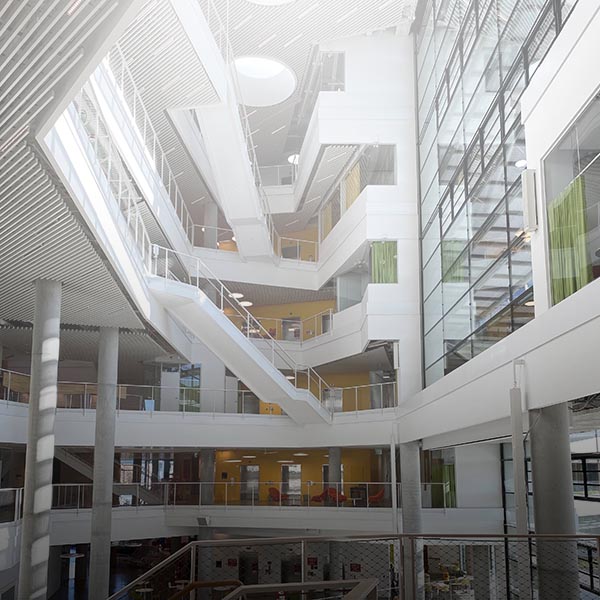
It's a working definition, and is open to change and interpretation, but I had to start somewhere. So what does this mean for buildings? Well, it means that architects have the opportunity to foster social justice with every building they design, through location, transportation access, public spaces, materials, indoor amenities, and construction labor practices.

As I researched this article, I began to see that social justice and environmental performance often go hand in hand. Putting an office building in the middle of nowhere means that everyone has to commute to it, raising their carbon footprint. This commute is hardest for those who have the least money and those who rely on public transit--often effectively disqualifying them from jobs at that building. Put the same building in an urban infill location, and suddenly you have access to transit and jobs closer to where many people live. Maybe you put retail on the ground floor, creating more jobs and adding to the amenities of the neighborhood.

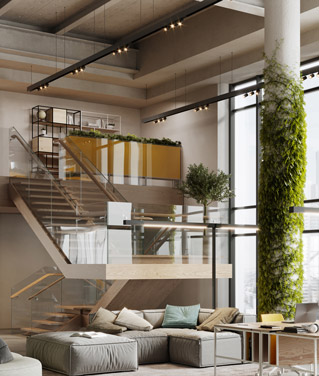
Location is a big change, and often determined well before the design team comes to the project. But small changes can make a big difference to social justice. Keep the janitorial offices out of the basement and provide them with windows, and you have spatial equity within the building. Make the lobby a place for monthly public art openings, and you've got a cultural attraction. Allow for a public courtyard with benches and tables, and you mitigate the urban heat island effect and make the building more welcoming.

It's easy to think of social justice as applicable only in those projects designed for underserved communities: affordable housing, nonprofit organizations, and homeless shelters, for example. But every design decision in every building has an impact on the social fabric of a community--making that impact conscious and positive is what social justice is all about.

(Image: Institute for the Built Environment at Colorado State University)

The living space in this new home built by Global Green in the Lower Ninth Ward of New Orleans is elevated four feet (1.2 m) to keep it above expected flood level. Numerous other "passive survivability" features are included.
A lot of people have been working for a long time to try to head off global warming — and some progress is being made. Buildings are becoming more energy-efficient, fuel economy standards for vehicles are finally rising again, and use of renewable energy is burgeoning.

We need to continue these efforts to reduce greenhouse gas emissions and sequester carbon dioxide, but the reality is that it's too little, too late to prevent climate change. Even if the CO2 spigot were turned off tomorrow, the earth would still see significant warming and the other predicted impacts of climate change: more intense storms, flooding, drought, wildfire, and power interruptions. It's time to design our buildings and the built environment to adapt to the very different climate that scientists say is going to be with us.

That's the subject of the feature article in our September 2009 issue of Environmental Building News: "Design for Adaptation: Living in a Climate-Changing World" (requires log-in) (no login required — see Alex Wilson's note in the comments, below).

Andrea Ward and I interviewed some of the nation's top climate scientists, including Stephen Schneider, Ph.D., of Stanford, and Jonathan Overpeck, Ph.D., of the University of Arizona, to establish context for the article — making the case that not only is climate change happening, but it's happening more rapidly than the best climate models predicted just two years ago.

We address the question of mitigation vs. adaptation — whether we should put effort into preventing climate change or adapting to it — and argue that we must do both simultaneously. "The bottom line is that you've got to adapt to what won't get mitigated," says Schneider in the article.

Moving on, we focus on measures for adapting to climate change. We describe 36 strategies, organized into five categories, providing context for each of the categories and succinct explanation for each strategy. These strategies are listed briefly here (details appear in the full article):

Read more...

Posted July 29, 2009 2:14 PM by Allyson Wendt
Related Categories: The Industry

The U.S. Green Building Council just sent out information from a report written by McKinsey and Company about energy efficiency and its role in U.S. mitigation of climate change. Here's what they found:

  • Energy-efficiency of buildings (along with other non-transportation efforts) could reduce U.S. energy consumption by 23% by 2020.
  • Such efforts would save $1.2 trillion and reduce emissions by 1.1 gigatons annually.
  • Getting to this point would require an annual investment of $50 billion for ten years.

In other words, the report puts numbers on what many of us knew intuitively: buildings are a really big piece of the climate puzzle.

The report (in PDF download) is available here.

Posted July 16, 2009 1:35 PM by Jennifer Atlee
Related Categories: Op-Ed, Science & Tech, Politics, The Industry

We recently learned that the Toxics Use Reduction Institute (TURI) is losing its Massachusetts state funding. This strikes particularly close to home for me as I worked briefly with TURI after grad school and was quite impressed with the caliber of their work (and yes, full disclosure, I still have friends there). TURI is one of a select few organizations nationally that successfully champions the needs of both industry and the environment — for 20 years now they've been finding that practical common ground where we can really move forward in widespread adoption of safer alternatives.

With our GreenSpec directory, editors at BuildingGreen constantly struggle to assess the use of a plethora of toxics in building products and manufacturing processes to determine what constitutes safe and healthy products and still gets the practical job done of building quality green buildings today. This requires the kind of pragmatic alternatives assessment that TURI excels at. The lessons I learned at TURI and their current research are a great help in my work here and it would be a huge loss to see their services cut.

This isn't a done deal. There is an effort afoot this week to get a supplemental budget appropriation that would allocate $1.2 million of the business fees collected from TURA filers to support the continued operation of TURI — back to the original financing model that pays for itself with the companies using toxics paying for the reduction program.

People living in Massachusetts can support the effort this week by contacting their representatives and asking them to sign onto the letter to Massachusetts House and Senate leadership requesting the appropriation. I did just that and was pleasantly surprised at the quick and positive response from my reps. Anyone from anywhere can comment on online articles about TURI and make it clear this self-funding program is too good to lose.

This kind of thing goes beyond Massachusetts and TURI. The battle to retain the high-quality, high-impact green jobs we already have, as well as remake our struggling economy into a thriving green one, is going on across the nation through skirmishes like this one — and it is in these local and state level debates where a few voices can sometimes make a surprising difference.

More information in BuildingGreen Suite: Funding Cut for Toxics Reduction.

Posted July 10, 2009 10:44 AM by Mark Piepkorn
Related Categories: The Industry, Books & Media

Another in an ongoing series of webinars offered for free from our sister site, GreenBuildingAdvisor.com, is coming up on Tuesday, July 14, at 4 p.m. Eastern.

The market for green building keeps growing as more and more people recognize that it just makes sense on so many levels. But it's not always as simple as "if you build it, they will come." Smart Strategies to Market Your High Performance Homes will offer effective and inexpensive ways to market green homes, giving you some of the best strategies in this challenging economy. Presenter Dina Lima is a business owner, author, speaker, educator, and the founder and CEO of Living Green Institute.

Register for Smart Strategies to Market Your High Performance Homes.

Other upcoming webinars from GreenBuildingAdvisor.com.

You can also view archived webinars.

Posted July 9, 2009 10:11 AM by Allyson Wendt
Related Categories: The Industry

One of the biggest hurtles in designing to Living Building Challenge standards is finding local materials, as we discuss here.

The folks at Cascadia Green Building Council have found a website that may help: www.stillmadeinusa.com.

It's not perfect, but it's a start. Now, if only we could figure out how to incorporate manufacturing locating information into product listings in all of the various databases out there.

Posted July 5, 2009 7:34 PM by Mark Piepkorn
Related Categories: The Industry, Case Studies

"Apparently an error in construction," the story says. Indeed.

Improper construction methods are believed to be the reason [for the] building collapse in Shanghai, according to a report from the investigation team. The investigation team's report said that workers dug an underground garage on one side of the building while on the other side earth was heaped up to 10 meters high, which was apparently an error in construction, according to a report on eastday.com, Shanghai's official news website. "Any construction company with common sense would not make such a mistake," said an expert from the investigation team.


Here's a terrific photo series with additional details. Seriously, hit that link and take a look.

This building actively failed what may be the primary passive survivability test — staying upright.

Posted July 5, 2009 8:58 AM by Mark Piepkorn
Related Categories: The Industry, Books & Media

Here's a free webinar (this Wednesday, July 8, at 4 p.m. ET) for you green contractor types about getting the subs on board — or at least in line with the goals of green. Chances are good that there will be things worth knowing for non-professionals, too.

Most contractors use trade contractors for the majority of the work on their projects. Effectively managed trade contractors assure higher performance, minimize rework and reduce warranty and callbacks. Carl will address how to create performance-based management systems focusing on the major components of green building. Attendees will see examples of management systems along with guidelines for creating them for their own businesses.

The presenter, Carl Seville of Seville Consulting, is a 30-year veteran of home renovation and construction... a green builder, educator, and residential sustainability consultant. He's also a regular contributor at GreenBuildingAdvisor.com.

Register for the free webinar.

More webinars coming up.

Recently, I broke one of my long-standing rules and blogged about something BuildingGreen-related at my own blog. My Costanzian fears were indeed warranted, and I've been egged on to cross-post it to the Live blog. Here she is, warts and all: my unvarnished opinion on the very best parts of the BuildingGreen product GreenBuildingAdvisor.com./BF

I don't often blog about worky stuff here, but decided this week that my "Worlds Will Collide!" fears are probably completely unwarranted. Besides, I'm working on some cool stuff these days. And finally, when my wife asks me, "What have you been doing?," when I come to bed at an obscene hour, I have an acceptable answer: "Changing the world, baby. Changing the world."

BuildingGreen launched a new property several months ago, GreenBuildingAdvisor.com (GBA). Now, this was in process as I came into the company in September 2008 and involved a whole lot of organization and reorganization to get the team in place for even content production, but I can't get into much of that here. What I *CAN* get into are what I think are the absolute coolest content areas on this Drupal-based site.

Green Basics

It's really important to come at a new field with a common vocabulary. Think of this as a vocab-building primer of terms and concepts bandied about in Green but seldom explained or contextualized. Click anywhere on that page and you get access to detail diagrams and explanations of key concepts and terms. I subscribe to a couple of building magazines and use their sites a lot. NOTHING is as good as this, period.

Green Homes

Now, case studies are not something new for BuildingGreen given the popularity of the High Performance Buildings Database, but there's one aspect in the corresponding Green Homes feature area that stands out: these pictures are gorgeous and inspiring. Sure, I can look up a product if I hear about and learn enough to put it in myself... but watching it get installed? Or seeing it in a context that gives me another product idea?? Reading about the compromises that lead to selection of that product in tandem with another? That's pretty awesome.

Product Guide

The Product Guide is some content syndication from GreenSpec, another key BuildingGreen property that provides a ready-to-use index of green products, manufacturers, and product categories. They sum it up on the GBA page with this: "Product manufacturers can not buy their way on to this list." These are a true best-of and where I first turned for ideas when we did our kitchen remodel this year.

Summary

Now, I know I've probably alienated some portion of the site that's behind the payed membership wall (oh yeah, some of this content is part of a paid GBA Pro membership that gets you even more like CAD Details & whatnot), but these are the stand-outs from my perspective and key to what makes this site a truly amazing asset. At the time of this writing, you can get a 10-day trial to the premium GBA Pro content - the energy savings I've realized alone have outvalued the cost of this annual or monthly membership - or be a lurker for a while before you take the plunge. Personally, I'm probably not renewing some of those magazines whose sites I use in favor of this totally righteous tool.

Posted May 24, 2009 8:53 AM by Mark Piepkorn
Related Categories: The Industry, Books & Media, Nature & Nurture

Paul Hawken gave the commencement address for the University of Portland earlier this month, and it's making the rounds. Deservedly. Its message is as good for the building industry — for anybody living, for that matter — as it was for those graduating seniors. Here it is. Please read it.

When I was invited to give this speech, I was asked if I could give a simple short talk that was "direct, naked, taut, honest, passionate, lean, shivering, startling, and graceful." No pressure there.

Let's begin with the startling part. Class of 2009: you are going to have to figure out what it means to be a human being on earth at a time when every living system is declining, and the rate of decline is accelerating. Kind of a mind-boggling situation... but not one peer-reviewed paper published in the last thirty years can refute that statement. Basically, civilization needs a new operating system, you are the programmers, and we need it within a few decades.

This planet came with a set of instructions, but we seem to have misplaced them. Important rules like don't poison the water, soil, or air, don't let the earth get overcrowded, and don't touch the thermostat have been broken. Buckminster Fuller said that spaceship earth was so ingeniously designed that no one has a clue that we are on one, flying through the universe at a million miles per hour, with no need for seatbelts, lots of room in coach, and really good food — but all that is changing.

There is invisible writing on the back of the diploma you will receive, and in case you didn't bring lemon juice to decode it, I can tell you what it says: You are Brilliant, and the Earth is Hiring. The earth couldn't afford to send recruiters or limos to your school. It sent you rain, sunsets, ripe cherries, night blooming jasmine, and that unbelievably cute person you are dating. Take the hint. And here's the deal: Forget that this task of planet-saving is not possible in the time required. Don't be put off by people who know what is not possible. Do what needs to be done, and check to see if it was impossible only after you are done.

Read more...

More Entries

Get new posts via e-mail:


Recent Comments

The Great Passivhaus Face-off

David Benjamin says, “I think the construction and successful operation of over 13,000 buildings built or renovated to the...” More...

Marcus says, “It's interesting with the subject Green Building. In connection with COP15 to be held in Copenhagen ...” More...


How Green is Polystyrene Insulation? EBN's Position, and How It Affects GreenSpec-Listed Products

Insulation Manufacturer says, “This Article is Helpful for Insulation Process Nice Articles, Please post another insulation articl...” More...


Why are people drawn to design inspired by nature?

S. Petty says, “Rather than the term "Nature" I would use "organic" in the art sense of "fl...” More...

ben graham says, “I would agree with Damon and others, including this fad idea, but perhaps its more of a phase shift ...” More...


Follow BuildingGreen
Follow us on Twitter Follow us on Facebook Follow us on Linkedin