Described below are the Top-10 Green Building Products for 2007, selected by the editors of GreenSpec® and Environmental Building News™. These products have either been added to GreenSpec during the past year (though some may have been on the market longer), or covered in Environmental Building News. Additional information on these products is available in the online edition of GreenSpec or Environmental Building News, both of which are available through the subscription-based BuildingGreen Suite (www.BuildingGreen.com).
FreeForm is a new FSC-certified particleboard that is produced with no added urea-formaldehyde. A melamine-formaldehyde binder is used rather than industry-standard urea-formaldehyde. Initial chamber testing has shown formaldehyde emissions to be in the range of 0.09 to 0.13 parts per million which meets the recently announced Phase I California Air Resources Board (CARB) standards for formaldehyde emissions—but not the Phase II standards. Within a year, the company anticipates that FreeForm will meet Phase II standards, and it hopes to eventually eliminate formaldehyde-based binders altogether. All FreeForm particleboard carries the Forest Stewardship Council label, designating products sourced from third-party-certified, well-managed forests. In contrast, with many other FSC products, the certification is an option available only at an upcharge. While low-formaldehyde particleboard made with phenolic binders is darker than conventional UF-particleboard (due to the reddish color of phenol-formaldehyde), FreeForm is lighter in color, because melamine binder is white.
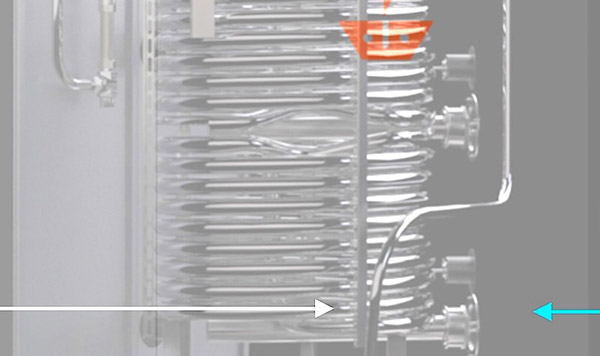
A longtime innovator in the window industry, Alpen Energy Group sets the bar for energy performance with its high-performance fiberglass windows. Alpen uses a combination of suspended low-emissivity (low-e) Heat Mirror films, low-e coatings on glass, low-iron glass to increase visible light transmittance, low-conductivity gas fill (including krypton and xenon), pultruded fiberglass frames insulated in vacuum silica aerogel packets, and low-conductivity glazing spacers to provide 1-3/8"-thick Alpenglass windows with a wide range of properties to meet different needs. Their highest performing windows, which were installed on north-facing walls at the Rocky Mountain Institute in 2007 and will be installed at an Antarctic research station in 2008, have three suspended films (each with low-e coatings on both sides) and provide R-20 center-of-glass insulating value (unit R-value of 10, U-factor 0.10). The majority of the company’s products are used in projects in which different glazings are used for different wall orientations. Alpen provides windows for both commercial and residential applications.
180 Walls from Milliken is a highly permeable, woven wallcovering for commercial applications made from 100% pre-consumer recycled polyester. It has a self-adhesive backing that eliminates the need for paste. This product has achieved a Silver rating in McDonough Braungart Design Chemistry's Cradle-to-Cradle certification program, and is certified to meet the Greenguard Children and Schools standard. (It was the first Greenguard-certified wallcovering to be tested with its adhesive.) 180 Walls is less expensive than most fabric wallcoverings.
The top-of-the-line 800 Series SHE98M line of Evolution Dishwashers from Bosch are the most energy efficient and quietest full-size dishwashers available in America. The SHE98M model is rated at just 190 kWh per year of electricity consumption, has an Energy Factor of 1.14, and a noise level of 42 dBA. This dishwasher sets the standard for green performance today. The Energy Factor of this dishwasher is 148% higher than the federal standard in the U.S. and 73% higher than the Energy Star requirement. This dishwasher is also available in the Integra line as the SMX98M model. As a company, Bosch has made a strong commitment to the environment and is the only appliance manufacturer with 100% of applicable products currently meeting Energy Star standards.
Skyline Design’s Greenplay furnishings for children’s environments include tables, seating, shelving, and play spaces. Products are made with environmentally responsible and healthy materials and finishes, including post-consumer recycled plastic, sunflower hulls, and FSC-certified wood. All paints and coatings are zero- or very low-VOC; adhesives are entirely avoided in favor of mechanical attachments, improving end-of-life recyclability. Skyline Design also has a take-back policy in which it will accept outgrown Greenplay components to repurpose and donate.
Caroma’s new Cube3 Ultra urinal is an advanced, ultra-low-flush urinal that flushes using just one pint (0.5 liters) of water. The product features a bowl that is optimized for very low water use and a liquid-sensing (as opposed to motion-sensing) automatic flush mechanism that prevents false flushes. The high-gloss vitreous china surface minimizes staining and improves sanitation and cleaning. With mixed success of waterless urinals in the field and lingering resistance by building officials, ultra-low-flush urinals (using one quart, 1 liter, or less) provide an attractive alternative.
Nearly all electrical cable today is insulated and sheathed with PVC or other halogenated plastics, such as Teflon (a fluoropolymer); many cable products also contain lead and other heavy metals as well as phthalate plasticizers (which are likely endocrine disruptors). LifeGuard is a line of low-smoke, near-zero-halogen electrical cables (some may contain trace amounts), many of which are lead-free and RoHS compliant (for the European Reduction of Hazardous Substances accord). Houston Wire & Cable Company sells LifeGuard primarily for high-reliability needs in utility and industry applications. The cable has also been used in highly populated commercial applications such as hospitals, transportation corridors, and universities where toxic smoke from halogenated cable is of particular concern. Products are available that are appropriate for commercial and residential applications, though, to date, high cost has discouraged use for residential wiring.
EnOcean produces a variety of energy-harvesting wireless controls for lighting and other building-automation equipment. Developed by German engineering giant Siemens and spun off as a separate company, EnOcean has engineered radio-frequency communication to use just one-tenth the power of most such controllers, and figured out how to power these devices by harvesting ambient energy—including mechanical energy from operating a light switch or photovoltaic energy from lighting in a room. This enables the controllers to operate without batteries, thus saving the materials, energy, and waste from battery manufacturing and disposal. Because wiring is not required, advanced controls may be more widely used, thus resulting in significant building energy savings.
The Solmetric SunEye is a hand-held electronic device for measuring solar shading and calculating solar access for solar installers and green builders. It has an integrated fish-eye lens and digital camera that captures an image of the site. Integrated electronics plot solar exposure at that location. Users can edit images, simulating the removal of obstructions such as trees or structures. Shading percentages in monthly, seasonal, annual, and multi-skyline averages can be determined in the field or uploaded to a personal computer via USB data cable for further analysis, reporting, and printing. The Solmetric SunEye automatically generates reports for sales quotes and solar rebate applications.
Incandescent lighting is highly inefficient—converting about 90% of the electrical energy into heat, rather than light. Fluorescent lamps, including compact fluorescent lamps (CFLs) are three to four times as energy efficient as incandescent light sources and last up to ten times as long, but they require mercury, a toxic heavy metal. LED (light-emitting diode) lighting requires no mercury, and LED light sources have extremely long lifetimes—up to 50,000 hours, or three to five times that of fluorescent lamps. Until recently, LEDs did not approach fluorescent lamps in efficacy—the light output in lumens per watt of electricity consumption—and the light quality was not nearly as good as incandescent lamps. Now LED Lighting Fixtures, Inc. (LLF) has introduced an LED downlight, the LR6, that uses just under 11 watts to provide 650 lumens of light, for a measured efficacy of 60 lumens per watt, which is better than CFL downlights. Just as significantly, the lamp has a color rendering index (CRI) of 92, which is significantly better than most CFLs. LLF achieves this performance by using a proprietary mix of red and yellowish-green LEDs—42 per fixture—behind a diffuser to provide a natural-looking, warm-white light. By contrast, most “white” LEDs achieve the white light by coating blue LEDs with a yellow phosphor, which results in a cool-blue rendering. The LLF LR6 was the grand prize winner in the Solid State Lighting category in the 2007 Lighting for Tomorrow competition, sponsored by the U.S. Department of Energy and others. The product is designed to fit into standard 6" recessed cans and is available with Edison screw-base and the newer GU-24 mount.