Green Globes Emerges to Challenge LEED


A Web-based green building performance tool from Canada, Green GlobesTM, is being introduced to the U.S. market as an alternative to the U.S. Green Building Council’s LEED® Rating System. The Green Building Initiative (GBI), established to promote the use of the National Association of Homebuilders’ (NAHB) Model Green Home Building Guidelines (see EBN Vol. 14, No. 2), has expanded into the nonresidential building market by licensing Green Globes for use in the U.S. GBI is supported by the Wood Promotion Network and a number of other industry groups that object to some provisions in LEED and, as trade associations, are not allowed to join the U.S. Green Building Council (see EBN Vol. 13, No. 6).

Released in Canada in January 2002, Green Globes consists of a series of questionnaires, customized by project phase and the role of the user in the design team (for example, architect, mechanical engineer, or landscape architect). A total of eight design phases are supported. A separate Green Globes model, for assessing the performance of existing buildings, has not been licensed into the U.S. yet. The questionnaires produce design guidance appropriate to each team member and project phase.

Distribution of Points in Green Globes

[enlarge image]
Green Globes generates numerical assessment scores at two of the eight project phases—schematic design and construction documents. These scores can be used as self-assessments internally, or they can be verified by third-party certifiers. Projects that have had their scores independently verified can use the Green Globes logo and brand to tout their environmental performance. The Green Globes questionnaire corresponds to a checklist with a total of 1,000 points listed in seven categories (see pie chart).

Unlike LEED, however, Green Globes does not hold projects accountable for strategies that are not applicable, so the actual number of points available varies by project. For example, points are available for designing exterior lighting to avoid glare and skyglow, but for a project with no exterior lighting, a user can select “N/A,” which removes those points from the total number available so as not to penalize the project. The same approach is taken with reuse of existing buildings—points are granted when a building is reused, but an entirely new project is not penalized in Green Globes to the extent that it can be in LEED.

Projects are assigned a rating of one or more Green Globes based on the percentage of applicable points they have achieved. In Canada the ratings range from one to five Green Globes, while in the U.S. the lowest rating was eliminated and the rest adjusted so that the highest rating is four Globes (see bar chart). “Our objective in doing that was to have something that people are accustomed to—a four-stage system,” notes Ward Hubbell, executive director of GBI. “The levels are roughly comparable with the four levels of LEED,” he adds.

In terms of technical content, Green Globes is broader than LEED, including points for issues such as optimized use of space, acoustical comfort, and an integrated design process. It is much harder to compare the levels of achievement needed to claim points in the two systems, not only because they are organized differently but also because the precise requirements within Green Globes are not publicly available. The industry groups supporting GBI in the U.S. no doubt were attracted in part because Green Globes recognizes all the mainstream forest certification systems, while LEED references only the Forest Stewardship Council’s program. Green Globes also awards points for the use of life-cycle assessment methods in product selection, although it doesn’t specify how those methods should be used.

Regarding the overall achievement levels, Hubbell claims that Green Globes is on a par with LEED. “We did carry out a harmonization exercise with LEED—not credit-by-credit; we compared objectives.” No substantive changes were introduced in the U.S. adaptation of Green Globes, according to Hubbell. Instead, the tool was modified for the U.S. market by referencing U.S. rather than Canadian standards and regulations, converting metric units to inch-pound units, and tying into tools such as the U.S. Environmental Protection Agency’s Target Finder (see EBN Vol. 11, No. 11).

Green Globes supporters resisted the introduction of LEED into Canada, and lost a close vote in a committee of the Royal Architectural Institute of Canada that led the creation of the Canada Green Building Council. Not surprisingly, Alex Zimmerman, president of CaGBC, has some criticisms of Green Globes. “It’s a useful tool, but I don’t see it as a rating system with independent third-party assessment,” Zimmerman says, noting that in Canada Jiri Skopek, president of ECD Energy and Environment Canada, has been the primary developer of Green Globes and in the past was its sole certifier. “While there are more certifiers now, it is not clear who they are, how they were chosen, or who they are answerable to,” Zimmerman added.

GBI aims to address that problem in the U.S. by training a network of independent certifiers to verify Green Globes ratings. These certifiers will have access to the report generated by the Green Globes website, according to Skopek, as well as additional information such as the project drawings, specifications, results of an energy simulation, and commissioning plan. “We understand that there are ways in any certification program to game the system,” says Hubbell, adding: “We go as far as USGBC goes to ensure that what we get from these certifications is valid.”

Zimmerman’s other major concern is the lack of transparency in the creation and modification of the tool. “How do you decide what has gone into it?” Zimmerman asks. “As we know with LEED, there are a lot of objections, but it is a process that is relatively transparent and open to scrutiny,” he adds. “Green Globes is a bit of a black box right now,” Skopek admitted to EBN. But that will change, he says, noting that GBI is currently recruiting members for an advisory board to help direct the product’s evolution, at least in the U.S.

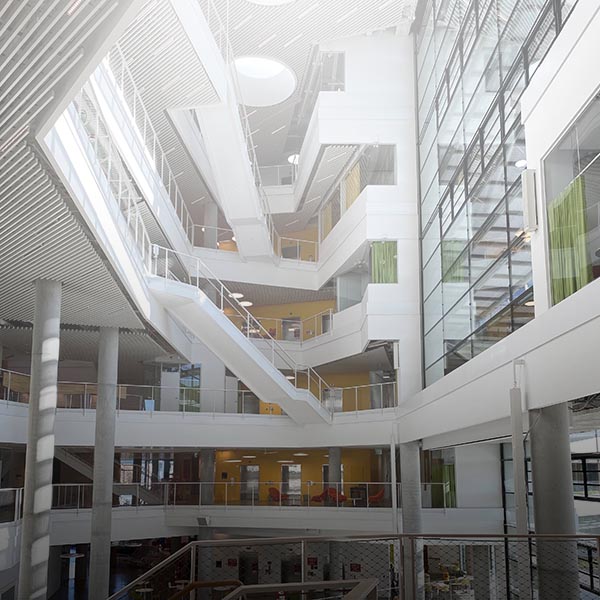
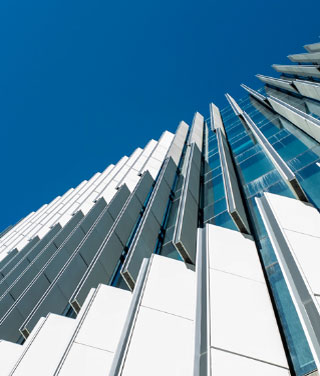
The 80,000 ft2 (7,400 m2) Integrated Learning Centre at Queen’s University in Kingston, Ontario, received a four-leaf rating through the BREEAM/Green Leaf program, which is now accessible online as Green Globes. Designed by B+H Architects of Toronto, the project was completed in 2004. The Ottawa-based firm Green & Gold, Inc., implemented the BREEAM/Green Leaf program for the ILC and helped integrate the building analysis tool into the design process. The lighting, ventilation, and water distribution systems, in particular, contributed to the building’s high rating.

Green Globes is an outgrowth of the Building Research Establishment Environmental Assessment Method (BREEAM), which was developed in the U.K. One of BREEAM’s creators, ECD Consultants, Ltd. (through its sister organization, ECD Energy and Environment Canada, Ltd.), used it as the basis for a Canadian assessment method called BREEAM Green Leaf. BREEAM Green Leaf was initially created to allow building owners and managers to self-assess the performance of their existing buildings. ECD then created Green Globes as a Web-based application of Green Leaf.

A 2003 Canadian government policy that has not yet been formally adopted recommends BREEAM Green Globes for any project with a budget between one million and ten million dollars (Canadian), and LEED for any project costing over $10 million. The rationale for this policy, according to H. Craig Boyle, sustainable design specialist in the Real Property Branch of Public Works and Government Services Canada, is twofold: First, larger projects can more easily support the cost of documentation and certification that LEED requires, and, second, bigger-budget projects tend to entail new construction, where LEED is stronger, while smaller projects are mostly renovations and tenant fit-outs. “Green Globes is seen as more adaptable to those sorts of applications,” says Boyle. In the private sector, the Building Owners and Managers Association of Canada (BOMA Canada) uses Green Globes in its annual Earth Awards program.

Using the U.S. version of Green Globes costs $500 per self-assessment. (The Canadian version, at $250 Canadian per project, is significantly cheaper.) Multiple members of a project team can use the tool based on that single registration. The cost of a third-party certification has not yet been determined, but GBI expects that it will range from $1,500 to $3,000, depending on the size and complexity of the project. The Web-based tool is available for use now, and GBI plans on having certifiers trained and ready by the end of March 2005.

Because Green Globes does not favor FSC over SFI forest certification, it has been advanced as a green certification system in areas with strong timber-industry lobbying presence. Legislation to encourage green building in Arkansas, Virginia, and a number of other states is likely to include Green Globes in addition to—or in place of—LEED. The Department of the Interior and some other federal agencies are also reportedly considering an endorsement of Green Globes.

As the first serious competitor to LEED in the U.S., Green Globes has the potential to undermine LEED’s dominance and slow the growth of the U.S. Green Building Council. The existence of Green Globes in Canada doesn’t seem to have stymied the CaGBC, however, which has grown at a rate of 10% per month since it was created, according to Zimmerman. Competition could also prove beneficial to LEED, which until now has been the only game in town, and therefore the sole focus of demands from all sides about what it should and should not do. Perhaps the introduction of choice in the market will clarify some issues and lead to improvements all around.

For more information:

Green GlobesTM
www.greenglobes.com

Green Building Initiative
222 S.W. Columbia Street, Suite 1800
Portland, OR 97201
877-424-4241, 503-961-8991 (fax)
www.thegbi.com

Jiri Skopek
ECD Energy and Environment Canada Ltd.
165 Kenilworth Avenue
Toronto, ON M4L 3S7 Canada
416-699-6671
jiriskopek@sympatico.ca

March 1, 2005

DISCUSSIONS

Reader-contributed comments related to Green Globes Emerges to Challenge LEED - EBN: 14:3. Comments are listed with newest at the top.

Green Globes Greenwash?

Posted by Brent Eubanks on Apr 25, 2007, 03:21 PM  
I have heard alot of criticism from various places suggesting that Green Globes is a "greenwash" standard. These charges are usually based on the system's acceptance of SFI ("Same old Forest Industry") certification, and the association to NAHB.

The article mentions both these issues in passing, but doesn't really explore the implied question. I would be very interested in a more critical analysis that looks into the real value of the Green Globes system for evaluating the quality of sustainable designs.
Log in to add comments - Help with comments

RELATED ARTICLES

EBN: What's Happening - August 2008
EBN: What's Happening - March 2007
EBN: What's Happening - November 2006
EBN: Newsbrief - November 2005
EBN: What's Happening - February 2005
Showing 6 of 8 [ show all ]

RELATED BIBLIOGRAPHY ITEMS

Websites

U.S. Environmental Protection Agency, publisher
 

RELATED CATEGORIES

GREEN TOPICS


IMAGE CREDITS:
1. (no credit)
2. (no credit)
3. Photo: interiorimages.ca
DISCUSSIONS
Brent Eubanks
Apr 25, 2007

RELATED ARTICLES
Jones Lang LaSalle Gives Green Globes a Boost
EBN: What's Happening - August 2008

RELATED BIBLIOGRAPHY
Image 1 Target Finder U.S. Environmental Protection Agency, publisher

RELATED GREEN DESIGN