Design for Adaptation:
Living in a Climate-Changing World
The Reality of Climate Change
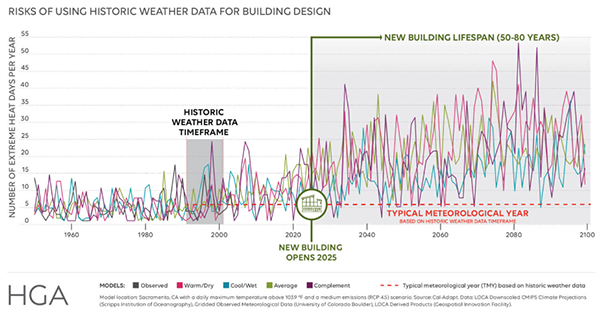
Debate may continue in some circles about whether humans are causing climate change, or even whether it is happening at all, but the scientific consensus is overwhelmingly clear. A report issued in June 2009 by the U.S. Global Change Research Program (USGCRP)—which coordinates climate change research of 13 federal agencies and operated as the U.S. Climate Change Science Program from 2002 through 2008 under the George W. Bush presidency—estimates that global average temperatures have risen approximately 1.5ºF (0.8ºC) since before the Industrial Revolution and could rise another 2ºF–11ºF (1.1ºC–6.1ºC) by the end of this century, based on modeling of a variety of greenhouse gas emissions levels, mitigation efforts, and economic scenarios. “The reality of climate change is unequivocal—we see it in many aspects of the Earth’s climate system,” said Jonathan Overpeck, Ph.D., co-director of the Institute of the Environment at the University of Arizona and a co-author of the USGCRP report.
A matter of degrees
The question in the scientific community seems to be not whether we will see change but how much we will see. “The confidence that something is going to happen is exceedingly high,” said Stephen Schneider, Ph.D., professor of biology and interdisciplinary environmental studies at Stanford University and a leading proponent of climate change adaptation. “Where it gets a bit more speculative is with questions like how many meters of sea level rise we will see and what the changes in rainfall will look like,” Schneider told EBN. He suggests that the extent of change depends on a few primary factors, including the speed with which the climate responds to varying concentrations of greenhouse gases, or “climate sensitivity”; the ability of the oceans and land-based ecosystems to absorb carbon dioxide (CO2) emissions; and the robustness of our efforts to curb the release of greenhouse gases into the atmosphere. Some effects of the warming planet are already being felt, and further consequences are on their way. These changes will vary from region to region, but general trends include changing precipitation patterns and heavier downpours, even in areas where overall precipitation will decline; longer, hotter, and more frequent heat waves; rising sea levels due to melting glaciers and land-based ice sheets; loss of both sea ice and protective snowpack in coastal areas; stressed water sources due to drought and decreased alpine snowfall; and “positive feedback loops”—consequences of warming that cause further warming, such as melting sea ice decreasing the capacity of the northern oceans to reflect solar radiation back out of the atmosphere. (More information on the regional effects of climate change can be found at www.globalchange.gov.) Alarmingly, a paper published in the Proceedings of the National Academy of Sciences by Susan Solomon, Ph.D., of the National Oceanic and Atmospheric Administration (NOAA), and colleagues in February 2009 reported that these changes to the earth’s systems due to anthropogenic greenhouse gas emissions will be largely irreversible for 1,000 years after emissions stop. The authors emphasized that if atmospheric CO2 concentrations rise to anywhere between 450–600 ppm (from their current levels around 385 ppm), we will see permanent decreases in dry-season rainfall and “inexorable sea level rise”—between 0.4 and 1.0 meters (15–40 inches) if CO2 concentrations reach 600 ppm, and 0.6 to 1.9 meters (24–75 inches) if concentrations rise above 1,000 ppm—the consequences of which would be catastrophic. Other scientists, including James Hansen, Ph.D., director of NASA’s Goddard Institute for Space Studies, believe that we must reduce CO2 levels to below 350 ppm or risk “irreversible catastrophic effects.”Adaptation: ‘Not an either-or proposition’
Much of what we already do in green building is related to mitigating (preventing or slowing) our impact on climate change. But given the slow pace of climate policy changes and the still-contentious political climate, we cannot stop greenhouse gas emissions on a dime, which means we are looking at changes to the earth’s systems that could radically alter our way of life. The implications are clear: no amount of mitigation will prevent potentially devastating impacts; it’s necessary for us to adapt. The human tendency to adapt reactively is well documented, as in the case of New Orleans, where the destruction of Hurricane Katrina laid bare the city’s vulnerability to extreme storms. But proactive adaptation will be necessary to avoid far more widespread impacts of climate change elsewhere. Some municipalities have begun to incorporate climate adaptation provisions into their long-range planning, and in August 2009 California unveiled the first statewide strategy to adapt to climate change. These policy efforts have been slower than some climate scientists feel is necessary, and some of this may be due to a perception that adaptation initiatives will take time and resources away from mitigation programs. “What should be done about [climate change] is a legitimate debate,” says Schneider, but he argues that ultimately, mitigation and adaptation must complement each other. “The bottom line is that you’ve got to adapt to what won’t get mitigated—and unfortunately that’s going to be a few degrees—and mitigate what you can’t adapt to.” Jonathan Overpeck agrees: “Adaptation and mitigation are not an either-or proposition,” he told EBN.Strategies for Adapting to Climate Change
Warmer temperatures
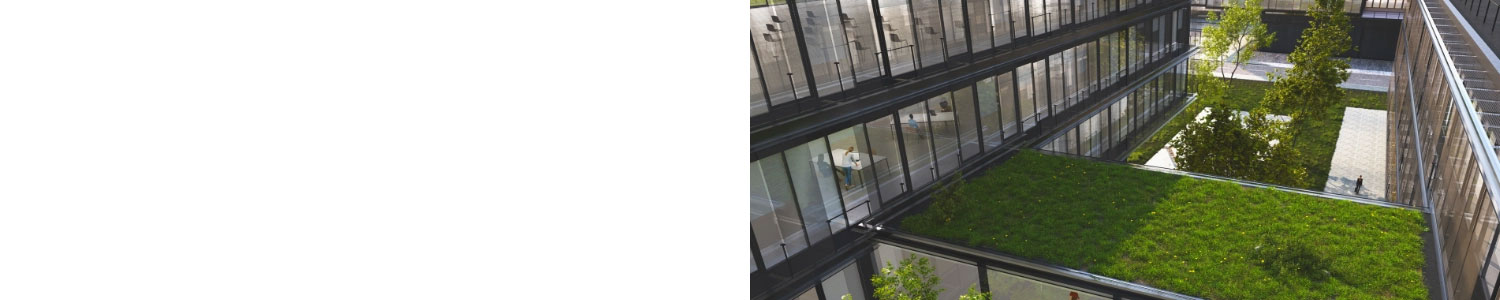
Increasing temperature is at the heart of climate change, and responding to this change is a critical component of any climate-change adaptation strategy. Longer, hotter, and more frequent heat waves raise demands for air-conditioning and increase heat-related deaths and injuries. Heat-adaptive strategies differ markedly by climate—what makes sense in Phoenix, where temperatures in the summer of 2009 have exceeded 115°F (46°C), will be very different from what makes sense in the Arctic, where melting permafrost is already affecting foundation design, according to John Davies, Ph.D., research director at the Cold Climate Housing Research Center in Fairbanks, Alaska. Design cooling-load-avoidance measures into buildings. Use building geometries to limit solar gain on east and west façades, limit the area of east- and west-facing glazing, incorporate exterior shading devices above glazing, specify glazings tuned to the orientation (glass with a low solar heat gain coefficient on east and west façades), incorporate high insulation levels to reduce conductive heat gain, provide high-albedo (reflective) roofing, and provide optimized daylighting to minimize the use of electric lighting. Design natural ventilation into buildings. In some climates, particularly those with low relative humidity, buildings can be designed to rely entirely on natural ventilation; in higher-humidity climates natural ventilation may be more practical as a backup cooling strategy that can be used during power outages as a passive survivability measure or during periods when bringing in outside air will not introduce excessive moisture. Limit internal gains by specifying high-efficiency lighting and equipment. The higher the efficiency of lighting, office equipment, appliances, and mechanical equipment, the less waste heat is generated. In general, equipment choices are less important than design decisions since equipment is replaced more frequently. Model energy performance with higher cooling design temperatures. With a climate that is projected to become warmer, cooling design temperatures used in energy modeling should be raised. This will help to justify higher investments in cooling-load-avoidance measures. (We’re still likely to see cold winters, so don’t raise the heating design temperatures.) Provide landscaping to minimize cooling requirements. Trees, vines, annuals, and green roofs can all help control heat gain and minimize cooling demands on a building. Carefully designed landscaping can also help to channel cooling breezes into buildings to enhance natural ventilation. Involve landscape architects or designers at the earliest stage of planning with a new building so that existing vegetation can be preserved to aid in these uses.Drought and water shortages
Changes in precipitation patterns are an expected outcome of climate change, so designing for drought is a high priority in many regions. Even in places that receive relatively high levels of precipitation, such as the southeastern U.S., drought can occur, as we learned in 2007 when Lake Lanier, the Atlanta area’s primary water source, shrank to historically low levels. Places that have not traditionally had to deal with drought are less prepared to respond. Emergency water-use restrictions are commonly imposed during drought, but there are design- and planning-related measures that can reduce the risk and lessen the difficulty or long-term impacts of response. Avoid new development in the driest regions. An obvious, but remarkably rare, response to expected water shortages and drought is to restrict new development in areas most likely to be affected. California has a provision requiring developers of large projects (over 500 housing units) to demonstrate that there will be an adequate water supply for 20 years before a building permit is issued. It is likely that much broader building moratoriums will become necessary in many areas in the future, and it makes sense for municipalities to establish procedures today that will enable such measures to be instituted when and if they become necessary. Specify water-efficient fixtures and appliances. Most water fixtures and equipment are replaced relatively often—many cycles within the lifespan of a typical building—but this doesn’t mean you shouldn’t install state-of-the-art water-conserving products when any new building is constructed or an existing building is renovated. Building owners should ensure that any replacements are state-of-the-art as well. Plumb buildings with water-conserving fixtures in mind. In homes, structured plumbing (sometimes referred to as “home-run” systems), in which individual piping lines (PEX tubing) run to each fixture or appliance from a central manifold, allows smaller-diameter lines to feed water-conserving fixtures. For example, if a water-saving, 0.5 gallon per minute (1.9 lpm), lavatory faucet is supplied by a 3⁄4" (19 mm) pipe, there will be a long wait for hot water. The wait time (and water waste) can be significantly reduced by running a 3⁄8"-diameter (10 mm) line to this feature. Plumb buildings for graywater separation. Even if graywater collection is not permitted today, it makes sense to plumb wastewater lines to simplify the installation of a graywater system in the future. (See EBN May 2008 for more on graywater.)More intense storms, flooding, and rising sea levels
According to some experts, the most visible and imminent effects of climate change will likely be the increasing severity of storms. As water temperatures rise in the South Atlantic, tropical storm systems will pick up more energy, resulting in higher-magnitude hurricanes on the Gulf Coast and Eastern Seaboard. Elsewhere, changing precipitation patterns are expected to deliver more rainfall in intense storms that result in river flooding. To complicate matters, development has made our landscapes less able to absorb rainfall, says architect Don Watson, FAIA, who is writing a book on “design for resilience.” “We’ve taken away all the absorptive capacity of our landscapes,” Watson told EBN. Adapting to climate change will require making our buildings more resilient to storms and flooding. In the longer term, we need to prepare for rising sea levels and restoring the ability of our land to absorb water. Avoid building in flood zones. Flood zones are expanding—often faster than revisions to zoning regulations, meaning that simply following the law relative to the siting of buildings may not be enough. Instead of designing to 100-year floods, consider designing to 500-year floods, seeking civil engineering or surveyor assistance as needed. Expand stormwater management capacity and rely on natural systems. More intense storms will strain the capacity of standard stormwater management infrastructure in some areas. Provide larger stormwater conveyance and detention basins, and try to rely on natural features, constructed wetlands, and other ecologically based systems to manage stormwater. “Restore the ecological services of the landscape,” says Watson.Wildfire
Power interruptions
Some of the likely impacts of climate change, such as intense storms and flooding, can cause power outages directly. Drought can also cause power outages indirectly if lack of cooling water for power plants results in rolling blackouts or brownouts. Adapting buildings to climate change should include measures that will make those buildings less affected by power outages. This is one of the key tenets of passive survivability, detailed in EBN May 2006. Design buildings to maintain passive survivability. Homes, apartment buildings, schools, hospitals, and certain other public buildings should be designed to maintain livable conditions in the event of loss of power or heating fuel, or shortages of water—a design criterion known as passive survivability. Specific strategies include an extremely high-performance building envelope (high insulation levels, triple-glazed windows in cooler climates, etc.), cooling-load-avoidance features, natural ventilation, and passive solar heating. Provide dual-mode operability with high-rise buildings. Look into designing tall buildings that will operate in normal mode when utility power is available, and in an emergency passive mode during power outages or when site-generated power is used. In the passive mode, electricity flow would be limited to critical needs such as elevators, ventilation fans, heating system pumps and fans, fire suppression systems, critical lighting, and so forth, so that the building could maintain limited functionality rather than having to be evacuated. Design mechanical systems to operate on DC power. If mechanical systems are designed with DC-powered pumps, motors, and fans, they can be more easily switched to non-grid power, which could be provided by backup generators or renewable energy systems.Looking to the Future
Most of these strategies for adapting buildings to the effects of climate change are relatively straightforward—and eminently doable. It makes sense to incorporate these into our design palette today. There are other challenges that are likely to be far more complex, requiring significant cultural and economic shifts if we are to adapt to a future that is not only warmer but must function without petroleum. Alternate transportation systems, new agricultural practices and food systems, more localized economies, and stronger neighborhood and community networks will make us more resilient to changes and uncertainty in a way that simply building better buildings cannot. The adaptive measures addressed here give us something we can think about and act upon today. The good news is that many of these measures also help to mitigate climate change—and quite a few reduce building operating costs or improve durability, benefiting building owners as well as the future of the planet.For more information:
Federal Alliance for Safe Homes (FLASH)
Tallahassee, Florida
877-221-7233
www.flash.org
Federal Energy Management Agency (FEMA)
Washington, D.C.
800-621-3362
www.fema.gov
Center for Fire Research and Outreach
University of California, Berkeley
Berkeley, California
firecenter.berkeley.edu
U.S. Global Change Research Program
www.globalchange.gov
Continuing Education
Receive continuing education credit for reading this article. The American Institute of Architects (AIA) has approved this course for 1 HSW/SD Learning Unit. The Green Building Certification Institute (GBCI) has approved the technical and instructional quality of this course for 1.5 GBCI CE hour towards the LEED Credential Maintenance Program.
Learning Objectives
Upon completing this course, participants will be able to:
- Identify the major known causes of climate change.
- Describe the range and reliability of predicted temperature changes.
- List several adaptation measures for adapting to each of five major categories of climate-related changes.
- Explain the drawbacks of proposed geoengineering solutions to climate change.
To earn continuing education credit, make sure you are logged into your personal BuildingGreen account, then read this article and pass this quiz.
There are no comments for this page yet.
| Log in to add comments - Help with comments |
|
EBN: Feature - March 2012
|
BuildingGreen.com: What's Happening - August 2011
|
||
|
EBN: Feature - April 2011
|
EBN: Newsbrief - February 2011
|
||
|
EBN: Feature - November 2010
|
EBN: Newsbrief - January 2010
|
IMAGE CREDITS:
1. Photo: Global Green
2. Photo: Global Green
3. Photo: Lucie Marusin
4. Photo: Alex Wilson
5. Photo: Simpson Strong-Tie
6. Photo: Rancho Santa Fe Fire Protection District
7. Photo: Community HousingWorks, Owner/Developer
DISCUSSIONS
There are no comments for this page yet.
RELATED ARTICLES
RELATED LEED CREDITS
SS Credit 1
RELATED GREEN DESIGN
|
||||||||||||||||||||||||||||||||||||||||||||||||||||||||


More related articles