
Blog Post
The L.A. event drew attendees dedicated to reaching new green milestones toward a climate positive world
Celebrating its 13th year, the Net Zero Conference, held at the Los Angeles Convention Center and hosted by sustainability consultant Verdical Group, focused primarily on climate, net zero, ESG, equity, carbon and resilience. With subfocuses including biomimicry, biophilia, built environment, design, energy, health and wellness, materials,... Read more
Feature
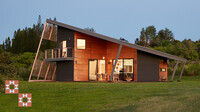
Meant to serve generations, accessory dwelling units are versatile and carbon friendly.
An ADU (accessory dwelling unit) has all the functionality of a home—bed, bath, kitchen—in a snack-size format. It can be many things to many people: a guesthouse, a rental unit, accommodations for elderly parents, a home office. It shares the same property as a single-family home, effectively turning a single-family lot into a... Read more
Blog Post
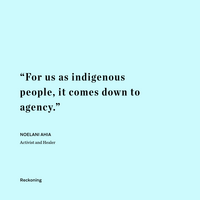
Activist Noelani Ahia on recovery and rebuilding in Lahaina through a native lens
Reckoning was originally published in the Disasters and Recovery issue of BuildingGreen.
Three years after the deadly and destructive fires swept through Lahaina, the town’s recovery and rebuilding efforts remain in flux. Maui resident Noelani Ahia runs Maui Medic Healers Hui, which provides grassroots, community-driven services for... Read more
Blog Post

Budding with actionable ideas, the event endeavored to shape the future of low-carbon construction, with the L.A. Olympics and Paralympics on the horizon
The Carbon Forward Summit, hosted by USGBC California and held at La Kretz Innovation Campus in downtown Los Angeles, looked toward the 2028 L.A. Olympics and Paralympics and beyond through discussions on concrete mixes and other decreased pollution materials, and how to reduce resources taken from the environment for built projects. There were... Read more
Blog Post

BuildingGreen returns as a media sponsor for the event, which endeavors to shape and elevate the national conversation on healthy buildings
BuildingGreen is proud to return as a media sponsor for the annual IWBI Healthy Building Policy Summit, to be held Tuesday, September 29, at Georgetown University’s McCourt School of Public Policy on its Capitol Campus.
Register here for the event.
In partnership with Georgetown University’s Global Cities Initiative, IWBI... Read more
Blog Post

Gilding the breaks in the green building movement will require a unified commitment to nature
“Fractured” was originally published in BuildingGreen Issue 3: Climate Justice.
The green building movement desperately needs a unified front. Where is that overarching cooperative program that harmonizes the otherwise disparate interests of environmental... Read more
Feature

Building for the nature we are part of
Rewilding, Biophilia and Biodiversity in Architecture was published in BuildingGreen Issue 2: Deep Ecology as "Born to Rewild." Take the quiz to earn 1 AIA LU/HSW or 1 GBCI LU.
A very important piece of infrastructure in Los Angeles is expected to open next year—for a group of users who have no idea of the expense and trouble... Read more
News Analysis

Environmental protections are being dismantled by the current administration.
There have been many updates to environmental protection policy this summer. The current administration is following through with dismantling long-held biodiversity and public lands laws while freeing up environmentally damaging construction from environmental regulation. Anti-pollution measures are also being... Read more
Feature
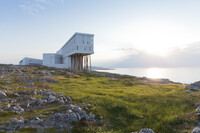
Destinations built to prioritize environment, community and place
In Strange and Familiar, a documentary about Norway-based Saunders Architecture’s work on Fogo Island in Newfoundland, Canada, the stunning scenery conjures wanderlust. Along with the island’s dramatic rocky terrain, its ever-changing skylines and its all-encompassing water... Read more
Blog Post

The UIA World Congress of Architects posits a post-climate world of “becoming,” but optimism is an uneasy outlook
Our Paris-bound plane touched down in June in the middle of France’s hottest day on record. The first sleepless night after a sleepless flight held steady at 90 degrees Fahrenheit in the bedroom—fans whipped the air but didn’t cool it. Nighttime relief was a damp washcloth and five liters of Evian. Walloped, I walked the neighborhood at... Read more
Blog Post
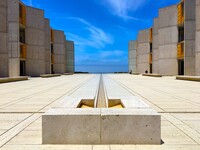
The annual conference drew thousands to San Diego to contemplate designing for all humanity
Yes, the puppy petting park returned to the AIA conference, held last week in San Diego. A good thing, that: The events, keynotes and show floor were at moments depleting in their depth, information and energy, and calm respites such as these allowed visitors to recharge and carry on. The mood was optimistic, with an emphasis on collaboration,... Read more
Feature
We can restore our own connection to native nature that has been replaced with non-native and invasive species among heavy urbanism.
With constant news of habitat destruction and species extinction being reported all around us with a political system attacking remaining protections, it can be overwhelming to approach how we can help to mitigate ecosystem and native species loss. It may feel small to think about our own actions and hand in species recovery and... Read more
Feature
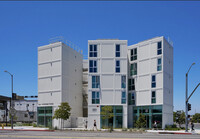
Where Affordability, Justice and Sustainable Design Intersect
Here is a thought experiment: What would California’s great cities be like if they had built housing at density levels commensurate with the state’s economic trajectory over the past 50 years? According to Eduardo Mendoza, a senior researcher at the pro-housing group California YIMBY, San Francisco would be the Manhattan of our time. Los... Read more
Feature

Stedsans, an ethereal lakeside Swedish eco resort, was an idealistic destination built on earth-first principles. Then it was suddenly shuttered.
The media described it as magical, blissful—an Instagram fairy tale. Stedsans, an ecologically minded forest resort in Southern Sweden, was founded by Danish couple Flemming Hansen and Mette Helbak in 2017. The two chefs (Helbak is also described as a food writer), had been running a popular urban farm-to-table restaurant in Copenhagen before “... Read more
Product Review
How do you build for disasters without compromising aesthetics? Architects are reimagining materials to protect structures without affecting performance.
Fire hardening can help save structures, or greatly reduce or delay fire damage. Architect Dan Brunn has implemented measures meant to protect his own L.A. home, Bridge House, including using Corten steel fencing. While steel does melt at above 2,500 degrees, it is “a superior alternative to wood for a fire barrier,” says Brunn, who also... Read more
News Brief
The fight for species protection and strategic plans to build with and reduce the effects of climate change continues with the help of environmental advocates.
The entire National Science Board was fired on Friday, April 24. All 22 members of the board were let go, in the middle of finalizing a report on the state of U.S. science. This board used to oversee the distribution of the National Science Foundation’s funds and lead research direction across the country. Without them in the... Read more
Feature

Architectural approaches to reducing bird-building collisions
Save the Birds was published in BuildingGreen Issue 2: Deep Ecology. Take the quiz to earn 1 AIA LU/HSW.
The hazard that the built environment poses to bird life has been known for decades, but the full magnitude has now come into view. A 2014 review of 23 studies estimated that between 365 million and 988 million birds are killed every... Read more
Blog Post

The current government administration has quietly decided on Tuesday to move the headquarters of the U.S. Forest Service from Washington, D.C., to Salt Lake City, Utah.
As predicted by those who have remembered the last time the administration has moved the headquarters of a major federal agency, the Bureau of Land Management (BLM) in 2019, from Washington, D.C., to Grand Junction, Colorado, the current government administration has quietly decided on Tuesday to move the headquarters of the U.S.... Read more


