Integrity Block is a compacted-earth block used as a cost-competitive replacement for concrete masonry units (CMUs). Made from a proprietary soil mix that includes up to 60% pre-consumer recycled content (byproduct from mining or quarrying), Integrity Block uses 40% less energy to produce and meets ASTM C-90 for load-bearing CMUs. The portland cement content is approximately half that of standard block. Integrity Blocks are the color of the earth used in manufacturing, giving them a unique natural appearance without any added dyes or pigments. The company’s landscape product is currently available, with structural full and half blocks to be rolled out in late 2008. Integrity Blocks are initially being shipped in Northern California, though the company has plans for at least five additional plants nationwide within the next several years so that regional markets can be reached with low transportation (and carbon) impacts.
Masonite’s Emerald Safe ‘N Sound solid-core interior doors have wheat-straw particleboard cores, skins made from composite wood, and stiles and rails made from made from solid wood certified according to Forest Stewardship Council (FSC) standards. These doors reduce sound transmission and do not contain any added urea-formaldehyde. Safe ’N Sound Emerald doors are available in 1-3/8th-inch thickness and 6' 8", 7' 0", and 8' 0" heights, with widths from 1' 0" to 3' 0" for passage doors and 2' 0" to 6' 0" for bifold doors.
Smith & Fong has introduced the first bamboo flooring to carry Forest Stewardship Council (FSC) certification. Available under the brand name PlybooPure, the flooring is also made with low-emitting, non-formaldehyde polyisocyanurate binder. PlybooPure comes either flat- or vertical-grained in a natural or amber color. It is available unfinished or prefinished with aluminum oxide; all flooring measures 5/8" x 3-3/4" x 75" and comes 23.4 ft2 per box. The company also offers a comprehensive range of trim moldings in stairnosing, threshold, reducer, and baseshoe profiles, and baseboard prefinished in amber or natural color.
Benjamin Moore’s Natura line of zero-VOC paints and primers are made for residential and light commercial use. These spatter-resistant paints dry quickly with little odor. Natura contains a proprietary 100% acrylic resin that, according to the company, will meet the Master Painter Institute’s Green Performance standard as well as Green Seal’s 2009 GS-11 standard covering chemical content and paint performance—though Benjamin Moore has decided to seek its own independent testing and will not be applying for MPI or GS-11 certification. While most zero-VOC paints use colorants containing as much as 150 grams per liter of VOCs, Natura uses Benjamin Moore’s own Gennex zero-VOC colorants. Natura is available as a primer as well as in flat, eggshell, and semi-gloss.
PolyWhey is a waterborne wood finish that uses recycled whey protein, a by-product of the dairy industry, as a binder. These LEED-qualifying, low-odor coatings contain no toxic heavy metals and have a VOC level less than 180 g/L. They provide a clear coating with water, chemical, and scratch-resistance and with twice the durability of other waterborne finishes, according to the company, making them suitable for high-traffic residential and commercial areas. PolyWhey finishes cover 500-600 square feet per gallon and can be applied with brush or spray gun, drying to the touch in under two hours and fully curing in under a week. As with traditional polyurethanes, proper preparation of the floor or other wood surface before coating is critical to create even coats and a quality seal. A slightly different formulation is available as a furniture finish. These coatings are available in gloss, semi-gloss, or satin finish; in five-gallon, gallon, quart, and pint sizes. The cans are made from 100% pre-consumer recycled polypropylene.
Mentioned in EBN: June 2008
View GreenSpec listing
O Ecotextiles produces a diverse and luxurious collection of premium organic textiles that have been produced with careful attention to three critical factors: toxicity (both in the growing of the fibers and the production of the cloth), carbon footprint, and social justice. In pursuit of safe fabrics, every ecologically harmful aspect of the textile industry was carefully considered and almost entirely ameliorated. O Ecotextiles are made from 100% organic cotton or other sustainably grown fibers, including hemp, flax (linen), abaca, ramie, silk, and bamboo. The textiles are produced in living-wage environments. Manufacturing processes throughout the supply chain eliminate the use of a wide range of hazardous substances typical to the textile industry, and produce wastewater safe for aquatic life. Many of these fabrics exceed heavy-duty contract specifications as defined by ACT standards. Fabrics are third-party certified to meet the Oeko Tex Standard 100, with some fabrics also certified by the Global Organic Textile Standard (GOTS). Other than certain functional finishes available on request, such as for flame retardancy and stain resistance, the fabrics are free of hazardous chemical residues.
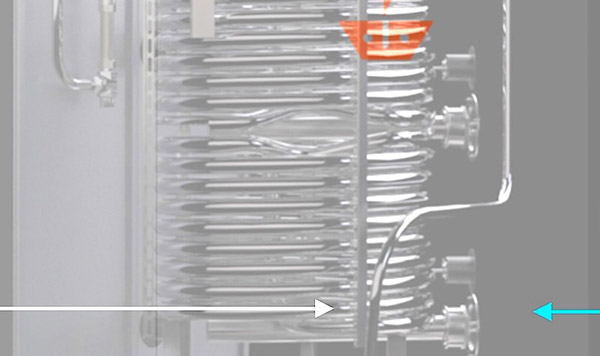
NTI’s Matrix is an integrated appliance that combines a gas-fired condensing boiler and furnace, condensing demand water heater, and heat-recovery ventilator into a single unit, and it is pre-configured for air conditioning. According to NTI, the Matrix’s advanced heat exchanger is capable of reducing gas consumption by 30% compared with a conventional system, providing an AFUE of 94 for forced-air and 92.7 for hydronic heating, and an energy factor of 0.85 for water heating. The Matrix can deliver five gallons of hot water per minute at 110°F (43°C) without a tank or standby energy loss. Features include an efficient, variable-speed, electronically commutated (ECM) motor; a microprocessor that adjusts heat output based on the home environment; and a sealed-combustion system that draws in outdoor air and directly vents exhaust. Compared with standard products, the efficient combustion results in less cycling, improved efficiency, and less noise, and it can be vented using conventional plastic piping. The Matrix is the first product to meet Canada's new CSA-P.10 standard for integrated mechanical systems, and it achieved a premium designation for the highest efficiency.
The SunCache integral-collector-storage (ICS) solar water heater uses a roof-mounted, water-filled, unpressurized, polyethylene panel and copper heat exchanger to pre-heat water for domestic use. Developed through research supported by the U.S. Department of Energy, the relatively inexpensive SunCache captures heat in 50 gallons of non-circulating water stored in a rooftop panel. When a hot-water tap is turned on, cold water from the supply line flows through copper heat exchanger embedded in the panel, extracting heat from the stored water. The pre-heated water then flows, via cross-linked polyethylene (PEX) tubing, to a conventional storage or tankless water heater. No pumps are used. The acrylic glazing minimizes convective heat loss, but nighttime losses from the collector will still be significant. People using hot water in the afternoon or early evenings will see the greatest energy savings. SunCache is affordable and easy to install, making it appropriate for both professional and do-it-yourself installations. The water heater is designed for warm climates, including the Sun Belt, and is not intended for use in cold climates.
Agilewaves Resource Monitor provides residential and commercial building owners with real-time data on electricity, gas, and water consumption. This system can be accessed via the Internet, providing monitoring data from circuits, rooms, water lines, and appliances. Agilewaves can also track, store, and analyze temperature, humidity, air quality, output from PV and solar water-heating systems, utility costs, and carbon footprint information. It can also communicate with certain building management systems to actively manage loads based on real-time usage. By influencing occupant behavior, Agilewaves can help reduce energy, gas, and water consumption by up to 20%, according to the company. Each system is custom-configured to meet specific monitoring needs, such as runoff from green roofs.
The Rainwater HOG is a modular rainwater storage tank for use in tight spaces such as under decks, against houses, or even within walls. Two versions are available: a potable water tank made from virgin food-grade polyethylene and a non-food-grade tank made with 15% recycled content. Each module holds 50 gallons of water that can be used for gardening, irrigation, toilets, laundry, or (with the food-grade tank and after proper filtration) potable water. When installed within a building envelope, the tanks can serve as thermal storage for passive solar heating systems. These 71" x 19.5" x 8.5" tanks can be installed horizontally or vertically, and they can be installed in series. They come with inlet screens, elbow vents, and outlet valves; tanks and components are designed for future reuse. Rainwater HOG is available as a stand-alone tank that is plumbed into the downspout or as part of a complete rainwater harvesting system called Rainwater Rescue, which combines the Rainwater HOG tank with GLI Systems’ RainTube roof-level water collector. Standard colors include bronze or olive green, but other colors are available for orders of 20 or more units. Rainwater HOG comes with a one-year guarantee. A 350-gallon HOGzilla tank is being introduced in 2009.