Getty Center is First LEED-EB Certified Facility

News Brief

Getty Center is First LEED-EB Certified Facility

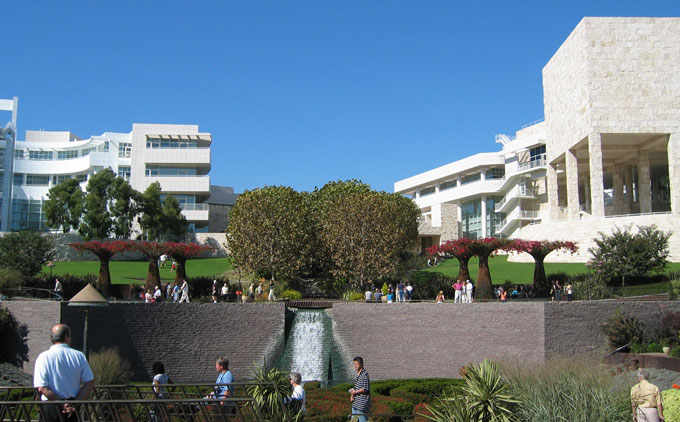
Home to the J. Paul Getty Museum and other programs of the J. Paul Getty Foundation, the Getty Center in Los Angeles, California, (see photo) is the first facility to gain certification through the official and balloted version of the LEED for Existing Buildings® (LEED-EB) Rating System. The certification was presented during the International Facility Managers Association Best Practices Forum, held at the Getty Center on February 14 and 15, 2005. The Getty Center was designed by Richard Meier & Partners Architects, LLP, and constructed between 1984 and 1997.

Published December 31, 1969

(2005, March 1). Getty Center is First LEED-EB Certified Facility. Retrieved from https://www.buildinggreen.com/departments/newsbrief

Add new comment

To post a comment, you need to register for a BuildingGreen Basic membership (free) or login to your existing profile.

Oregon Bill Would Ban Deca Flame Retardant

News Brief

Oregon Bill Would Ban Deca Flame Retardant

A bill being considered by the Oregon legislature could be the first in the U.S. to ban the deca form of the polybrominated diphenyl ether (PBDE) class of flame retardants. If passed and signed into law, the ban of decaBDE would take place by 2008. The proposed law would also ban by 2006 the penta and octa forms of PBDE, two chemicals that have already been discontinued by the sole manufacturer, Great Lakes Chemical Corporation (see

EBN

Vol. 14, No. 2). For background on flame retardants, see

EBN

Vol. 13, No. 6.

Published December 31, 1969

(2005, March 1). Oregon Bill Would Ban Deca Flame Retardant. Retrieved from https://www.buildinggreen.com/departments/newsbrief

Add new comment

To post a comment, you need to register for a BuildingGreen Basic membership (free) or login to your existing profile.

Arizona Commits to Green Building

News Brief

Arizona Commits to Green Building

Just one month after Arizona’s requirement that all new state-funded buildings use nonflushing urinals took effect on January 1, 2005, Governor Janet Napolitano signed an executive order in February requiring all new state buildings to derive at least 10% of their energy from renewable sources—defined as solar, wind, and biomass—and to meet a Silver or higher LEED® rating from the U.S. Green Building Council. The Arizona state legislature is online at www.azleg.state.az.us.

Published December 31, 1969

(2005, March 1). Arizona Commits to Green Building. Retrieved from https://www.buildinggreen.com/departments/newsbrief

Add new comment

To post a comment, you need to register for a BuildingGreen Basic membership (free) or login to your existing profile.

Chicago Acts to Reduce C&D Waste

News Brief

Chicago Acts to Reduce C&D Waste

The City of Chicago has adopted new regulations aimed at reducing the amount of construction and demolition (C&D) waste sent to landfills. All contractors will be required to recycle at least 25%, by weight, of all C&D waste in the city by January 1, 2006, according to Chicago’s Department of Streets and Sanitation. On January 1, 2007, the required recycling rate will double to 50%.

Published December 31, 1969

(2005, March 1). Chicago Acts to Reduce C&D Waste. Retrieved from https://www.buildinggreen.com/departments/newsbrief

Add new comment

To post a comment, you need to register for a BuildingGreen Basic membership (free) or login to your existing profile.

UBMA Becomes BMRA

News Brief

UBMA Becomes BMRA

The organization formerly known as the Used Building Materials Association (UBMA) has changed its name to the Building Materials Reuse Association (BMRA). The educational organization, “dedicated to supporting the recovery and reuse of building materials throughout the U.S. and Canada,” is now based in State College, Pennsylvania, and is online at www.buildingreuse.org.

Published December 31, 1969

(2005, March 1). UBMA Becomes BMRA. Retrieved from https://www.buildinggreen.com/departments/newsbrief

Add new comment

To post a comment, you need to register for a BuildingGreen Basic membership (free) or login to your existing profile.

USGBC to Form Research Committee

News Brief

USGBC to Form Research Committee

The U.S. Green Building Council Board voted at its Portland, Oregon, meeting in November 2004 to create a Research Committee. The committee will identify research priorities in the green-building field, educate policy makers and funding agencies regarding green-building research needs, expand the scientific basis of the LEED

® Rating System, pursue collaborative partnerships with other organizations involved in building research, and, in the future, fund further research. The Council is currently seeking expressions of interest from people interested in serving on this committee. Send inquiries to board members Alex Wilson (alex@buildinggreen.com) or Vivian Loftness, FAIA (loftness@Andrew.cmu.edu).

Published December 31, 1969

(2005, February 1). USGBC to Form Research Committee. Retrieved from https://www.buildinggreen.com/departments/newsbrief

Add new comment

To post a comment, you need to register for a BuildingGreen Basic membership (free) or login to your existing profile.

USGBC Calls for Session Proposals

News Brief

USGBC Calls for Session Proposals

The U.S. Green Building Council has announced a call for session proposals for the next Greenbuild conference, set for Atlanta in November 2005. Outside reviewers will rate all proposals using a 100-point scale designed around the theme of stewardship. Proposals must be submitted electronically by February 11, 2005. Details are online at www.greenbuildexpo.org.

Published December 31, 1969

(2005, February 1). USGBC Calls for Session Proposals. Retrieved from https://www.buildinggreen.com/departments/newsbrief

Add new comment

To post a comment, you need to register for a BuildingGreen Basic membership (free) or login to your existing profile.

Most Toxic Forms of PBDE Discontinued

News Brief

Most Toxic Forms of PBDE Discontinued

Great Lakes Chemical Corporation, the sole manufacturer of the two forms of polybrominated diphenyl ether (PBDE) flame retardants that are considered most toxic—penta-BDE and octa-BDE—ceased production of those chemicals at the end of 2004. The U.S. Environmental Protection Agency and Great Lakes Chemical announced the voluntary phaseout of these two chemicals in November 2003. The European Union and several U.S. states have also now banned the chemicals. Great Lakes is promoting its new Firemaster

® 550 as the replacement for the most widely used PBDE, penta-BDE, in flexible polyurethane foam. Firemaster 550 is a phosphorous-bromine flame retardant that is 27% bromine by weight. For information, visit www.greatlakes.com. More information on flame retardants can be found in

EBN

Vol. 13, No. 6.

Published December 31, 1969

(2005, February 1). Most Toxic Forms of PBDE Discontinued. Retrieved from https://www.buildinggreen.com/departments/newsbrief

Add new comment

To post a comment, you need to register for a BuildingGreen Basic membership (free) or login to your existing profile.

Unified Sustainable Textile Standard Announced

News Brief

Unified Sustainable Textile Standard Announced

In December 2004, the nonprofit Institute for Market Transformation to Sustainability approved version 2.0 of the Unified Sustainable Textile Standard, designed “to provide a market-based definition for sustainable textile, establish performance requirements for public health and environment, and address the triple bottom line (economic, environmental, and social) throughout the supply chain.” The voluntary certification process applies to carpet, fabric, and apparel. Scientific Certification Systems (SCS) is listed as the third-party certifier for this standard, but a contact at SCS indicated that they have not assumed that role. The standard can be downloaded from www.mts.sustainableproducts.com/standards.htm.

Published December 31, 1969

(2005, February 1). Unified Sustainable Textile Standard Announced. Retrieved from https://www.buildinggreen.com/departments/newsbrief

Add new comment

To post a comment, you need to register for a BuildingGreen Basic membership (free) or login to your existing profile.

Battle Rages Over Florida Lawn

News Brief

Battle Rages Over Florida Lawn

When Ed Ehlen paid $19,000 to purchase and install artificial turf at his new home in Florida’s upscale Marco Island community, he thought he was doing an environmental service. “We have such a water problem in Southwest Florida,” Ehlen told the

News-Press. And with artificial turf, he said, “you don’t have to water. You don’t have to fertilize.” Not everyone sees it that way, however, and community development director Greg Niles has asked Ehlen to replace it with real grass, complaining that the artificial turf poses environmental problems of its own and fails to comply with the spirit of the city’s landscape code. The debate is set to be resolved by the city council in coming weeks. Meanwhile, Ehlen has painted one side of his home pink, with green and purple polka dots, in protest; paint colors are not constrained by city ordinances. For more on the debate over artificial and natural turf, see

EBN

Vol. 13, No. 4.

Published December 31, 1969

(2005, February 1). Battle Rages Over Florida Lawn. Retrieved from https://www.buildinggreen.com/departments/newsbrief


Add new comment

To post a comment, you need to register for a BuildingGreen Basic membership (free) or login to your existing profile.