
News Analysis
At press time (late November 2004) the Canada Green Building Council (CaGBC) was preparing to launch its own version of LEED® for New Construction and Major Renovations (LEED-NC). Under the licensing agreement with the U.S. Green Building Council, buildings that achieve LEED certification by CaGBC will be recognized as LEED buildings by the... Read more
News Brief
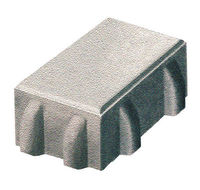
Environmental Building News and the
GreenSpec®
Directory, we announced our annual list of Top-10 Green Products at the U.S. Green Building Council’s Greenbuild conference in November. The Top-10 awards represent the most exciting products added to the
GreenSpec Directory during 2004.
•
ECO I... Read more
News Brief
The City of San Francisco has adopted a Green Building Ordinance, requiring all new city construction projects, renovations, and additions to achieve a LEED® Silver or higher rating. “This ordinance will translate into millions in savings on future operational costs,” said Jared Blumenfeld, director of the San Francisco Department of the... Read more
News Analysis
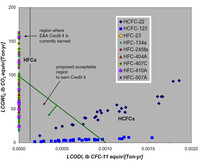
® Technical and Scientific Advisory Committee (TSAC) HCFC Task Group. This report,
The Treatment by LEED of the Environmental Impact of HVAC Refrigerants, was written to inform future revisions to... Read more
Product Review
To the best of our knowledge, Humabuilt no longer exists, and the products it previously produced are unavailable.
Update: (July 27, 2006)To the best of our knowledge, Humabuilt no longer offers FSC-certified veneers.
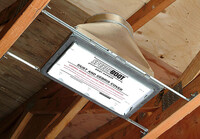
The Lake Oswego, Oregon company Humabuilt™ is marketing Wheatboard™-core... Read moreNews Brief
News Analysis
Op-Ed
Rick Fedrizzi, president and CEO of the U.S. Green Building Council, may not have thought he was saying anything controversial when he used a standard line to promote the LEED® Rating System: “If it’s not LEED, it’s not green.” But Fedrizzi’s comments raised the hackles of a number of attendees at the opening plenary session at the Greenbuild... Read more
Product Review
News Analysis
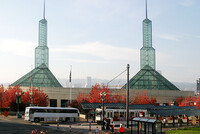
® for Existing Buildings (LEED-EB) pilot program (see p. 3). As in recent years, the... Read more
News Brief
The U.S. Green Building Council presented its 2004 Leadership Awards during an evening gathering at the Greenbuild conference in Portland, Oregon on November 11, 2004. The Council instituted this awards program in 2002 in order to recognize companies, organizations, and individuals “whose actions have had a significant impact on the development... Read more
News Analysis
News Brief
Eighty teams were selected from the submissions to present poster sessions during Greenbuild 2004. These half-hour sessions took place during the lunch breaks on November 10 and 11. Three posters were recognized with Awards of Merit, two tied for Best of Show, and one poster was selected for the People’s Choice award.
•
Design for... Read more
News Brief
The Center for the Built Environment (CBE) at the University of California, Berkeley has an online occupant survey tool with automated reporting and analysis options (see
EBN Vol. 12, No. 9). In order to increase the number of LEED-certified buildings in its database, CBE is currently waiving the standard $1,000 per building fee for... Read more
News Analysis
News Brief
The Healthy Building Network (HBN) presented its 2004 Healthy Building Leadership Award to the nonprofit, ecumenical Christian housing ministry Habitat for Humanity. HBN and Greenpeace met with Neville Eastwood, director of construction and environmental research for Habitat for Humanity International in 2000 to discuss the possibility of... Read more
Product Review
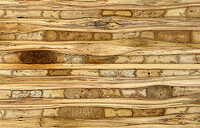
This high-design, lightweight, formaldehyde-free panel is made of waste fiber left over after processing sorghum.
Kirei™ is a lightweight, formaldehyde-free panel made from waste fiber left over after processing sorghum, a grain crop grown widely in many parts of the world. The product was developed in Japan in the mid-1990s and introduced to the U.S. market in 2003. Kirei is a Japanese character meaning both clean and beautiful, according to Kirei USA... Read more
News Brief
The Emerging Green Builders (EGB) chapter of the U.S. Green Building Council announced during Greenbuild the winners of the third annual USGBC Design Competition, intended to recognize students and young professionals in the building industry. More than 130 teams, including more than 270 individuals from 16 countries, competed to design a... Read more
News Analysis
Rand® Corporation, based on information from Healthcare for Communities, a survey funded by the Robert Wood Johnson Foundation. The survey analyzed health data for more than 8,600 adults living... Read more
News Brief
Architects/Designers/Planners for Social Responsibility (ADPSR) has initiated a boycott of all prison design, construction, and renovation in protest of the prison-industrial complex and its effects on society. ADPSR works for peace, environmental protection, ecological building, social justice, and the development of healthy communities. For... Read more


