
News Analysis
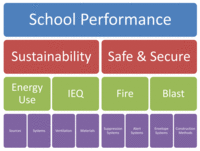
The massive Commercial Building Energy Consumption Survey (CBECS)—akin to the U.S. Census but for building energy performance—has underpinned a number of key policies and building certification programs for years. While a major blow, the recent loss of new CBECS data due to funding reasons (see “Key Energy Data Hit Hard by Federal... Read more
News Brief

Walk Score developer Front Seat has addressed a flaw in its scoring system that could help the already-popular program see greater adoption by city planners and others, reports
New Urban News.
Walk Score’s “Street Smart” feature measures distances based on the actual routes available to pedestrians rather than as the... Read more
News Analysis
Low-flow faucets have become a standard water-saving feature in public bathrooms. Unfortunately, it turns out that drying your hands can use a lot more water than washing them—anywhere from 18 to 70 liters (4.8 to 18.5 gallons) per hand-washing session, depending on the drying method—according to a life-cycle assessment (LCA)... Read more
Feature
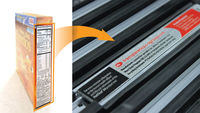
Manufacturers are offering more product information than ever, but how can we know what to trust?
I’m looking through you. Where did you go?
I thought I knew you. What did I know?
– The Beatles
In the last two years, building product transparency has started to get traction in North America: changes in consumer expectations, building certification systems, and international laws and standards have finally begun... Read more
News Brief
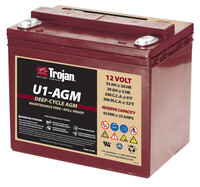
Trojan Battery Company and Palladium Energy have announced a research alliance, promising to bring a new wave of lithium ion-based batteries to the market.
Trojan Battery is among the largest producers of deep-cycle lead acid batteries in the world, and Palladium Energy is well regarded for engineering lithium-based batteries. The... Read more
News Brief

By Evan DickThe U.S. Environmental Protection Agency (EPA) has released monitoring data showing that 21 areas in 14 states and Puerto Rico still do not meet the National Ambient Air Quality Standards for lead established in 2008.
While the data show the majority of the country is in compliance, locations that don’t meet the standard... Read more
News Brief

By Evan DickThe International Facilities Management Association (IFMA) has launched an online survey management system called BEX that will house the association’s benchmarking surveys and results. The new system makes it easier to participate in the surveys and to access results. It allows facility professionals to update, filter, and search... Read more
News Brief
NSF International has published the first American National Standard for water reuse systems. NSF/ANSI 350, Onsite Residential and Commercial Reuse Treatment Systems, will help ensure that systems designed to treat wastewater for non-potable onsite reuse meet water-quality requirements for the reduction of chemical and microbiological... Read more
News Analysis
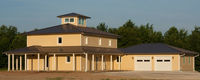
The Passive House Institute U.S. (PHIUS) will no longer give its blessing to projects incorporating spray polyurethane foam insulation (SPF) that uses blowing agents with high contribution to global warming, according to executive director Katrin Klingenberg.
“It does not make any sense at all to use them if one of the major overarching... Read more
Product Review
I can remember 30 years ago receiving samples of the latest, greatest phase-change material. As I recall, it was a eutectic salt product that came packaged in sealed, black cans, ready for installation in passive solar buildings. While a great idea, these products were expensive and didn’t hold up well. Phase Change Energy Solutions appears to... Read more
Blog Post
Dear friends,
We know that the economic climate in 2011 has continued to be challenging, so we're all the more grateful and flattered that so many of you continue to rely on our tools and resources for insight, guidance, and community.
We're especially honored by the growth we've seen in enterprise licenses to firms and... Read more
Blog Post
Looking for ways to meet your "prescriptive" continuing education (CE) requirements with the LEED Credential Maintenance Program (CMP)? Here at BuildingGreen.com we have long offered articles to help you earn your credits--articles that... Read more
Blog Post
Anyone who was in Vermont in late August of this year and witnessed the raging floodwaters from Hurricane Irene and the havoc they wreaked, gained an intimate view... Read more
Blog Post
For some fun around the holidays, GreenSpec is holding a virtual "open house"--giving you a sneak peek at some cool new products we're reviewing, and our first impressions. We'd like to hear what you think, so please read our first impressions below and then take the quick survey. Happy holidays! Update: Thank you for your feedback. We have... Read more
News Brief

The U.S. Congress is calling a halt to certain military spending on green building in a newly passed defense authorization bill (H.R. 1540). The bill prohibits use of Department of Defense funds to achieve LEED Gold or Platinum, with waivers possible if a cost-benefit analysis for the project can demonstrate payback. Exceptions may... Read more
Blog Post
With the holiday season upon us (yet no snow on the ground here in Vermont since the freak October storm that knocked out power across the Northeast) and the Durban climate deal still largely symbolic, I thought some... Read more
Blog Post
People living off the grid using photovoltaics (PV) or other renewable energy to generate power typically depend on maintaining banks of lead-acid batteries and carefully managing the amount of energy they store and use as... Read more
Blog Post

Climate scientists tell us that we can expect more of these sorts of problems in the years and decades ahead.
During my six-week bike ride last spring, I covered nearly 2,000 miles, most of it over land that hadn't seen a drop of rain since the previous fall; some of those areas--mostly in Texas--still haven't gotten significant precipitation. Farmers in... Read more
Blog Post
After presenting this webcast this week to a full house, Alex Wilson is bringing it back next week with an encore performance!
To help professionals make the best design and material choices for their specific projects (and... Read more
News Brief
The Passive House Institute U.S. (PHIUS) will no longer give its blessing to projects incorporating spray polyurethane foam insulation (SPF) that uses blowing agents with high contribution to global warming, according to executive director Katrin Klingenberg.
“It does not make any sense at all to use them if one of the major... Read more


