
News Brief
The U.S. Green Building Council’s success with a green building rating system for commercial buildings has led to the formation of a task force to develop a residential LEED system. Approximately 40 experts in energy-efficiency, indoor air quality, materials, and sustainable land development recently met at the Johnson Foundation’s Wingspread... Read more
News Brief
BP Solarex, the subsidiary company formed when British Petroleum acquired Solarex Corporation, is now
BP Solar. This change is part of a new corporate look for BP (no longer BP Amoco), which includes a logo with interlocking green and yellow sunbursts and the catchwords “beyond petroleum.” According to a company press release, “The... Read more
News Brief
A study commissioned by the City of Portland, Oregon attempts to quantify the impacts of applying the LEED Rating System to city buildings. Allen Lee and his associates at XENERGY, Inc. examined three relatively new buildings and found that they could have achieved 32 LEED points (the minimum number required in the LEED 2.0 ballot version) with... Read more
News Brief
According to statistics from the American Public Transportation Association, reported in the July-August issue of New Urban News, public transportation ridership is up. In 1999, Americans took 9 billion trips on mass transit—a level not seen since 1960 and almost 40% above the low of 6.5 billion trips in 1973. The 1999 level is still far lower... Read more
News Brief
by Sandra F. Mendler, AIA and William Odell, AIA. John Wiley & Sons, New York, 2000. Hardcover, 400 pages, $69.95
When we reviewed HOK’s Sustainable Design Guide in 1998 (EBN Vol. 7, No. 5), our only complaint was that it lacked a pretty cover. Now that it has been updated, expanded, and published by a mainstream publisher, The HOK... Read more
News Brief
A British mortgage lender, Norwich and Peterborough Building Society (N&P), has teamed up with the environmental group Future Forests to make its green mortgage “climate neutral.” Homes must have a Standard Assessment Procedure rating of 80 or greater to qualify (80 out of 100 in an energy rating program similar to our HERS). N&P,... Read more
News Brief
In response to ongoing environmental concerns with refrigerants such as HCFCs and HFCs, a naturally occurring fluid may be making a comeback:
carbon dioxide. Although CO2 is the principal greenhouse gas, compared to most other refrigerants on a per-molecule basis it is extremely benign. According to the July 14, 2000 issue of... Read more
News Analysis
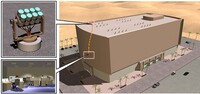
The next-generation daylight-driven fiber-optic fixture is not yet on the market, but it is already garnering honors, including a “Groundbreaking Technology” award fromBuilder magazine. Similar in function to the Himawari (see
EBN
Vol. 8, No. 10), this new device is designed to be much more... Read more
Op-Ed
With reference to your June 2000 (EBN Vol. 9, No. 6) editorial entitled “Perspective: Green Building Tax Credits? No, Thanks!” you are entirely correct—the last time the federal government offered tax credits for solar energy applications, they made a monumental mistake, one that almost destroyed the solar industry... Read more
News Brief
On June 30, 2000 two dozen representatives of various design-related organizations (joined by deans from some of the nation’s leading architecture schools via video teleconference) met at the World Resources Institute in Washington, D.C. to discuss
sustainability in architectural education. The event was organized by The American... Read more
News Analysis
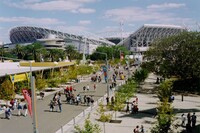
In the early 1990s, Greenpeace International head Paul Gilding participated with environmental consulting... Read more
Op-Ed
I am an architect interested in environmental issues.
EBN is always my first source in searching for information about environmental products because of its clear summaries and comparisons. Your “Recycled Synthetic Roofing Shingles” product review (
Vol. 9, No. 5 – May 2000) raises two... Read more
News Brief
by Ken Yeang, 1999. Prestel Verlag, Munich. Paperback, 304 pages, $29.95
The challenges presented by Ken Yeang inThe Green Skyscraper start right with the cover shot—an arresting model of the Tokyo Nara Building revealing several floors of skyscraper devoted to gardens and a soft, sculptured form—and... Read more
Product Review
The TranStar... Read more
Case Study
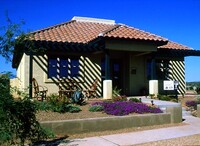
EBN conducted an... Read more
Product Review

News Analysis
On June 12, 2000 the National Science Foundation released its
National Assessment Synthesis Report for a 60-day comment period. This report is the culmination of a research program initiated in 1990 by the Global Change Research Act. Included in it are the results of... Read more
Feature

Op-Ed
I’ve been harboring this illusion that once the doubts were adequately addressed, the world would wake up and take real action to... Read more
News Brief
, President and CEO of Collins Companies, has announced plans to retire this fall. Under Quinn’s leadership, Collins became national leaders in Forest Stewardship Council-accredited certification of their forest lands, which include areas in northern California, southern Oregon, and (as Kane Hardwood) Pennsylvania. Quinn will be... Read more


