
News Brief
Steven Winter Associates, Inc., of Norwalk, Connecticut, has been awarded a grant through the U.S. Department of Energy’s 1995 Small Business Innovative Research program to design advanced modular townhouses for urban infill sites. The company has been charged with designing townhouses that employ renewable energy and energy conservation... Read more
Product Review
... Read more
News Analysis
How can we be confident that a particular manufacturer or company is committed to environmental improvements? There are certification systems for specific environmental claims, or for particular products, but as the best management practices and environmental goals evolve, how do we know that the... Read more
News Brief
Environmental Building Consultants, 312 A Jefferson Ave., Cheltenham, PA 19012-2021; 215/663-1611, 215/663-1637 (fax), ehouse@omni.voicenet.com (e-mail); $50 for PC or Macintosh diskette containing database and software to run it.
This initial release of an IAQ products database contains about 450 listings... Read more
Product Review
For years polystyrene has been just about the only game in town for exterior foundation insulation. The problem is that
extruded polystyrene—the type of polystyrene most commonly used on foundations—is produced with HCFCs that deplete ozone, and
all polystyrene (both extruded and... Read more
Op-Ed
I read your article “Steel or Wood Framing, Which Way Should We Go?” in the Volume 3, Number 4 issue of EBN with considerable interest and anticipation, but did not see a sufficient discussion on the major reason for building differently with steel studs: the problem of mold growth at the thermal bridge over... Read more
News Brief
Even as environmental regulations are being widely threatened by Congressional initiatives, a broad new effort to protect the nation’s water is now underway. Sixteen months after it first convened, the National Forum on Nonpoint Source Pollution has released a report that urges new approaches for cleaning up water pollution. The general thrust... Read more
News Analysis
Efforts to establish a National Institute for the Environment (NIE) are proceeding in Washington, and they may even pick up speed as a way to consolidate environmental research efforts that are being handled through many different agencies. A bill to establish the Institute is expected to be introduced in... Read more
News Brief
A fire destroyed 5 million pounds of recycled PET in a warehouse belonging to Image Industries, Inc., makers of Image Carpet, according to the July 31 issue of
Plastics News. No one was injured in the blaze, and the origin is unknown. The burned material represents only a small portion of the company’s stock, and it was insured.
... Read moreNews Analysis
Fluorescent lighting was introduced in the 1920s as a more energy-efficient alternative to incandescent lighting. Over the past two decades, technology improvements have gradually increased the acceptability of fluorescent lamps for many more applications. Light quality was dramatically improved with triphosphor... Read more
News Brief
Janet Marinelli and Paul Bierman-Lytle. Little, Brown and Company, Boston, 1995. 272 pages. Hardcover $45; paperback $21.95.
Brand new from one of the pioneers in low-toxic, environmental architecture and one of the field’s most eloquent writers,
Your Natural Home is a superb resource for... Read more
Product Review

We first learned about Icynene at the First Annual Conference on Alternatives to CFCs and Halons in November 1990. At that time it was a tiny Canadian company (founded in 1986) with a type of foam insulation that had no harmful effects on the Earth’s stratospheric ozone layer. Company founder... Read more
News Brief
A four-month-old initiative within the U.S. Postal Service aims to revise design guidelines and material specifications to improve environmental performance. The Washington, D.C. office of HOK, Inc. was recently retained to help develop the proposed changes, which will be presented to senior Postal Service staff for review in late October. To... Read more
News Brief
The Wild Lawn Handbook: Alternatives to the Traditional Front LawnStevie Daniels, 1995. Macmillan, 15 Columbus Circle, New York, NY 10023; 800/858-7674. Hardcover, 223 pages, $20 ($27.95 Canada).
Written for homeowners who are questioning the ecological and financial cost of maintaining a traditional lawn... Read more
News Analysis
Just as certain segments of the HVAC and insulation industries have begun a widespread shift to the ozone-safe, chlorine-free hydrofluorocarbon HFC-134a, new environmental concerns have been raised about this compound. Researchers at the Cambridge, Massachusetts firm Atmospheric and Environmental Research suggested... Read more
Case Study
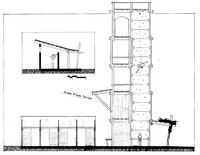
NOLS had established a base for sea kayaking and other water activities on the Baja California peninsula, in... Read more
News Brief
The Northeast Sustainable Energy Association (NESEA) has announced a design competition for completed buildings north of 40 degrees north latitude. Judging criteria include energy and resource efficiency and bioregional appropriateness. There is no fee for submissions, which must be received by December 31, 1995. Contact NESEA at 413/774-6051,... Read more
Op-Ed
Learning from the Past
Easter Island has long mystified archaeologists. When the tiny, remote island, 2,000 miles (3,200 km) from the nearest continent, was “discovered” on Easter day in 1722, some 200 mammoth stone statues (moai) stood on the island like sentries. But there was no obvious means by which the islanders could... Read more
News Brief
The U.S. Department of Energy has published proposed voluntary guidelines for rating home energy performance. The guidelines were drafted by the Home Energy Rating Systems (HERS) Council for DOE and are designed to encourage uniformity among the various methods used to rate the energy efficiency of both new and existing residential buildings.... Read more
News Analysis
2 Sink?
It is well known that the manufacture of portland cement results in significant emissions of carbon dioxide (CO2), a greenhouse gas. New research is showing that much of the released CO2 could be reabsorbed by concrete through carefully controlled curing conditions.The manufacture of portland cement... Read more


