
Blog Post
New to Green Building? Try GBA.
Recently, I broke one of my long-standing rules and blogged about something BuildingGreen-related at my own blog. My Costanzian fears were indeed warranted, and I've been egged on to cross-post it to the Live blog. Here she is, warts and all: my unvarnished opinion on the very best parts of the BuildingGreen product GreenBuildingAdvisor.com./BF... Read more
Blog Post
Twice each month, BuildingGreen publishes an email news bulletin with current news and product information briefs. Sign up here — it's free. We will never share or sell your email address, and you may unsubscribe at any time.
Read the current bulletinBlog Post
Blog Post
Blog Post
Blog Post
Twenty-five years ago, if you had predicted that I might be suggesting that electric water heating could be a good option, I'd have asked what you were smoking. I agreed with the argument that it's dumb to use such a high-grade form of energy (electricity) for such a low-grade energy need--a need that can... Read more
Blog Post
Blog Post
Blog Post
Continuing our series on water heating, this week we'll look at two options for heating water with the home's central boiler. First some terminology: boilers heat water or produce steam for distribution in baseboard units or steam radiators, while furnaces heat air for... Read more
Blog Post
Blog Post
Twice each month, BuildingGreen publishes an email news bulletin with current news and product information briefs. Sign up here — it's free. We will never share or sell your email address, and you may unsubscribe at any time.
Read the current bulletinBlog Post
Last week I suggested some ways to reduce your hot water use. This is almost always the easiest way to save energy with water heating--it's the "low-hanging fruit" to be sure. Over the next few weeks, I'll get into water heating options. To start, let's look at the differences between "storage" and "tankless" water heaters.
The vast... Read more
Blog Post
On Friday, May 19, the Milwaukee Journal-Sentinal published a damning story based on the leaked minutes of a private strategy meeting of food-packaging executives and chemical industry lobbyists that took place in Washington DC the previous day. The story's authors spoke with the chairman of the North American Metal Packaging Alliance (NAMPA),... Read more
News Brief
BuildingGreen is making its unofficial LEED for New Construction Accredited Professional (LEED AP) practice exam available to BuildingGreen Suite members hoping to take the exam before it changes on June 30, 2009. This practice test is unforgiving, which means if you pass it, you’re very likely to sail through the real thing! If you have... Read more
Case Study
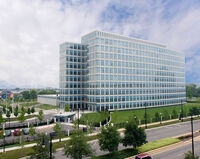
The FBI’s Chicago regional office recently became the world’s first building to be certified Platinum by the U.S. Green Building Council’s (USGBC) LEED for Existing Buildings: Operations & Maintenance (LEED-EBOM) rating system, earning 74 of 92 possible points.
The 430,000 ft2 (40,000 m2) building, which opened in 2006, is just the... Read more
News Brief
Florida developer Kitson & Partners has announced plans to build a new city powered entirely by solar energy. The proposed development, Babcock Ranch, would include 19,500 homes on 17,000 acres (6,900 ha)—much of which would remain protected green space—northeast of Fort Myers, Florida. A 75-megawatt photovoltaic plant, the largest in the... Read more
News Brief
Like a growing number of municipalities that are concerned about algae growth in freshwater reservoirs, Westchester County, north of New York City, has banned all phosphate-based fertilizers, effective January 2011. The law also imposes restrictions on all fertilizer use between April and December, effective in 2009, and prohibits most use of... Read more
News Analysis
Cutting carbon, saving money, and creating green jobs were the leading themes in April 2009 announcements from Los Angeles, New York City, and Seattle. Each city plans to use federal stimulus funds for building retrofit programs.
The Los Angeles City Council unanimously approved an ordinance requiring that all city-owned buildings over 7,500... Read moreNews Brief
The factory in Electra, Texas, where Agriboard Industries has made straw-core structural insulated panels (SIPs) since 2000 (see
EBN July 2002) was destroyed by a wildfire on April 9, 2009, when strong, shifting winds burned 4,500 acres (1,800 ha) in Wichita County. The loss is estimated at $20 million. The company is now operating in... Read more
Feature
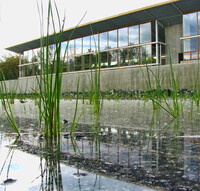
It’s the year 2060. A developer has gathered a group of designers to answer a request for proposals for a 250,000 ft2 building in Portland, Oregon, built entirely with natural materials and without mechanical systems, plumbing, or electric lighting. The developer represents a company that will profit from the ecosystem services the building... Read more


