
News Brief
Study Finds Quick Payback for LEED Investments
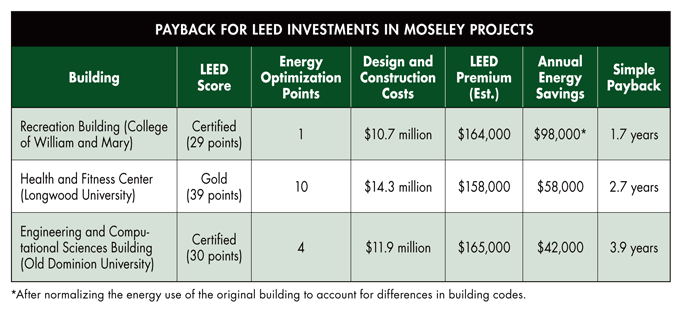
Managing principal George Nasis, AIA, and director of environmental research Bryna Dunn, Assoc. AIA, both of Moseley Architects in Richmond, Virginia, studied three of the firm’s LEED-certified institutional buildings and found paybacks for green features of under four years based on energy savings alone. Nasis and Dunn monitored energy use in the buildings and compared it to the energy use of a baseline building meeting minimum ASHRAE 90.1 requirements. Using the firm’s average LEED premium of 1.5% for design and construction costs, they calculated simple payback figures of 1.7 years, 2.7 years, and 3.9 years (see table). According to Dunn, calculating the baseline figures was far from easy, especially for the renovation and expansion of a recreation building at William and Mary College, which had been built to earlier codes with different requirements for ventilation, lighting, and other energy-using features.
Managing principal George Nasis, AIA, and director of environmental research Bryna Dunn, Assoc. AIA, both of Moseley Architects in Richmond, Virginia, studied three of the firm’s LEED-certified institutional buildings and found paybacks for green features of under four years based on energy savings alone. Nasis and Dunn monitored energy use in the buildings and compared it to the energy use of a baseline building meeting minimum ASHRAE 90.1 requirements. Using the firm’s average LEED premium of 1.5% for design and construction costs, they calculated simple payback figures of 1.7 years, 2.7 years, and 3.9 years (see table). According to Dunn, calculating the baseline figures was far from easy, especially for the renovation and expansion of a recreation building at William and Mary College, which had been built to earlier codes with different requirements for ventilation, lighting, and other energy-using features.
Published October 29, 2008 Permalink Citation
Wendt, A. (2008, October 29). Study Finds Quick Payback for LEED Investments. Retrieved from https://www.buildinggreen.com/newsbrief/study-finds-quick-payback-leed-investments



Add new comment
To post a comment, you need to register for a BuildingGreen Basic membership (free) or login to your existing profile.