Tempe, Arizona, is not what most people would describe as a walkable city. With temperatures hovering over 100 degrees for at least four months of the year, it makes sense that most locals prefer to move quickly between the air-conditioned comfort of their homes, cars and whatever destination they may be headed to. And Tempe isn’t alone in its reliance on cars. This pattern of usage is common throughout the United States, where fewer than 10 percent of all households are car free, and most of us can’t imagine life without the convenience of our vehicles.
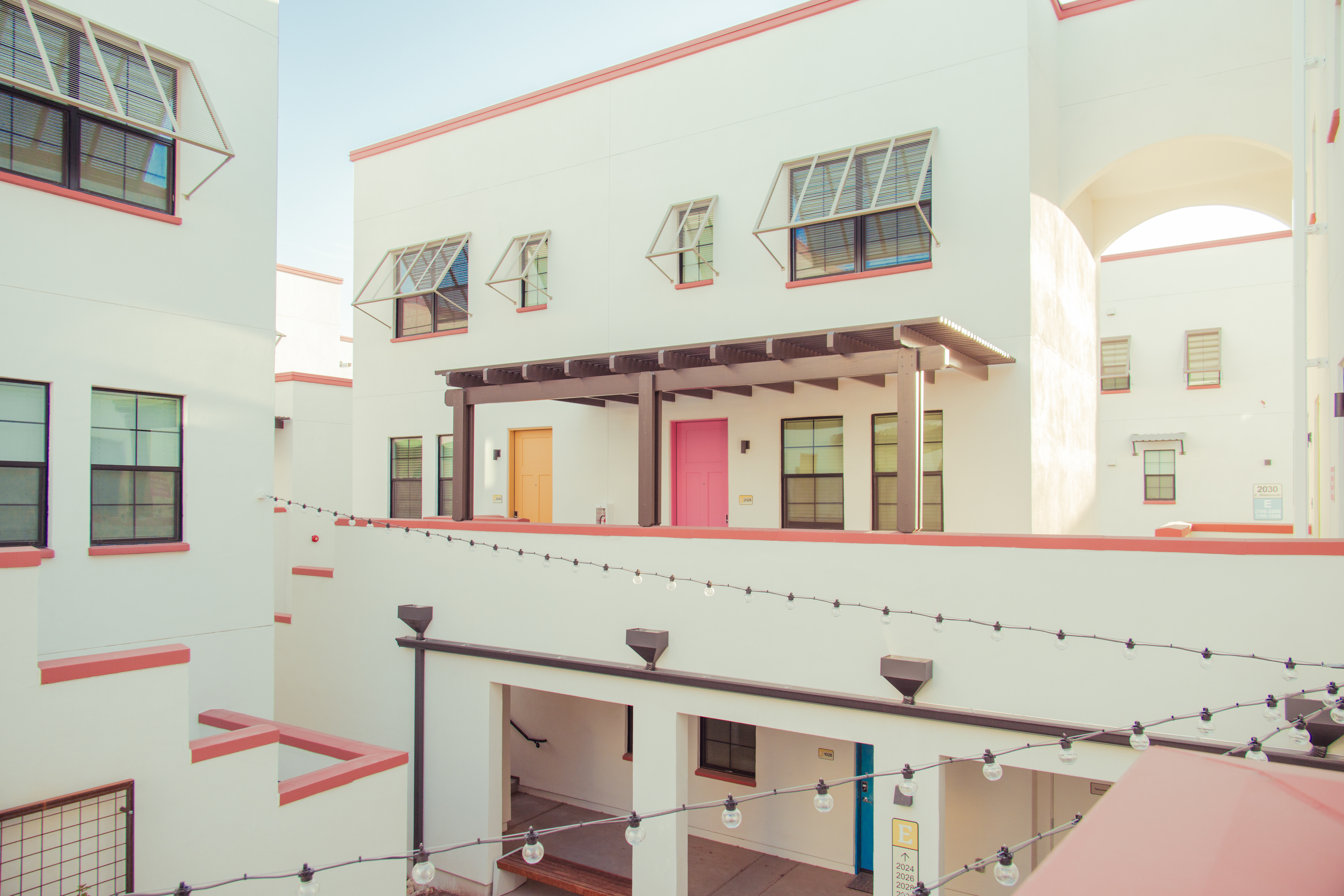
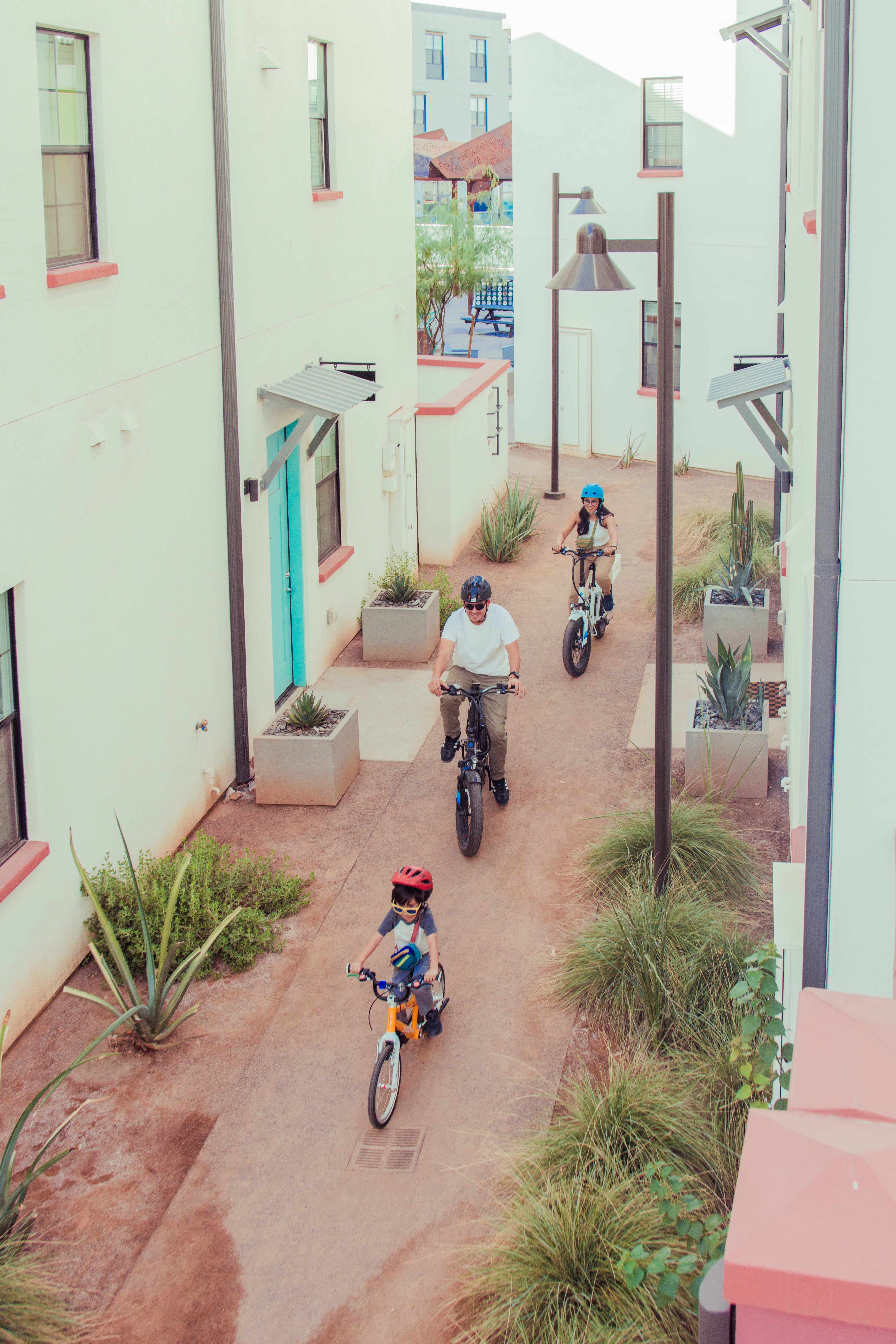
But Tempe is now home to a bold new experiment in urban planning: a development called Culdesac. Designed to be the first walkable community of its kind, Culdesac is built to be entirely car free. Located close to a light rail station, the development offers free electric bikes and low-cost electric car rentals to residents, who are otherwise expected to live without the use of conventional vehicles. As proof of their convictions, the community was built without a parking lot.
Historically, development has been closely linked to the idea of parking, and the construction of parking spaces. “If you have a five- or six-story building, normally you’d have to build two spaces per apartment of required parking,” says Matt Gertz, a former Los Angeles city planner. “Which then means that you have to go subterranean, which astronomically increases the cost of development.” These costs, of course, are passed onto residents in the form of higher rent, and the less tangible costs of incentivizing car-centric behavior, including health impacts and a lowered quality of life.
At Culdesac, they’re trying something different. “Because it’s really just a mega block in a car-dependent region, my expectations were low,” says Dave Snyder, a sustainable transportation expert who has spent time organizing community biking events at Culdesac. “But the design is brilliant. It evoked memories of pedestrian-oriented medieval towns. They’ve really done an amazing job of adding amenities and other social spaces that make it feel like a neighborhood.”
Residents have reported that Culdesac felt more communal than other places they’d lived in the Tempe area. The streets are narrow, although they are able to accommodate emergency vehicles, and designed so that the buildings cast shadows that protect walkers and bikers from the heat. Low rents and high foot traffic draw businesses, and the community is even home to a weekly night market. Despite growing pains like finding and retaining the right retail aspects for the residents, the overwhelming consensus among them is that the neighborhood feels welcoming, and that they feel at ease.
These experiences aligned with what the experts tell us about car-free spaces. Study after study shows that car-free cities offer significant benefits to their residents, including improved public health, thanks to cleaner air and increased physical activity, reduced environmental impact due to lower levels of exhaust and the particulate matter created by cars, enhanced urban livability and stronger social cohesion and community connection.
Still, in most of the United States, the ability to get through the day without using a car remains a deviation from the norm. With only a small percentage of our cities boasting public transportation networks robust enough to make car usage unnecessary, it’s clear that we’ll need to make considerable changes to make a less car intensive lifestyle accessible to the average American. But the truth is, these changes might be less expensive and complex than many assume. In fact, a reduced car usage lifestyle might be more accessible than one might think.