
Good open comment. For the big picture on toxins working up the food chain (biomagnification), read Our Stolen Future.
Blog Post
Redux: What do you do when a good product has bad stuff in it?
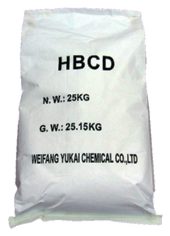
Another mighty important subject. As noted in the Environmental Building News article, Insulation: Thermal Performance is Just the Beginning, "All foam plastic insulation materials rely on flame retardants to meet fire-resistance standards. EPS and XPS are produced using the brominated flame retardant HBCD (hexabromocyclododecane) at concentrations of 0.5-2.0% by weight. HBCD is not the focus of as much attention as another class of brominated flame retardants (PBDEs), but some evidence indicates that it is more bioaccumulative than PBDEs and just as likely to be toxic to humans." It then refers to another EBN article, Flame Retardants Under Fire, which goes into additional detail about HBCD: "Hexabromocyclododecane (HBCD) — the third most widely used brominated flame retardant in the world and the BFR of choice for polystyrene foam — may actually be more prone to bioaccumulation than PBDEs. HBCD is just as likely to be toxic to humans, according to an October 9, 2003 article in the American Chemical Society's journal, Environmental Science and Technology. The Chemical Stakeholders Forum in the U.K. determined in March 2003 that HBCD is persistent, bioaccumulative, and toxic. The European Union is carrying out a risk assessment of HBCD, suspecting the compound of being an endocrine disruptor by impairing thyroid function." (It's interesting to note that Europe, having taken steps to ban penta and octa PBDEs, was in 2001 using more HBCD than the Americas, Asia, and the rest of the world together. I don't know if that has changed.) The problem is on our radar. The real difficulty comes in weighing the overall consequences of using a product with flaws versus not using it (when an equally viable alternative doesn't exist). Foamed glass insulation seems like it could be a great alternative for high-moisture applications, if only it were affordably — or even just readily — available in the Americas. Canadian manufacturer Roxul has mineral wool products that could do the trick, but they're almost impossible to get in the US. If I'm missing some obvious solution, I hope somebody will speak up. There was a timely conversation during the most recent GreenSpec review meeting. We were talking about glazed curtain walls, which are basically an energy catastrophe when weighed against other design options. (So why are all these big green high-rise projects being specified with glazed curtain walls?) The question came up: Even though GreenSpec only lists the highest-performing glazed curtain walls that set the bar for energy efficiency, should it be listing any of them at all? Discussion ensued. What is GreenSpec for, and how does it support the BuildingGreen mission of transforming the building industry? Should we put our energies toward supporting the bleeding edge, or toward facilitating change in the larger (perhaps less committed) green building community? The answer was that we need to continue trying to do both. It ain't easy. GreenSpec is intended to be a best-of-the-best directory, a starting point for further research — that's why each listing is accompanied by links to related information in BuildingGreen Suite, like the two articles I cited above. We've also been working behind the scenes to beef up the section introductions with deeper and more concise information about categories of products, and thinking about how to make that too-often-overlooked bigger picture more visible and accessible. Conversations like this are a definite help in that effort. So, back to slab edge insulation. Uninsulated slab edges can account for more than 10% of a home's heat loss. This is particularly exacerbated when "green-friendly" radiant-floor heat is used — the Radiant Panel Association says, "Slab edge insulation is a given. No one should be installing a radiantly heated slab, basement or on grade, without this important piece of insulation." (Why did I put "green-friendly" in quotes when talking about radiant floor heating? See the article Radiant-Floor Heating: When It Does — and Doesn't — Make Sense.) Uninsulated slab edges are a problem requiring a solution. This particular product, despite its incorporation of undeniably nasty materials like PVC and HBCD, can prevent significantly more toxic emissions and environmental degradation over their service lives by reducing energy consumption than if they weren't used. Deciding which side of the coin represents the worse consequence is no easy feat — this one's almost a lose-lose situation. As the article Building Materials: What Makes a Product Green? says, "The Holy Grail of the green building movement would be a database in which the life-cycle environmental impacts of different materials were fully quantified and the impacts weighted so that a designer could easily see which material was better from an environmental standpoint. [...] Very often, we are comparing apples to oranges. We are trying to weigh, for example, the resource-extraction impacts of one product with the manufacturing impacts of another, and the indoor-air-quality impacts of a third." On a note related to HBCD, the foam cushioning used in some furniture and lots of car seats can be up to 30% HBCDs (compared to 0.5-2.0% in rigid insulation). Especially as the foam ages and it becomes increasingly friable, HBCD-laden dust can be released directly into the room's air as people sit down, get comfy, stand up. It's even more acute when the fabric is ripped. There's also foam carpet padding to consider — the dust works its way up through the carpet when it gets walked on, thrown into the air when vacuumed... Which isn't meant to be an excuse. Just one more thing to think about. Here's another one that gets into PVC and flame retardants, if you'd like — Wire and Cable: Untangling Complex Environmental Issues. Thanks for your important note, and do keep up the good work. Please feel free to continue this dialog and to point out other concerns as you come across them.For more about HBCD, see the Environmental Health Perspectives article, Brominated Flame Retardants: Cause for Concern? We're always willing to entertain doubts. Did we go too far in including this product?
Published March 2, 2009 Permalink Citation
(2009, March 2). Redux: What do you do when a good product has bad stuff in it?. Retrieved from https://www.buildinggreen.com/blog/redux-what-do-you-do-when-good-product-has-bad-stuff-it
Comments
Dear Mr. Wilson and Editors o

Dear Mr. Wilson and Editors of Greenspec,
I read with interest the recent back and forth discussion on the dangers of brominated fire retardants and the appropriate level of publicity to give them in the pages of EBN.
I would second Cate Ledger's point that the issue needs the broadest exposure possible, and that EBN has perhaps a unique voice in raising the issue, due to the trust that the green building industry puts in the products recommended in it's pages.
I have been frustrated on a couple of fronts in eliminating these products from my practice as an interior designer. First of all it is difficult to know what products contain brominated fire retardants. The vendor often does not know due to the Byzantine nature of sourcing upholstered goods with includes many third party vendors, literally thousands of potential fabric SKU's, and multiple components in furnishings products.
Secondly, as much as I would like to offer my clients an option in upholstered goods that avoids these bio-accumulative chemicals, often there is is no option available that has the price and visual characteristics that they desire. In my practice, color is a performance characteristic, and thus, much like the example of rigid insulation, I end up selecting products that might (or might not) contain fire retardants, because they match the performance requirements of the client.
And finally, as a contributing factor to both of the above problems, there is very little awareness of the fact that brominated fire retardants might be a health risk, no one has heard of them. I find putting a tremendous amount of effort into educating the individual client about the issue, and then cannot even offer them a broad spectrum of solutions because the lack of alternative products for new upholstery.
I bring up my struggles with this issue, even though it is outside of the general subject of building materials, because these difficulties have led me to a single conclusion. I cannot solve this issue within my practice. My only hope of being able to spec upholstered furniture and fabrics, and have the sure knowledge that they are healthy for my client, is to work to raise awareness of the issue to the point that the industry as a whole changes, through pressure from specifiers or legislation.
I strongly support the EBN editorial stance that PDBE's should be banned, as outlined in Mr. Wilson's 2004 article. My only frustration is that change is so slow.
Thank you for your continuing exploration of this issue.
Yours,
Kirsten A Flynn
Sustainable Home
Interior Design
Mark, Thank you for following
Mark,
Thank you for following up (March 2, 2009) in such detail on my comment about plastic insulations and halogenated flame retardants. As you point out, EBN has really been a leader in breaking this story and pointing out the extreme seriousness of the problem. What I see is a dis-connect between the research/news arm of the organization and the product recommendation arm.
When Alex Wilson broke the excellent story in 2004 about halogenated flame retardants in building materials and their significant health and environmental implications, EBN’s editors called for a ban on PBDEs and other halogenated flame retardants such as HCBD that could not be proven to be safe. They asked architects and builders to look for alternative methods of building to avoid products containing these chemicals until/unless they could be proven safe or safe substitutes could be found.
This was only the second time EBN had taken such a strong stand—the first time was advocating for a ban on the wood preservative CCA.
I see very little of this concern that is in the editorial department transferring to the Green Spec department. If EBN is calling for a ban on dangerous Halogenated Flame Retardants, why isn’t this sense of alarm showing up in the Green Spec? It is very hard to even find mention that plastic insulations contain Halogenated Flame Retardants, let alone mention of EBN’s high level of concern, in any of your discussions about individual insulation products. You say that there are links that allow individuals to visit more in depth articles, but there are none linked to plastic insulations.
I and many, many of my colleagues in the green architecture community really rely on EBN’s Green Spec to provide us with serious information and guidance on green building products.
I understand your concern about recommending how we should build or what kind of buildings we should make in the Green Spec. However, if you don’t point out the dangers EBN has discovered associated with a given product, it is very likely that many of us won’t find out—either because we lack the time to dig deeper or completely lack the institutional memory to know there was a problem reported on the subject several years ago. Without information, we cannot make informed decisions. At least a hyperlink referring to older stories would be helpful. A brief summary of the problems would be better.
I am particularly troubled with this lack of information because I seen a tremendous increase in the use of plastic insulations in response to the need to improve energy performance. Without awareness of the many environmental and toxicity issues associated with plastic insulations, there is really no reason to look to more environmentally benign alternatives, such as cellulose insulation when they will do the job just as well, or to consider designing in a way to obviate the need for plastic insulation. Again, without information, we cannot make informed decisions.
I support EBN’s “Beyond a Ban of PBDEs.” It is copied below.
Again, thank you for the leadership and incredible expertise that EBN brings to the green building community.
Sincerely,
Cate Leger
Leger Wanaselja Architecture
From the Editors from Environmental Building News
June 1, 2004
Beyond a Ban of PBDEs
As explained in our feature article this month, certain brominated flame retardants, especially PBDEs, are being shown by scientists to pose significant risks to our health and the environment. Indeed, the arguments for banning PBDEs are so clear that EBN calls for an immediate ban of all PBDEs, including the widely used deca form. This is only the second time EBN has called for the outright ban of a particular product; the first was in 1997, when we argued for a ban of the wood preservative CCA (see EBN Vol. 6, No. 3).
Beyond a ban of PBDEs, EBN calls for the following:
• Comprehensive testing of all flame retardants relative to health and environmental safety;
• Additional bans of other halogenated flame retardants that cannot be proven, beyond a reasonable doubt, to be safe; and
• A voluntary transition to flame retardants less likely to be hazardous or to materials that do not require flame retardants.
Inherent in these recommendations is a shift in the burden of proof in demonstrating risk of chemicals. It should be up to manufacturers to demonstrate a product’s safety, rather than up to regulators or health activists to prove undue risk. The Toxic Substances Control Act of 1974 should be revised to reflect this shift in responsibilities, and the U.S. should support international efforts, such as the European Union’s REACH (Registration, Evaluation and Authorization of Chemicals) process for managment of chemicals.
Our recommendations regarding flame retardants will often necessitate going beyond simple chemical substitutions. We are suggesting a different way of thinking about which products are appropriate for which building applications, how those products should be installed to ensure fire safety, and what additional protective measures, such as universal sprinklering in buildings, may be required to provide the safety consumers deserve. If inherently flammable building materials, such as plastics and wood, cannot be made reasonably flame resistant with safe chemicals, then these materials should be used only in locations and applications where flame resistance is not required or where protective fire barriers or sprinklers can impart the necessary safety. This might include enclosing all wiring within metal conduit, for example, or protecting foam insulation with more fire-resistant barriers. For certain applications, it may be time to stop using inherently flammable materials altogether—replacing certain plastics, for example, with inherently fire-resistant cementitious materials, metals, and ceramics.
These shifts will be dramatic, they will be strenuously resisted by some (especially those in the plastics industry), and they will take time and money. It will take ingenuity to achieve these changes without adversely affecting safety, energy performance, durability, and affordability—all critically important goals. But this evolution will also create tremendous opportunities for new product development, with billions of dollars to be made by smart companies. For example, the technology exists today to produce foamed-mineral beadboard insulation that could replace plastic foam insulation. As for the costs of transitioning away from hazardous flame retardants, they might be far lower than those resulting from putting an ever-more-complex alphabet soup of new chemicals into our buildings, our bodies, and our environment.
– Alex Wilson
Since both PBDEs and HBCD are
Since both PBDEs and HBCD are bioaccumulating, perhaps it might be useful to compare them with DDT, the bioaccumulating properties and consequences of which are well-known (although DDT still has some good insecticide properties going for it for use in the 3rd World).
New wrinkle on this topic - h
New wrinkle on this topic - http://www.buildinggreen.com/live/index.cfm/2009/4/3/Something-Bioaccumu...



Add new comment
To post a comment, you need to register for a BuildingGreen Basic membership (free) or login to your existing profile.