
Blog Post
In Response: "4 Years + 15 Million Dollars = Old News, No Actual Solutions"
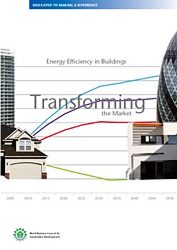
The WBCSD and EEB project team members are very interested in receiving constructive feedback on their work, so we appreciate individuals such as Mr. Piepkorn taking a close look at the results, analysis, and recommendations we presented in our recent report, Energy Efficiency in Buildings: Transforming the Market. Fundamentally, Mr. Piepkorn is looking for more specifics on how the tools and approaches outlined in our recommendations can be applied to achieve large-scale change in the building sector. Undoubtedly, many others in the green building field share this desire for some well-defined answers. Unfortunately, finding a true mechanism to foster the necessary market response remains elusive. Our report talks in considerable detail about the barriers to energy efficiency in buildings and what should be done to remove them. Ultimately, however, there is a complex process that needs to be exercised to assemble the political and financial will behind the market forces to drive change. The EEB project, in a credible way and backed by an organization of 200 major international corporations, makes a powerful point that without increased attention to this process to drive change, the "interesting models" to scale the market response Mr. Piepkorn implicitly seeks will not come to fruition. Education is, indeed, the first step. Since we launched this report on April 27, more than 140 separate stories communicating this important point have appeared in newspapers, on websites and blogs such as this, in trade journals, and on TV and radio broadcasts. We estimate that our message has been seen by hundreds of millions of people in more than 20 countries. Although raising awareness is important, as Mr Piepkorn rightly acknowledges, we will continue to do everything we can to get past this stage quickly so we can move on to the real objective: action.
The world needs genuine action coordinated among the building sector stakeholders, stimulated around the six principal recommendations we've outlined. We have our own plans in this respect. Under the EEB project manifesto that will be issued later this year, WBCSD member companies will commit themselves to making significant energy efficiency improvements in their respective building stocks, which will show a degree of leadership on a scale not seen before. We expect this will spur other businesses to take similar action. With regard to the to the contention that "not one of the points raised is a new idea," we had no need to reinvent the wheel when plenty of promising ideas have been proposed or are starting to be implemented on building energy efficiency. Our approach, however, is unique and powerful in several respects: (1) it quantified impacts of applying multiple policies across entire building submarkets (some of which may react differently than others to the same policies), providing new insight into the potential for reducing energy consumption on a large scale; (2) we built a solid foundation of detailed building stock data, making the investment in pulling together data from numerous sources, which can now be used for additional studies; (3) we took into account whole building performance and the interactions between different building subsystems, which many analyses have ignored; and (4) perhaps most important is that we factored in the decision-making behavior of building owners, rigorously treating the financial criteria that are typically applied in the real world to generate a truer interpretation of future outcomes under different policies, including the cost, energy, and carbon impacts. Our exploration of this significant topic will not end with this report; we will continue to probe in search of more effective packages of policies and innovative approaches, now that we've built the capability to perform the kind of comprehensive analysis that's needed to do so. There are plenty of existing ideas out there, but precious few ways of actually testing them. Now we have a new tool with which to move forward. It deserves mentioning that while the project used substantial resources, these supported not only the publication of the recent report and all of the data collection and analysis that went into it, but were also used to create another major body of work, summarized in Facts and Trends, Energy Efficiency in Buildings: Business realities and opportunities, published by the WBCSD in 2007. A project such as this one, with its international scope, involved a large degree of outreach to stakeholders, which will continue in 2009. Effectively communicating our results is a cornerstone of the project, requiring a large cast of staff, public relations specialists, event organizers, and the like. We believe this money is well spent because the message is so important, and based on the response received so far, it appears the message is being widely received and getting serious attention from governments and building sector participants across the world. Finally, we should also correct the writer's point that "free-market business" is the EEB project's primary audience. While this group is very important, it is just one of several key audiences who need to hear and act on our project's recommendations. As we state in the report and on every occasion we speak in public, market forces alone won't drive the change we need to be able to live and work in energy efficient buildings.The WBCSD has its own blog that's worth lingering on. Check out posts like The Mc Kinsey Curve - False Good News? and LEEDing thoughts from the USA...
Published May 19, 2009 Permalink Citation
(2009, May 19). In Response: "4 Years + 15 Million Dollars = Old News, No Actual Solutions". Retrieved from https://www.buildinggreen.com/blog/response-4-years-15-million-dollars-old-news-no-actual-solutions



Add new comment
To post a comment, you need to register for a BuildingGreen Basic membership (free) or login to your existing profile.