
Here's another example of greening transportation...
GreenBuild 2008 is consciously making every aspect of the event as green as it can be - including transportation. The organizers have selected EA Logistics Expo and Event Services Division as the Preferred Green Carrier. They are offering EA Logistics’ Delivered GrEAn® program to help exhibitors reduce and offset the event's transportation-related carbon emissions.
"GreenBuild is already an exemplary green event and a model of sustainability on many levels," said Anah Corley, Vice President - Business Development for Stetson Convention Services, the show's general contractor and a leader in sustainable events. "As GreenBuild moves forward with their requisite sustainability guidelines, we want to support the exhibitor's efforts and resourcing by including Delivered GrEAn® by EA Logistics as our preferred green carrier. By doing so, we're expanding our program and creating a legacy of improved environmental practices amongst event participants."
Trade shows and conventions have been cited as a leading source of pollution and waste, prompting the meetings and events industry to develop new ways of reducing the potential impact of green exhibiting. Transportation of trade show displays and materials contributes significantly to an event’s carbon footprint. A typical trade show can generate as much as 25 truckloads of freight, releasing hundreds of metric tons of CO2 into the atmosphere.
“The environmental impact of show-related shipping can be enormous and the industry is just beginning to grapple with the need for eco-friendly transportation,” said Mike Ellis, president of EA Logistics. “As the preferred green carrier, we will have an opportunity to demonstrate how the Delivered GrEAn® program can complement other greening efforts and make a real dent in the environmental impact of a major event.”
An established freight forwarder with a specialized Expo & Event Services division, EA Logistics developed Delivered GrEAn® to help customers offset the carbon generated during shipping. “Although it’s important to reduce carbon emissions to the greatest possible extent by reducing the amount of materials and buying locally, a certain amount of shipping is unavoidable. Bringing in Delivered GrEAn® will help address this dirty but necessary aspect of the exhibition, said Ellis.
With thousands of conventions, expos and tradeshows taking place each year, the impact associated with moving freight alone can be staggering. Through Delivered GrEAn®, EA Logistics (EAL) computes emissions for each shipment based on distance, weight and mode of transportation and offsets 100% of these emissions by purchasing carbon credits which are invested in renewable energy, energy efficiency and reforestation projects.
After the shipment has been Delivered GrEAn®, the shipper gets a receipt documenting the amount of CO2 that has been offset, which can be addressed to the client or the client’s customer. The program can be further tailored to fit the specific needs of manufacturers, distributors, booth builders, exhibitors, show management companies, general contractors and associations.
EAL is a member of the EPA’s SmartWay Transport Partnership, for which the company has earned the highest possible rating for saving money, reducing fuel consumption, and adopting other socially responsible practices. For more information, visit www.DeliveredGrEAn.com or contact: 800.863.5948
Blog Post
Transportation Energy: Consumers vs. The Consumed
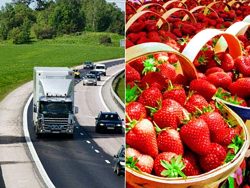
...a comprehensive study done by the United Kingdom's Department of Environment, Food and Rural Affairs (DEFRA)... reported that 82 percent of food miles were generated within the U.K. — consumer shopping trips accounted for 48 percent and trucking for 31 percent of British food miles. In the United States, a 2007 analysis found that transporting food from producers to retailers accounted for only 4 percent of greenhouse emissions related to food. According to a 2000 study, agriculture was responsible for 7.7 percent of total U.S. greenhouse gas emissions. In that study, food transport accounted for 14 percent of the greenhouse gas emissions associated with agriculture...It's a bit reminiscent of the Environmental Building News feature, "Driving to Green Buildings: The Transportation Energy Intensity of Buildings," which said,
With average new code-compliant office buildings "using" twice as much energy getting occupants to and from the buildings as the buildings themselves use for heating, cooling, lighting, and other energy needs, the green building community needs to focus greater attention on the transportation dependency of our buildings.These transportation energy questions — whether it's about food, building products, or getting back and forth from work, are worth thinking about. The EBN feature "On Using Local Materials," said:
...short hauls generally represent a disproportionately large share of total transportation impacts... short hauls are almost always done in trucks, as opposed to rail or ship. Second, because the trucks used for short hauls are smaller than those used for long hauls, proportionately more of the energy is used for moving the truck itself. And third, because short hauls are typically over secondary roads with a lot of stopping and starting, efficiency is reduced. Given all these factors, the total environmental impact of hauling materials 1,000 miles by train to a supply yard may be less than the impact of hauling materials 100 miles by truck to a job site.Depending on things like geography and transportation methods, Chinese bamboo flooring or a bottle of French wine could have a good bit less transportation energy to the same point of delivery than solid wood flooring from Oregon or a bottle of domestic wine from California.
Published November 12, 2008 Permalink Citation
(2008, November 12). Transportation Energy: Consumers vs. The Consumed. Retrieved from https://www.buildinggreen.com/blog/transportation-energy-consumers-vs-consumed
Comments
Here's another example of gre

Sometimes, it seems the trans
Sometimes, it seems the transportation question can mask a bigger issue. Just today, I learned that, while transporting food accounts for a measly 4% of GHG's, eating meat has a much larger impact. Specifically, the United Nations Food and Agriculture Organization reported in 2006 that 18% of greenhouse gases worldwide come from livestock production alone. (source: JHU Newsletter, 10/2/08) A simple thing like going meatless one day a week could have a huge affect on reducing GHG emissions -- particularly methane, which is 20 times more potent than CO2.



Add new comment
To post a comment, you need to register for a BuildingGreen Basic membership (free) or login to your existing profile.