

On the other hand, the widespread presence of flame retardants in water will head off further embarrassing incidents such as the conflagration of the Cuyahoga River.
Blog Post
Something (Bioaccumulative) in the Water
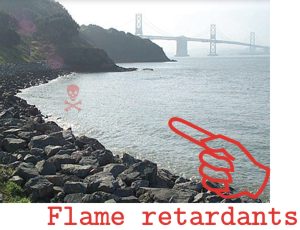
"The National Oceanic and Atmospheric Administration released the first-ever nationwide report this morning on the level of polybrominated diphenyl ethers (PBDEs) found in U.S. coastal areas and the Great Lakes. The report contradicts earlier surveys that suggested PBDEs, chemicals commonly used as flame retardants in commercial goods since the 1970s but in large part discontinued because of health concerns, were found in only a few U.S. sites." — Water & Wastewater NewsBuilding on the recent post about flame retardants, here's an excerpt from the executive summary of An Assessment of Polybrominated Diphenyl Ethers (PBDEs) in Sediments and Bivalves of the U.S. Coastal Zone, a study developed by NOAA's National Status & Trends Program:
"In recent years, PBDEs have generated international concern due to their global distribution and associated adverse environmental and human health effects. Laboratory studies indicate that PBDEs may impair liver, thyroid, and neurobehavioral development, and the most sensitive populations are likely to be pregnant women, developing fetuses, and infants. PBDE production has been banned throughout Europe and Asia, and production of some PBDE mixtures has been voluntarily discontinued by U.S. industry, although one form of PBDE is still produced. While production of PBDE flame retardants began in the 1970s and peaked in 1999 they are still found in many consumer products including many household items. Because the application of PBDEs has been so widespread including many consumer plastics, textiles, electronics, and furniture scientists speculate that they may present an ongoing and growing problem in coastal environments."
Published April 3, 2009 Permalink Citation
(2009, April 3). Something (Bioaccumulative) in the Water. Retrieved from https://www.buildinggreen.com/news-article/something-bioaccumulative-water



Add new comment
To post a comment, you need to register for a BuildingGreen Basic membership (free) or login to your existing profile.