

The director of the WBCSD's Energy Efficiency in Buildings project sent a reply that I've elevated to a post of its own - see http://www.buildinggreen.com/live/index.cfm/2009/5/19/In-Response-4-Year...
Blog Post
4 Years + 15 Million Dollars = Old News, No Actual Solutions
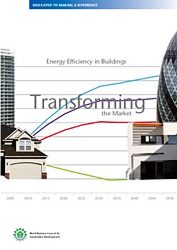
New modeling by the World Business Council for Sustainable Development (WBCSD) shows how energy use in buildings can be cut by 60 percent by 2050 — essential to meeting global climate change targets — but this will require immediate action to transform the building sector. This is the central message of the report from the WBCSD's four-year, $15 million Efficiency in Buildings (EEB) research project, the most rigorous study ever conducted on the subject.It ain't exactly the 2030 Challenge, but the words "shows how" popped off the screen. Finally, a clear path forward. I dove in. Deeper. Deeper. And then I climbed out. There's a lot of good information defining the energy problems of building construction and operation, and those problems are well expressed. If you need to put together a presentation about why change is needed, this study is a great starting point for facts and figures. But the solutions — the "shows how" — not so much.
Transformation will require integrated actions from across the building industry, from developers and building owners to governments and policy-makers. This set of recommendations outlines the necessary steps to substantially reduce energy consumption and resulting carbon emissions.These are all well and good, but it's not really the how-to I thought I'd be getting. It's more of a what-to-do. (Download their "Roadmap" for a distillation / refresher.) Substeps for these vague recommendations are described in the study, and they do provide some substance. Not one of the points raised is a new idea, however, and most already have some steam behind them — many of those efforts already begun before this study was initiated four years ago. The paper does pull together ideas that are often disparate, and there's value in that... but the 15 million dollars spent doing it could have gone a long, long way in furthering those almost universally underfunded efforts. It's likely that the majority who look at this study won't know these things, however. People are all over the map in terms of awareness. I know that education is the first step, and that we still need a whole lot of it, and fast. I do hope this study finds a wide readership, and that its primary audience — the free-market business end — pays close attention. (The World Business Council for Sustainable Development, which sponsored the study, is "a CEO-led, global association of some 200 companies dealing exclusively with business and sustainable development.") But I'm really, really ready for some big solutions — actual working models — to hit the ground running and cut a wide transformational swath. I'll keep looking.
- Strengthen codes and labeling for increased transparency
- Incentivize energy-efficient investments
- Encourage integrated design approaches and innovations
- Develop and use advanced technology to enable energy-saving behaviors
- Develop workforce capacity for energy saving
- Mobilize for an energy aware culture
Published May 9, 2009 Permalink Citation
(2009, May 9). 4 Years + 15 Million Dollars = Old News, No Actual Solutions. Retrieved from https://www.buildinggreen.com/blog/4-years-15-million-dollars-old-news-no-actual-solutions



Add new comment
To post a comment, you need to register for a BuildingGreen Basic membership (free) or login to your existing profile.