
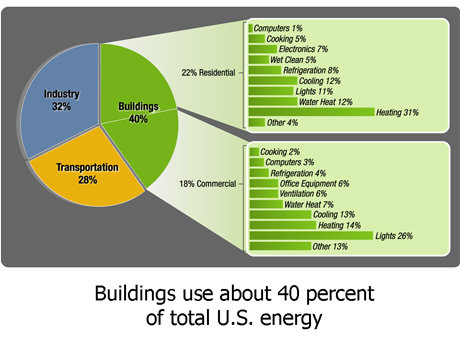
The biggest energy bars - heating, lighting, and cooling are all easily controlled by proper building envelope design, a lost art for the majority of practioners out there. Daylighting and reduced heating requirements are easily addressed by proper glazing and facade design. I love meetings with Architects who insist that maximizing the glass height is a must-do for daylighting. I show them pictures of all the high % glass facades with all the blinds drawn on sunny days, as well as the foil and paper taped up to the glass due to occupants trying to keep the glare off the computer screens....You know what? You CAN get great daylighting with less than 50% glass to opaque wall ratios and proper exterior solar shading, by using triple or quad glazings, and have a subtantially reduced heat loss. Oooh, expensive! Not eally, what about all the capital costs saved by the much smaller heating and cooling plant, no perimeter heating systems, and connected electrical services? Trade $$ on the M&E Systems for more $$ on the envelope. But I guess that's not good business for the M&E consultants, to help the Architect reduce thier M&E fees and work themselves out of a job....
Blog Post
Banging the Building Drum Again—With Great Visuals
Published August 21, 2009 Permalink Citation
(2009, August 21). Banging the Building Drum Again—With Great Visuals. Retrieved from https://www.buildinggreen.com/blog/banging-building-drum-again—-great-visuals
Comments
Haven't these ratios always b

Haven't these ratios always been pretty close historically though?



Add new comment
To post a comment, you need to register for a BuildingGreen Basic membership (free) or login to your existing profile.