
Hey, Alex:
We have recently designed new lighting and controls for the Southern California Edison computer center GO-2 in Rosemead. It will reduce lighting power by about 2/3, saving well over 100 kW of demand (plus HVAC savings) without any change in light levels and with better lighting quality. Why? Because the computer center is designed to operate from generator during an emergency such as an earthquake, and we freed up 100 kW to power new computers and servers without buying a new generator. Note that the actual energy use will stay the same...sigh
Blog Post
Emergency Energy Conservation Saves a School
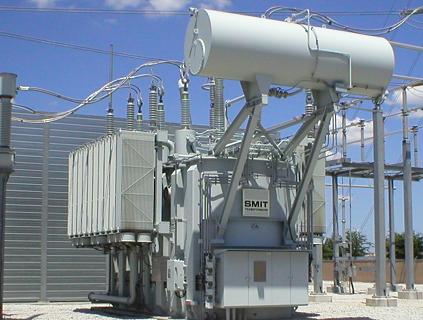
The situation was pretty dire. We had to cut electricity demand by two-thirds, and I remember the facilities manager warning us that students on a single floor of one dorm might be able to intentionally blow the undersized temporary transformer if they all turned on their lights at the same time. Such an action, we were told, would create a sudden surge in electricity use that would be too rapid for the facilities manager to respond to, and it could overtax the temporary transformer, causing it to fail. As I think back on this, I'm pretty sure that those warnings were greatly exaggerated; other loads on campus would dwarf those of lighting on one floor of a dorm. But the warnings were effective in mobilizing campus-wide action. Our campus energy conservation committee photocopied fliers about energy savings. We made up placards and posted them next to the light switches in all of the college classrooms, urging students and faculty to use only necessary lighting and to turn off lights when leaving the room. We policed buildings to turn off unnecessary lights. I'm sure that the vast majority of the emergency conservation efforts were focused on large loads, such as chillers, packaged air conditioning systems, and gymnasium lighting, but the response by the entire campus community--students, faculty, and staff--demonstrated to me just how significant coordinated efforts could be in saving energy. It was a great opportunity not only to solve an immediate problem--preventing a blackout that could shut down the school for several months--but also get significant, across-the-board buy-in to the benefits of energy conservation. (This wasn't long after the first Energy Crisis, when an embargo of Mideast petroleum dramatically drove up the price of oil and put energy on the radar screen for Americans.) And, the efforts were successful. Ithaca College was able to hold off another transformer failure during that several-month period. The experience has stuck with me throughout a career that has always focused on energy conservation as a cornerstone of responsible environmental policy. And, I suppose that that transformer failure in the 1970s, and our efforts to reduce electrical demand by two-thirds, set the stage for this weekly blog--the 100th installment of which you are now reading. I invite you to share comments on this blog. What chance events propelled you on your career path? Alex Wilson is the executive editor of Environmental Building News and founder of BuildingGreen, LLC. To keep up with his latest articles and musings, you can sign up for his Twitter feeds. Photo: Smit Transformer
Published May 25, 2010 Permalink Citation
(2010, May 25). Emergency Energy Conservation Saves a School. Retrieved from https://www.buildinggreen.com/blog/emergency-energy-conservation-saves-school
Comments
Hey, Alex: We have recently d

Thank you Alex for all you do
Thank you Alex for all you do to help educate us about building products, conservation, and healthy living.
We just need to kick some b_ _ in D.C. to get the disaster in the Gulf stopped before it gets to all the coastlines.
Charyl
I spent a year on Iwo Jima Co
I spent a year on Iwo Jima Coast Guard Loran Station in 1973-1974. During this time we were ordered to cut back from two engines to one engine (we produced our own electricity). The Chief Engineer said it could not be done. Our Chief Electrician said it could not be done. It was done, and our fuel consumption was reduced by a significant amount without any "off air time".



Add new comment
To post a comment, you need to register for a BuildingGreen Basic membership (free) or login to your existing profile.