National Academies Questions EPA Assessment of Dioxin

News Brief

National Academies Questions EPA Assessment of Dioxin

A panel of the National Academies of Science (NAS) has concluded that low doses of dioxin might not be as carcinogenic as the U.S. Environmental Protection Agency (EPA) claimed in a 2003 draft risk assessment. When EPA first published an assessment of dioxin, in 1985, it labeled the chemical a “probable human carcinogen.” EPA upgraded the threat, however, to “carcinogenic to humans,” in a draft reassessment published in 2003. The Interagency Working Group on Dioxin, including representatives of seven federal agencies, recommended further review, a move critics contend was intended to stall federal action based on its conclusions. The NAS panel tasked with reviewing the reassessment took issue with EPA’s decision to rely on a linear model, which assumes the risk of cancer is directly proportional to dose at all exposure levels. NAS argued that some evidence points to a nonlinear model, with a threshold below which dioxin has no impact on cancer risk. The report recommends that EPA estimate the cancer risk resulting from both models and describe the strengths and weaknesses of each. The full report, including this and several other recommendations, is online at www.nationalacademies.org/morenews/20060711c.html.

Published December 31, 1969

(2006, July 31). National Academies Questions EPA Assessment of Dioxin. Retrieved from https://www.buildinggreen.com/departments/newsbrief

Add new comment

To post a comment, you need to register for a BuildingGreen Basic membership (free) or login to your existing profile.

Portland, Oregon Named Most Sustainable U.S. City

News Brief

Portland, Oregon Named Most Sustainable U.S. City

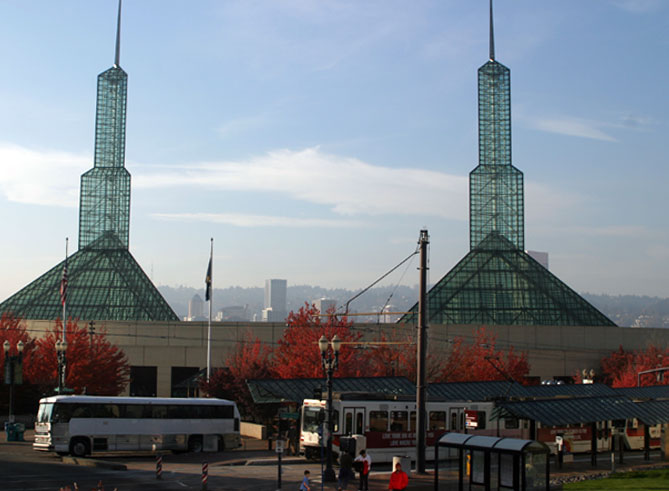
The nonprofit SustainLane.com has named Portland, Oregon, the most sustainable of the 50 largest cities in the U.S. Second and third went to San Francisco and Seattle, respectively, while Columbus, Ohio, was named least sustainable. The rankings were based on 13 factors: air quality, housing affordability, innovation, knowledge base and communications, green economy, energy and climate change policy, green building, local food and agriculture, natural disaster risk, planning and land use, solid waste diversion, tap-water quality, and transportation and commuting. To see how other cities fared and learn about the methodologies used to rank them, visit www.sustainlane.org.

Published December 31, 1969

(2006, July 31). Portland, Oregon Named Most Sustainable U.S. City. Retrieved from https://www.buildinggreen.com/departments/newsbrief

Add new comment

To post a comment, you need to register for a BuildingGreen Basic membership (free) or login to your existing profile.

Rethinking Sustainable Construction 2006 Brings International Flavor to Florida

News Brief

Rethinking Sustainable Construction 2006 Brings International Flavor to Florida

Charles Kibert, Ph.D., of the University of Florida’s Rinker School of Construction, has assembled an impressive collection of speakers from around the world for a sequel to the seminal Sustainable Construction conference he hosted in November 1994. Based on its draft agenda, the four-day affair looks to be a hybrid of Greenbuild’s practice- and industry-oriented program (minus the trade show) and the more academic Sustainable Building series of conferences hosted by the International Institute for a Sustainable Built Environment (iiSBE) and others. Leadoff keynote presenter Chrisna du Plessis from South Africa is likely to set a broad tone for the event, which takes place September 19 to 22, 2006, in Sarasota, Florida. For details, visit www.treeo.ufl.edu/rsc06/.

Published December 31, 1969

(2006, July 9). Rethinking Sustainable Construction 2006 Brings International Flavor to Florida. Retrieved from https://www.buildinggreen.com/departments/newsbrief

Add new comment

To post a comment, you need to register for a BuildingGreen Basic membership (free) or login to your existing profile.

Behnisch Debuts New Name and Office Structure

News Brief

Behnisch Debuts New Name and Office Structure

Behnisch, Behnisch & Partner in Stuttgart, Germany, under the leadership of Stefan Behnisch, is now Behnisch Architekten. The firm’s Venice, California, office, led by Stefan Behnisch and Christof Jantzen, AIA, has also changed its name, to Behnisch Architects. Founded in 1989, the firm has long been recognized as a leader in architectural design and environmentally sustainable building practices. Projects designed out of the California office include the Genzyme Center in Cambridge, Massachusetts (see case study in BuildingGreen Suite), the Arizona State University Gateway project, and the Mill Street Lofts in downtown Los Angeles.

Published December 31, 1969

(2006, July 9). Behnisch Debuts New Name and Office Structure. Retrieved from https://www.buildinggreen.com/departments/newsbrief

Add new comment

To post a comment, you need to register for a BuildingGreen Basic membership (free) or login to your existing profile.

First Home Certified Under LEED

News Brief

First Home Certified Under LEED

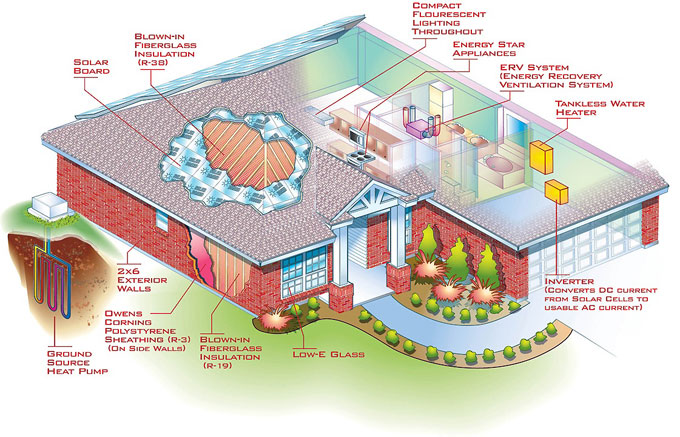
Launched by the U.S. Green Building Council in August 2005, the LEED® for Homes (LEED-H) pilot rating system now has its first certified home. Built by Ideal Homes, Inc., and certified by LEED-H provider Guaranteed Watt Saver Systems, Inc., the LEED-H Certified home is located in the Valencia neighborhood of Oklahoma City, Oklahoma. The 1,640 ft2 (150 m2) home features a ground-source heat pump, advanced framing, and an 8 kW grid-connected photovoltaic system (expected to supply 90 to 95% of the home’s electricity needs), among other green features. Ideal Homes is currently leasing the home, and Building Science Corporation and the National Renewable Energy Laboratory are monitoring its performance. Following its first year of occupancy, the company plans to sell it for about $200,000, according to Todd Booze, co-owner and president of construction for Ideal Homes. The company is online at www.idealinnovation.com. For more on LEED-H, see

EBN

Vol. 14, No. 7.

Published December 31, 1969

(2006, July 9). First Home Certified Under LEED. Retrieved from https://www.buildinggreen.com/departments/newsbrief

Add new comment

To post a comment, you need to register for a BuildingGreen Basic membership (free) or login to your existing profile.

Bloomberg Announces Division of Sustainability for New York City

News Brief

Bloomberg Announces Division of Sustainability for New York City

In a May 2006 announcement before the New York League of Conservation Voters, New York City Mayor Michael Bloomberg announced a new Division of Sustainability that will operate within the Mayor’s Office of Operations. Bloomberg’s announcement, in which he called sustainability “a philosophy of realistic optimism,” follows his 2004 creation of a task force on sustainability and October 2005 legislation that sets standards of sustainability for municipal construction projects. The division’s mission will be to formalize policies of sustainability as integral to growth and development, Bloomberg said.

Published December 31, 1969

(2006, July 9). Bloomberg Announces Division of Sustainability for New York City. Retrieved from https://www.buildinggreen.com/departments/newsbrief

Add new comment

To post a comment, you need to register for a BuildingGreen Basic membership (free) or login to your existing profile.

California Restaurant is First to Earn LEED-CI Designation

News Brief

California Restaurant is First to Earn LEED-CI Designation

An upscale Tahoe Vista, California, restaurant, Wild Goose, recently became the first restaurant to receive certification from the U.S. Green Building Council’s LEED® rating system for commercial interiors (LEED-CI). CCS Architecture, of San Francisco, remodeled the 10,000 ft2 (930 m2) restaurant for East West Partners. Among Wild Goose’s environmental features are recycled-content materials, including cotton insulation and steel; certified and reclaimed wood; paints and stains with low emissions of volatile organic compounds (VOCs); water-conserving fixtures; and an environmental cleaning policy.

Published December 31, 1969

(2006, July 9). California Restaurant is First to Earn LEED-CI Designation. Retrieved from https://www.buildinggreen.com/departments/newsbrief

Add new comment

To post a comment, you need to register for a BuildingGreen Basic membership (free) or login to your existing profile.

Army Adopts LEED

News Brief

Army Adopts LEED

The U.S. Army has announced that, beginning in 2008, all of its new buildings will achieve Silver or higher ratings in the U.S. Green Building Council’s LEED® Rating System. LEED will supplant the Army’s own Sustainable Project Rating Tool (SPiRiT), which was modeled after LEED. The Army has also committed to certifying all of its housing once LEED for Homes is available.

Published December 31, 1969

(2006, July 9). Army Adopts LEED. Retrieved from https://www.buildinggreen.com/departments/newsbrief

Add new comment

To post a comment, you need to register for a BuildingGreen Basic membership (free) or login to your existing profile.

McDonald's Achieves LEED Gold

News Brief

McDonald's Achieves LEED Gold

A McDonald’s restaurant in Savannah, Georgia, has achieved a Gold rating in the U.S. Green Building Council’s LEED® rating system for Core and Shell (LEED-CS) development. Designed by Adams + Associates Architecture in Mooresville, North Carolina, and developed by Melaver, Inc., the first-ever LEED-certified McDonald’s features bike racks, porous paving, daylighting, and wood certified according to Forest Stewardship Council (FSC) standards.

Published December 31, 1969

(2006, July 9). McDonald's Achieves LEED Gold. Retrieved from https://www.buildinggreen.com/departments/newsbrief

Add new comment

To post a comment, you need to register for a BuildingGreen Basic membership (free) or login to your existing profile.

UC Davis Launches Energy Efficiency Center

News Brief

UC Davis Launches Energy Efficiency Center

A $1 million grant from the California Clean Energy Fund and $500,000 from PG&E Corporation will fund the Energy Efficiency Center at the University of California–Davis. The university will contribute $1.3 million in operating and research funds, faculty time, and office and laboratory space. Intended as “the world’s leading university center of excellence in energy efficiency,” the Center is dedicated to “speeding the transfer of new energy-saving products and services into the homes and lives of Californians.” The Center is online at www.eec.ucdavis.edu.

Published December 31, 1969

(2006, July 9). UC Davis Launches Energy Efficiency Center. Retrieved from https://www.buildinggreen.com/departments/newsbrief

Add new comment

To post a comment, you need to register for a BuildingGreen Basic membership (free) or login to your existing profile.