IRN Approved by Boston Society of Architects

News Brief

IRN Approved by Boston Society of Architects

The Boston Society of Architects has approved the Institution Recycling Network (IRN) to offer American Institute of Architects

Learning Units in construction waste management. IRN, based in Concord, New Hampshire, is a cooperative organization that works to improve the financial and operating performance of recycling programs at colleges and universities, hospitals, and similar organizations. Their hour-long education program is offered at no cost to architects and other professionals throughout New England. IRN is on the Web at www.ir-network.com.

Published December 31, 1969

(2004, February 1). IRN Approved by Boston Society of Architects. Retrieved from https://www.buildinggreen.com/departments/newsbrief

Add new comment

To post a comment, you need to register for a BuildingGreen Basic membership (free) or login to your existing profile.

Inuit People and Climate Change

News Brief

Inuit People and Climate Change

The Inuit Circumpolar Conference (ICC), representing 155,000 Inuit people in Russia, Canada, Greenland, and Alaska, is planning a human-rights legal case against Arctic states—particularly the United States—for their

complicity in global climate change. “What is at stake here is the cultural survival of Inuit as a people,” said ICC chair Sheila Watt-Cloutier. ICC will likely invoke the 1948 American Declaration on the Rights and Duties of Man. “Inuit hunters understand nature’s rhythms and cycles. Their environmental knowledge is detailed and accurate,” said Watt-Cloutier. “But many Inuit hunters now find the weather unpredictable and traveling over the sea-ice dangerous.” ICC is online at www.inuitcircumpolar.com.

Published December 31, 1969

(2004, February 1). Inuit People and Climate Change. Retrieved from https://www.buildinggreen.com/departments/newsbrief

Add new comment

To post a comment, you need to register for a BuildingGreen Basic membership (free) or login to your existing profile.

CRRC Aged Testing of Roofing Products

News Brief

CRRC Aged Testing of Roofing Products

The

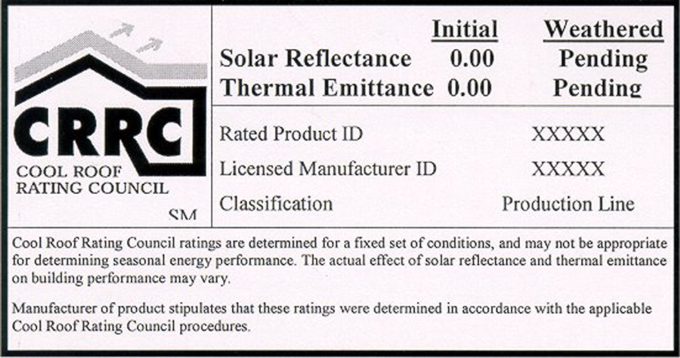
Cool Roof Rating Council (CRRC) has begun the aged-testing component of its product rating program. CRRC has been providing third-party verification of both initial solar reflectance and initial thermal emittance of roofing products since September 2002 (see

EBN

Vol. 12, No. 7), and this aged-testing component adds another round of testing after the products have been exposed on weathering test farms for three years. CRRC’s sole approved test farm has three U.S. locations, representing hot/dry, hot/humid, and cold/temperate climates. The first products were placed on the test farms in December 2003, and the results will be added to each product’s CRRC label and listed in the CRRC Rated Products Directory, at www.coolroofs.org, starting in early 2007.

Published December 31, 1969

(2004, February 1). CRRC Aged Testing of Roofing Products. Retrieved from https://www.buildinggreen.com/departments/newsbrief

Add new comment

To post a comment, you need to register for a BuildingGreen Basic membership (free) or login to your existing profile.

New Jersey Stormwater Regulations

News Brief

New Jersey Stormwater Regulations

Governor James E. McGreevey of New Jersey announced the adoption of

new stormwater-control regulations in January that are being hailed as the most comprehensive in the nation. The new rules establish a 300-foot (90 m) buffer around more than 6,000 stream miles (9,650 km) along high-quality waterways. They also establish a goal of maintaining 100% of the average annual groundwater recharge for new development projects. The rules promote smart growth techniques and emphasize public education. For details, visit www.state.nj.us/dep.

Published December 31, 1969

(2004, February 1). New Jersey Stormwater Regulations. Retrieved from https://www.buildinggreen.com/departments/newsbrief

Add new comment

To post a comment, you need to register for a BuildingGreen Basic membership (free) or login to your existing profile.

USGBC Board of Directors Elections

News Brief

USGBC Board of Directors Elections

The

U.S. Green Building Council has completed elections for members of its board of directors. New members are

Zaida Swanson Hagar, AIA, from the City of Dallas – Equipment and Building Services Department;

Vivian Loftness, FAIA, from the School of Architecture at Pittsburgh’s Carnegie Mellon University; and

Muscoe Martin, AIA, of Philadelphia’s Wallace Roberts & Todd.

Rebecca Flora, from Pittsburgh’s Green Building Alliance;

Mary Tucker, from the City of San Jose; and

Gail Vittori, from the Center for Maximum Potential Building Systems in Austin, have been reelected. All board member terms now last three years.


Published December 31, 1969

(2004, January 1). USGBC Board of Directors Elections. Retrieved from https://www.buildinggreen.com/departments/newsbrief

Add new comment

To post a comment, you need to register for a BuildingGreen Basic membership (free) or login to your existing profile.

Bush Abandons Revisions to the Clean Water Act

News Brief

Bush Abandons Revisions to the Clean Water Act

The Bush Administration surprised critics in December when it abandoned plans to revise the Clean Water Act. The changes, proposed in September 2002, would have significantly reduced the number of waterways and wetlands protected from development. The change of plans was made following an overwhelmingly negative response from the public and members of Congress. Conservationists remain worried that a guidance policy issued to the Army Corps of Engineers and EPA leaves up to 20 million acres (8.1 million ha) of wetlands vulnerable.


Published December 31, 1969

(2004, January 1). Bush Abandons Revisions to the Clean Water Act. Retrieved from https://www.buildinggreen.com/departments/newsbrief

Add new comment

To post a comment, you need to register for a BuildingGreen Basic membership (free) or login to your existing profile.

Dam Removal in the U.S.

News Brief

Dam Removal in the U.S.

Since the Edwards Dam in Augusta, Maine was dismantled in 1999,

more than 100 dams have been removed across the United States, according to American Rivers. Over 76,000 dams taller than 6 feet (1.8 m) remain, however, and fewer than 3% of these are used to generate electricity. For details, visit www.americanrivers.org.


Published December 31, 1969

(2004, January 1). Dam Removal in the U.S.. Retrieved from https://www.buildinggreen.com/departments/newsbrief

Add new comment

To post a comment, you need to register for a BuildingGreen Basic membership (free) or login to your existing profile.

EPA Seeks Comments on IEQ Label for Homes

News Brief

EPA Seeks Comments on IEQ Label for Homes

The U.S. Environmental Protection Agency is seeking comments on their proposed Indoor Air Quality Label for New Homes (see EBN Vol. 12, No. 5). This voluntary label, a complement to the existing Energy Star® label for homes, is intended to improve IAQ, moisture control, comfort, and durability. The draft specifications and introductory material will be online at www.epa.gov/iaq/energystar/label_specifications.html by January 10. Comments must be received by March 12 of this year.


Published December 31, 1969

(2004, January 1). EPA Seeks Comments on IEQ Label for Homes. Retrieved from https://www.buildinggreen.com/departments/newsbrief

Add new comment

To post a comment, you need to register for a BuildingGreen Basic membership (free) or login to your existing profile.

INFORM Fact Sheet on Mercury-Free HVAC Systems

News Brief

INFORM Fact Sheet on Mercury-Free HVAC Systems

As part of its Pollution Prevention Program, INFORM, Inc. has published a fact sheet on “Specifying and Sourcing Mercury-Free HVAC and Building Equipment.” Fluorescent lamps are not the only mercury-containing products we use. A number of widely specified building systems—most notably switches and thermostats in heating and cooling systems; measurement devices, valves, and flow switches in systems that move, store, meter, or regulate liquids; and fire suppression and security systems—often incorporate mercury, a highly persistent, bioaccumulative, toxic chemical. Although systems containing mercury are still readily available, mercury-free alternatives are also available, generally with no penalty in cost or quality. The fact sheet includes sample spec language, a list of recommended manufacturers and vendors, and links to more information. It’s online at www.informinc.org/fs_P3merchvac.pdf.


Published December 31, 1969

(2004, January 1). INFORM Fact Sheet on Mercury-Free HVAC Systems. Retrieved from https://www.buildinggreen.com/departments/newsbrief

Add new comment

To post a comment, you need to register for a BuildingGreen Basic membership (free) or login to your existing profile.

North Carolina Green Building Program

News Brief

North Carolina Green Building Program

The North Carolina Green Builder Program (NCGBP) Task Force has published its checklist for residential certification. Homes may be certified to four distinct levels by achieving a number of prerequisites and earning points in each of eight sections: site; water; energy for (a) building envelope, (b) comfort systems, and (c) appliances and renewables; indoor air quality; materials; and miscellany. A ninth category can be added in communities with their own checklists. The checklist is the foundation of NCGBP, administered by the North Carolina Solar Center with support from the State Energy Office. The first project aiming for certification, an 18-unit neighborhood named Prospect Terrace, is under construction in downtown Asheville. NCGBP hopes to certify 3,000 homes to its standards by 2009. Details and the checklist itself are available at www.ncsc.ncsu.edu.


Published December 31, 1969

(2004, January 1). North Carolina Green Building Program. Retrieved from https://www.buildinggreen.com/departments/newsbrief

Add new comment

To post a comment, you need to register for a BuildingGreen Basic membership (free) or login to your existing profile.