Solar Cell Breaks World Record

News Brief

Solar Cell Breaks World Record

A solar photovoltaic cell has achieved the highest efficiency level yet recorded, converting 40.7% of the sun’s energy into electricity, according to the Boeing Company, owner of Spectrolab, Inc., which made the cell. The U.S. Department of Energy’s National Renewable Energy Laboratory verified the milestone, which has been called the solar electric equivalent of running the four-minute mile. While conventional photovoltaic technology has remained closer to 20% efficiency, the record-breaking cell uses multiple layers of semiconductor material and a concentrating lens. The technology, which responds more effectively to multiple spectra of sunlight, has been used for space exploration equipment. Spectrolab representatives said that the cells could be manufactured in high volumes, and could make solar electricity cost-competitive with conventional sources in some applications.

Published December 31, 1969

(2007, January 2). Solar Cell Breaks World Record. Retrieved from https://www.buildinggreen.com/departments/newsbrief

Add new comment

To post a comment, you need to register for a BuildingGreen Basic membership (free) or login to your existing profile.

Congress Extends Tax Credits for Solar and Wind Energy

News Brief

Congress Extends Tax Credits for Solar and Wind Energy

In December 2006, Congress passed a last-minute extension of several tax credits related to renewable energy resources. The one-year extension covers tax credits, set up in the Energy Policy Act of 2005, for the installation of residential and commercial photovoltaic equipment, the construction of energy-efficient buildings, and the production of energy from wind and other renewable sources (see

EBN

Vol. 14, No. 9). Originally set to expire in December 2007, these tax credits will now be in place through December 2008.

Published December 31, 1969

(2007, January 2). Congress Extends Tax Credits for Solar and Wind Energy. Retrieved from https://www.buildinggreen.com/departments/newsbrief

Add new comment

To post a comment, you need to register for a BuildingGreen Basic membership (free) or login to your existing profile.

EPA Limits Cement Plant Emissions

News Brief

EPA Limits Cement Plant Emissions

After a court-issued remand, the U.S. Environmental Protection Agency (EPA) has announced new emissions limits for mercury and total hydrocarbons for cement kilns built after December 2005. The new regulations will not apply to kilns built before that date, which are only required to meet standard industry practices for reducing emissions. EPA estimates that the new limits will reduce national mercury emissions by 1,300 to 3,000 lbs (590 to 1,400 kg) per year and total hydrocarbon emissions by 1,100 tons (1,000 tonnes) per year beginning in 2012. In addition, the regulations ban the use of flyash (sometimes added to a kiln in the production process instead of shale or clay) from utility boilers that use activated carbon injection to control mercury emissions, unless a plant can prove that the use of such flyash will not add to its total mercury emissions. A fact sheet on the new regulations is available online at www.epa.gov/ttn/oarpg/t3/fact_sheets/cement_amend_fs_120806.html.

Published December 31, 1969

(2007, January 2). EPA Limits Cement Plant Emissions. Retrieved from https://www.buildinggreen.com/departments/newsbrief

Add new comment

To post a comment, you need to register for a BuildingGreen Basic membership (free) or login to your existing profile.

Adobe Headquarters Goes Platinum

News Brief

Adobe Headquarters Goes Platinum

Adobe Systems, Inc., of San Jose, California, has reached new heights in the U.S. Green Building Council’s LEED® Rating System by having three of its buildings achieve a LEED for Existing Buildings Platinum rating. The first of these buildings, the West Tower of the company’s headquarters, was certified in July 2006; two other buildings, the East and Almaden Towers, were certified in December. According to Adobe, the company has invested $650,000 in energy and environmental retrofits in the East and Almaden Towers since 2001 and has seen $728,000 in savings as of 2006. The retrofits included the installation of drought-tolerant landscaping and a weather-based irrigation control system as well as the installation of carbon dioxide sensors in the office areas that adjust exhaust fan operation to control indoor air quality.

Published December 31, 1969

(2007, January 2). Adobe Headquarters Goes Platinum. Retrieved from https://www.buildinggreen.com/departments/newsbrief


Add new comment

To post a comment, you need to register for a BuildingGreen Basic membership (free) or login to your existing profile.

EPA to Regulate Some Nanotechnologies as Pesticides

News Brief

EPA to Regulate Some Nanotechnologies as Pesticides

The U.S. Environmental Protection Agency (EPA) announced in November 2006 that it would regulate a form of nanotechnology for the first time. Engineered at the scale of one-billionth of a meter, nanotechnology is now used in over 200 consumer products, according to the nonprofit Project on Emerging Nanotechnologies. EPA has decided that one technology, nanosilver, is a pesticide and therefore needs to be regulated under the Federal Insecticide, Fungicide, and Rodenticide Act. Nanosilver uses the antimicrobial properties of silver. Small amounts of nanosilver are released to the environment when the material is used in air fresheners and washing machines, among other products. Like other pesticides, EPA will be looking at it for possible impacts on public health and the environment.

Published December 31, 1969

(2007, January 2). EPA to Regulate Some Nanotechnologies as Pesticides. Retrieved from https://www.buildinggreen.com/departments/newsbrief

Add new comment

To post a comment, you need to register for a BuildingGreen Basic membership (free) or login to your existing profile.

New AIA President to Focus on Sustainability

News Brief

New AIA President to Focus on Sustainability

RK Stewart, FAIA, of Gensler was inaugurated as the 83rd president of The American Institute of Architects (AIA) in December 2006. Stewart served as vice president of AIA from 2005 to 2006 and will succeed Katherine Schwennsen, FAIA. Central to his goals for AIA are increasing awareness of sustainability and reducing buildings’ consumption of fossil fuels, Stewart said in his inaugural speech, adding that “the need to change how we inhabit the planet to avoid catastrophic consequences is now widely accepted.” Stewart promised to “aggressively advance sustainable design” among AIA membership and beyond.
Published December 31, 1969

(2007, January 2). New AIA President to Focus on Sustainability. Retrieved from https://www.buildinggreen.com/departments/newsbrief

Add new comment

To post a comment, you need to register for a BuildingGreen Basic membership (free) or login to your existing profile.

Cold Climate Research Facility Opens

News Brief

Cold Climate Research Facility Opens

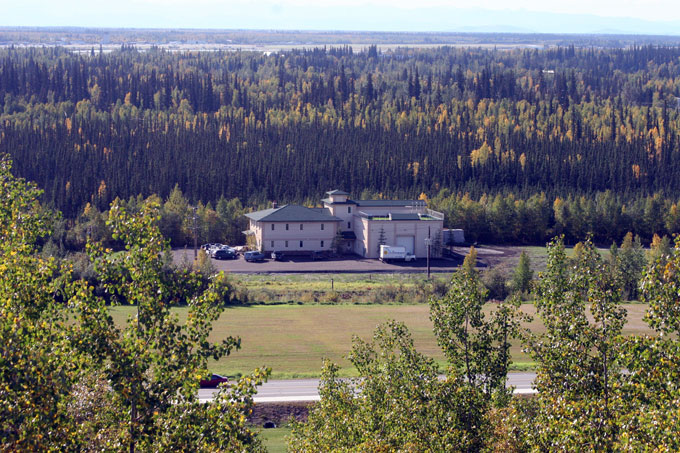
The Cold Climate Housing Research Center (CCHRC) has opened a new 15,000 ft2 (1,400 m2) research and testing facility in Fairbanks, Alaska. The nonprofit CCHRC was founded to research, develop, and test energy-efficient, healthy, and cost-effective building technologies for cold climate regions. The $5 million facility houses classrooms, offices, a library, and two large test bays designed for environmental engineering research and product development and testing. Designed to achieve a LEED® Platinum rating, the building features daylighting, water conservation, and a heat-recovery ventilation system as well as a 12,000-pound (5,400 kg) masonry heater that will be used not only to heat the building but also to test the relative heating efficiency of different kinds of wood. More information on CCHRC and its new facility can be found online at www.cchrc.org.

Published December 31, 1969

(2007, January 2). Cold Climate Research Facility Opens. Retrieved from https://www.buildinggreen.com/departments/newsbrief

Add new comment

To post a comment, you need to register for a BuildingGreen Basic membership (free) or login to your existing profile.

NRDC and DOE Settle Lawsuit

News Brief

NRDC and DOE Settle Lawsuit

The U.S. Department of Energy (DOE) has settled a lawsuit brought in September 2005 by a group of organizations and states led by the Natural Resources Defense Council (NRDC). The suit charged that DOE was late in meeting congressionally mandated deadlines to update energy-efficiency standards for a range of consumer products. Settling the suit in November 2006, DOE agreed to a timetable that requires it to set standards for 22 commercial and residential appliances over the next five years. More information on the program is available online at www.eere.energy.gov/buildings/appliance_standards.

Published December 31, 1969

(2007, January 2). NRDC and DOE Settle Lawsuit. Retrieved from https://www.buildinggreen.com/departments/newsbrief

Add new comment

To post a comment, you need to register for a BuildingGreen Basic membership (free) or login to your existing profile.

Kaiser Moves Away from PVC Roofing

News Brief

Kaiser Moves Away from PVC Roofing

The Environmental Stewardship Council of Kaiser Permanente, a leading health-maintenance organization, has announced that it will require all new roofing on its facilities to be PVC-free starting in January 2007. According to Tom Cooper, chair of the High Performance Buildings Committee at Kaiser, the new policy includes the option to continue the use of thermoplastic olefin (TPO) roofing membranes but does not require them. “There may be situations where TPO is not appropriate,” said Cooper, “so we want to be flexible in how the decision on the product selection is handled.”

Published December 31, 1969

(2007, January 2). Kaiser Moves Away from PVC Roofing. Retrieved from https://www.buildinggreen.com/departments/newsbrief

Add new comment

To post a comment, you need to register for a BuildingGreen Basic membership (free) or login to your existing profile.

Stern Report Advises Paying Now to Avoid Climate Change

News Brief

Stern Report Advises Paying Now to Avoid Climate Change

Averting serious climate change would be far cheaper today than dealing with it in the future, according to a report commissioned by the British government and written by Sir Nicholas Stern, chief of Britain’s economic service and former chief economist of the World Bank. If we continue to allow unmitigated climate change, dealing with its effects could cost more than 20% of the world’s gross domestic product (GDP) each year, according to the report. The cost of cutting emissions to 60% to 80% below 1990 levels by 2050, however, would amount to only about 1% of global GDP, the study says. “The conclusion of the review is essentially optimistic,” said Stern. “There is still time to avoid the worst impacts of climate change if we act now and act internationally.” The full report is online at www.sternreview.org.uk.

Published December 31, 1969

(2006, December 5). Stern Report Advises Paying Now to Avoid Climate Change. Retrieved from https://www.buildinggreen.com/departments/newsbrief

Add new comment

To post a comment, you need to register for a BuildingGreen Basic membership (free) or login to your existing profile.
