
News Brief
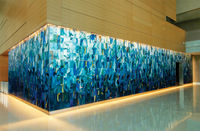
Many LEED v4 prerequisites and credits are now automatic for projects meeting the CALGreen code.
UPDATE: This article was updated on April 19, 2018, to reflect major changes announced by the U.S. Green Building Council.
Commercial building projects and homes in California can now get a huge jumpstart on achieving LEED certification.
New construction, commercial interiors projects, and both single-family and mid-rise... Read more
Blog Post

Architects and designers want to do exceptional, challenging sustainability work. Why are we waiting for the unicorn client?
I regularly speak with architects who would really love to do a Living Building Challenge project, or net-zero, or another progressive project. All they are waiting for is a client to ask for it. So here we remain, stuck in a self-fulfilling pattern that looks a bit like this.
During interview: “Let’s not scare them away… we’ll make... Read more
News Brief
The forum invites affordable housing designers to join HBN experts and others to ask questions and share information on material health.
The Healthy Building Network’s HomeFree database recently launched an online forum on healthy building materials—an idea exchange that brings together practitioners in affordable housing with HBN’s researchers.
“It is a great place to ask individual questions and be able to get more specific information from the Healthy Building Network... Read more
Product Review
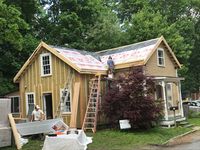
GAF now offers a full line of polyisocyanurate foam insulation that is free of toxic halogenated flame retardants.
I first learned about GAF’s new halogen-free polyisocyanurate insulation when I was teaching a workshop on resilient design at the GAF headquarters in Parsippany, New Jersey, in March, 2017. Having called for manufacturers to develop such products several years ago (see Getting Flame Retardants Out of Foam Insulation), I am particularly attuned... Read more
News Brief

With recent and upcoming certifications, the Living Building Challenge breaks out of its boutique building typology.
The stereotype of a Living Building has been an environmental education classroom or visitor center that’s not much bigger than the average American house. That stereotype wasn’t too far off during the program’s first five years—until the 10,700 ft2 Phipps Center for Sustainable Landscapes and the 50,800 ft2 Bullitt Center were certified in... Read more
Product Review
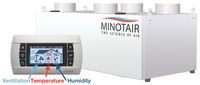
Build Equinox and Minotair Ventilation Inc. (MVI) have updated their heat-pump-based energy recovery ventilation systems, providing better control of humidity, heating, and cooling in a smaller footprint.
Balancing indoor air quality and energy consumption in ventilation is no easy task. Bringing in fresh air keeps us healthy and alert, but heating, cooling, and adjusting its humidity (also known as conditioning the air) requires energy, and much of that energy is lost when stale air is vented.
The... Read more
Blog Post
How well do Zip and ForceField sheathing integrate a structural panel with bulk water and air management?
There are a lot of different ways to get continuous air and water control layers on the exterior of a building enclosure. You can use housewrap, taped-and-sealed rigid foam insulation, liquid-applied membrane, or either the Huber Zip or Georgia-Pacific ForceField system. Each approach has strengths and weaknesses.
All things... Read more
Blog Post
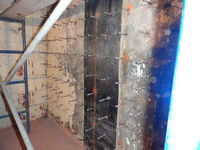
Of course the best way to waterproof any below-grade assembly is from the exterior—but what works if you have to go from the interior?
Negative-side waterproofing (NSW) is a tough topic that I have frankly been dancing around for quite some time. Manufacturer claims and homeowner anecdotes of successful interior waterproof solutions for basement walls and slabs did not completely add up. But I did not think that I understood the topic or the physics well enough to challenge... Read more
Explainer

Biomimicry offers a vitalizing framework for reconnecting designers to nature and driving innovation.
The term biomimcry literally means the imitation (mīmēsis) of life (bios). At its most basic, the practice of biomimicry is about looking to the natural world and following its lead. By looking to nature and emulating it as the ultimate model of “sustainable design,” architects are drawing from a rich, diverse sourcebook of ideas and solutions... Read more
News Brief

The state has budgeted $30 million to develop a self-sufficient, private sector-based market for deep energy retrofits of multifamily buildings.
The goal of RetrofitNY is to transform the state’s building industry over the next decade by driving the development of scalable solutions for deep energy retrofits of large residential buildings. It’s an initiative of New York State Energy Research and Development Authority’s (NYSERDA) Multifamily Performance Program. RetrofitNY is part of... Read more
News Analysis

Design plays a key role in helping cities overcome the logistical and social barriers to eliminating waste.
An increasing number of U.S. cities have adopted zero waste goals, including San Francisco, Seattle, Minneapolis, and Austin, Texas. In New York City, the Department of Sanitation’s (DSNY) 0x30 campaign is designed to eliminate landfilled waste by 2030. According to DSNY, New Yorkers generate a total 18,500 tons of waste every day and the city... Read more
Feature
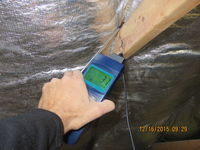
Leaky building enclosures create health hazards, comfort problems, and high energy bills. Fixing them isn’t rocket science; but you’d better know your building science.
Sealing air leaks in any building can make it more comfortable and efficient. But owners of existing buildings often resist spending the time and money to address the problem. In fact, addressing air leaks in existing buildings is like the Rodney Dangerfield of Rodney Dangerfields. In the words of the late comedian, "they just don’t get no... Read more
Explainer
What are the books that all designers should read? This reading list on sustainable design, gathered from experts, is a mini-degree on green building.
As a supplement to this month’s feature, Sustainable Design Literacy: A Foundation for Transformed Practice, BuildingGreen has compiled a list of books that can help designers develop and maintain their sustainability knowledge.
The list includes recommendations from sustainable design leaders and educators, as well as some of... Read more
Op-Ed
By making the administration’s position clear, Trump’s decision unleashed a wave of actions to stabilize the climate.
When President Donald Trump was equivocating about whether to pull out of the Paris Accord, I fervently hoped he would not. When he announced in early June that the U.S. would walk away from the agreement, I was worried that the global effort to mitigate climate change would be seriously set back.
But now, I’ve changed my mind. In fact... Read more
Feature

How well does the average designer know sustainable design? And how are the best firms supporting increased knowledge—and action?
Good morning, choir.
Chances are, if you’re reading this article, you care more about and know more about sustainability than the average architect or designer. Your “sustainability literacy” is high.
Sustainable design literacy involves the ability to understand the various ways in which a project can impact—negatively or... Read more
News Brief

The new zero carbon standard is designed to assess carbon emissions from commercial, institutional, and multi-family buildings across Canada.
The World Green Building Council launched its Advanced Net Zero project in 2016, with the goal of eliminating carbon emissions from all new buildings by 2030, and from every building by 2050. Now, the Canada Green Building Council has introduced the first national standard to emerge from that campaign, a certification program focused solely on... Read more
Blog Post
We asked architects how they evaluate someone’s sustainability literacy in a single question.
How do you measure someone’s sustainable design literacy? As we discuss in Sustainable Design Literacy: A Foundation for Transformed Practice, no single exam or other measure tells the whole story.
We thought about writing our own, holistic, non-LEED-centric version of the LEED AP exam. We quickly recognized, however, that it’s the... Read more
Product Review

Grayworks is a modular, plug-and-play commercial graywater treatment system that simplifies installation and maintenance.
When we turn on a faucet in the U.S., it’s easy to think that the clean water that comes pouring out is a limitless resource. But fresh water is a precious commodity and it takes a lot of energy and resources to filter, sanitize, pump, and transport potable water into our buildings, and then out again as wastewater.
We can reduce our... Read more
News Brief

Focused solely on net-zero-energy performance, the new certification aims to distinguish projects that verify outcomes with actual data.
As more projects started claiming “net-zero-energy design” without having actual performance data to back them up, a certification and a certifying agency became needed. International Living Future Institute (ILFI) and New Buildings Institute (NBI) have now teamed up to fill this gap and accelerate the net-zero-energy trend.
Earlier in... Read more
News Analysis
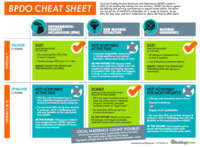
The three “Disclosure and Optimization” or “BPDO” credits in LEED v4 include both some pretty easy points and points that are not yet achievable.
Among the biggest changes that LEED v4 brought to the U.S. Green Building Council’s LEED Rating System were three new credits in the Materials & Resources category. These credits cover building product disclosure and optimization, or BPDO: Environmental Product Declarations (EPDs), Raw Material Extraction, and Material Ingredients. Each of... Read more


