
News Analysis
With new program announcements, the International Living Future Institute and its Living Building Challenge continue to drive innovation and transformation.
The International Living Future Institute (ILFI) announced a number of new programs at its May 2014 Living Future conference. ILFI is best known for its rigorous Living Building Challenge (LBC), but even as ILFI signs up more projects for the LBC, with just over 200 projects currently registered, the organization is pushing the... Read more
News Analysis
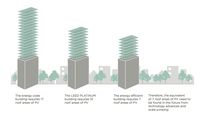
Finding cost premiums as little as 5% over LEED Platinum, a new report highlights how D.C. can incentivize net-zero and Living buildings.
A recent analysis suggests making the jump from LEED Platinum to net-zero energy costs less than one might think, requiring just a 5%–10% first cost premium for a new commercial building. The study also evaluated premiums associated with net-zero water and Living Building Challenge certification and recommended policy changes... Read more
News Brief
In a recent study conducted at a Stanford University fertility clinic, women with high levels of bisphenol-A (BPA) in their blood had an 83% greater risk of miscarriage than women with the lowest levels. Although further research is needed to tell... Read more
News Brief

The “wetlands mapper” is now available for more accurate site assessments that include the size and value of wetland areas.
Researchers created the maps by using high-altitude images to identify the location of wetlands based on vegetation, visible hydrology, and geography. Data is... Read more
News Brief
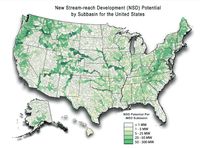
All of the nation’s rivers and streams have now been evaluated for their hydropower potential as a part of the New Stream-reach Development Resource Assessment (NSD). This data, released by the U.S. Department of Energy, is meant to help... Read more
News Brief
Building codes restrict the use of many heat-recovery technologies from commercial kitchens due to fire risk, but recent code updates should make it easier to specify Halton’s Heat Recovery Unit.
Even though ASHRAE 90.1 requires heat recovery for exhaust exceeding 5,000 cubic feet per minute (cfm), commercial kitchen ventilation is exempt from these requirements due to fire risk from accumulated grease. International Mechanical Code (IMC) 514 also prohibited heat and energy recovery in commercial kitchens, but the... Read more
News Brief
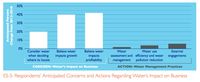
A recently published survey by the Pacific Institute and VOX Global finds that, although many companies report currently facing water challenges and expect these issues to... Read more
Explainer
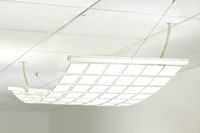
Fluorescent and LED lighting get most of the attention, but there are other efficacious lighting technologies that could illuminate our future.
When it comes to lighting, fluorescent and LED technologies currently are most often specified in green buildings, but their siblings, induction and OLED (organic light-emitting diode) lighting, have been trying to earn a place at the table.
Nikola Tesla first demonstrated induction lighting in the late... Read more
News Brief
In a first for the U.S., Montgomery County in Maryland has enacted a mandatory benchmarking law with third-party data verification.
Montgomery County, Maryland, recently became the first county in the U.S. to require energy benchmarking for large nonresidential buildings. Following in the footsteps of nine major cities, the county’s new law makes annual energy tracking and disclosure mandatory for both public and private commercial buildings (for background... Read more
Op-Ed

An entry-level alternative pushing LEED to get better would be great, but GBI’s Green Globes needs to start by joining the green building community.
TurboTax gets audited. Now, so does Green Globes.
The green building rating system run by the Green Building Initiative (GBI), would-be rival to the U.S. Green Building Council (USGBC) and its LEED rating system, has been likened to the popular income tax software because it takes a complex problem and... Read more
Product Review

With attention to installation quality, Knauf’s EcoSeal and Owens Corning’s EnergyComplete demonstrate that they can create air barriers and reduce use of SPF.
Two products—EcoSeal from Knauf and EnergyComplete from Owens Corning—have been on the market for several years as spray-applied latex sealants for making building envelopes airtight during new construction (see Spray-Applied Latex: A New Tool for Air-Sealing). Until recently, however, we haven’t had... Read more
Feature
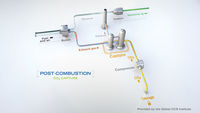
Concrete is responsible for a huge proportion of global carbon dioxide emissions. A few companies want to reverse this cycle by sequestering carbon in building materials.
Driving down California’s Coastal Route 1 from Santa Cruz to Monterey, you might notice a couple of massive 500-foot smokestacks venting flue gases from one of California’s largest power plants, Dynergy’s Moss Landing Power Plant. This 2,500-megawatt (MW) facility emits 2.3 million tons (2.1 metric tons) of carbon... Read more
Blog Post
With each new program, ILFI continues to push the building industry (and now other industries) toward greater stewardship and a “living future.”
I’m just back from Portland, Oregon where I attended the annual Living Future Conference.
The Living Future Conference was created by the International Living Future Institute (ILFI) initially to provide a networking and learning venue for designers and builders involved in creating buildings that are... Read more
Webcast
Alex Wilson, founder of BuildingGreen and director of the Resilient Design Institute, recently completed a zero-energy retrofit of an old Vermont farmhouse.
In this webcast, Alex and his designer-builder, Eli Gould, review their nuts-and-bolts experiences and lessons learned with innovative products and systems, with a focus on the... Read more
News Brief
Industry professionals expect continued growth after LED retrofit installations climbed to 37% in 2013.
LEDs saw a significant uptick in 2013 and are expected to outpace fluorescent lighting in 2014 for retrofit installations, according to a survey conducted by lighting manufacturer Precision-Paragon.
Responses from 5,000 lighting industry professionals suggest LED installations jumped 12% in 2013 to make... Read more
News Analysis
Early versions of LEED pull ahead in air quality but lose ground with inadequate lighting, resulting in a tie with non-LEED buildings for overall workplace happiness.
With data from 65 LEED-certified buildings—but only those certified under LEED v2.2 or earlier—a recent study concludes that workers in LEED buildings are no more satisfied with indoor environmental quality than those in non-LEED buildings. While Stefano Schiavon, one of the authors of “Occupant satisfaction in LEED and non-... Read more
Blog Post
We oversized our PV system so that we will be able to use solar energy to power around-town driving with a plug-in hybrid
Among the energy-related features of our new house in Dummerston, Vermont, is one parked in the garage.
We are hoping to power a plug-in hybrid car using the electricity generated on our barn. We have... Read more
News Analysis
The Papadakis Integrated Sciences Building is a five-story, 130,000 ft2 laboratory and classroom building that opened in September 2011 at Drexel University in Philadelphia. To... Read more
Blog Post
As summer heats up here, I’m looking forward to trying out the high-tech ceiling fans we installed in our two upstairs bedrooms. First,... Read more
News Analysis

LEED has 37 times more certified projects than Green Globes. LEED recently clocked three billion square feet of space, while Green Globes is barely a blip. LEED has close to 200,000 accredited professionals; Green... Read more


