
Blog Post
Blog Post
Product Review
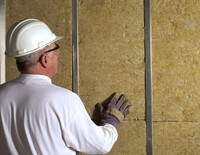
Mineral wool forms naturally when strong winds blow through molten lava to create the thin, gold-colored strands that volcanologists call Pele’s hair. Today’s mineral wool insulation is made in a less dramatic process using basalt and iron-ore slag that is melted, spun into fibers, and held together with a phenolic resin. Adjusting the density... Read more
News Analysis
The U.S. Green Building Council has opened recent revisions to the LEED certified wood credit to public comment.
A second public comment period for the U.S. Green Building Council’s (USGBC) treatment of forest certification in the LEED Rating System is open until October 14, 2009. At issue is a collection of criteria that USGBC will use to evaluate forest certification programs to gain recognition in LEED. The first public comment period (see EBN Sept.... Read more
Feature

Sustainability is the ability to “meet the needs of the present without compromising the ability of future generations to meet their own needs.” – Brundtland Commission
“In every deliberation, we must consider the impact on the seventh generation, even if it requires having skin as thick as the bark of a pine.” – Iroquois law
... Read more
Case Study
A suburb of the nation’s capital, Alexandria, Virginia, started to outgrow its high school several years ago, leading the school board to decide that a replacement for T.C. Williams High School was needed. The new LEED Gold high school, designed by Moseley Architects, was built on the same property as the old one, which was demolished after the... Read more
Blog Post
Blog Post
Blog Post
Architectural testing concern HTL will be at GlassBuild America shooting missiles at windows again. The demonstration/demolition follows the Miami-Dade large missile protocol by shooting 2x4s at impact-resistant and non-impact-resistant windows. A press release from HTL quotes NGA Industry Events Director Susan Jacob: "There is nothing quite... Read more
Blog Post
Let me get right to the point: unvented gas (and kerosene) space heaters and fireplaces are a bad idea. Don't install one.
Euphemistically called "... Read more
Blog Post
News Brief
Energy-efficiency advocates fighting profligate energy use to overcool workplaces in summer and overheat them in winter now have a compelling new argument: people are healthier in spaces that are less severely conditioned. That is the finding of a peer-reviewed study by Mark Mendell, of Lawrence Berkeley National Laboratory, entitled “Indoor... Read more
Blog Post
Last week I described some observations about transportation from a trip I took to Sweden two years ago. While there, I toured two state-of-the-art, wood-chip-fired, combined heat and power (CHP) plants, one in... Read more
Case Study
Vaulted Roof, Ambitious Goals: Yale transforms the site of a defunct powerplant into a low-carbon home for its School of Forestry and Environmental Studies.
With its rustic stone facades and vaulted roof supported by glue-laminated beams, Kroon Hall, the new home for Yale University’s School of Forestry and Environmental Studies, looks a bit like an elegant rendition of a New England barn. But the reference wasn’t intentional, insist its architects, London-based Hopkins with the Connecticut firm... Read more
Blog Post
A lot of people have been working for a long time to try to head off global warming — and some progress... Read more
Blog Post
I had the great fortune two years ago to spend a couple weeks in Sweden. In late December 2007 I was visiting my daughter, who was studying at Lund... Read more
Blog Post
News Brief
The inherent unpredictability of LEED projects creates a unique liability for green building owners and contractors that is rapidly gaining momentum. In an effort to ease its clients’ elevated legal anxiety, Energy Ace, an Atlanta-based consulting firm, is guaranteeing LEED certification—or your money back—when the company supervises... Read more
Blog Post
Blog Post
Regular readers might remember the toilet-flushing video from March that showed ridiculous quantities of carrots, chess pieces, Gummi bears, hot dogs, plastic letters and numbers, grapes, golf balls, and dog food getting flushed. Fun, but it didn't qualify for GreenSpec because it only met the federal minimum standard for water use. Well, here... Read more


