
News Analysis

News Brief
Christopher Pyke, Ph.D., former director of climate change services at CTG Energetics in Irvine, California, has been named Research Director for the U.S. Green Building Council (USGBC). Dr. Pyke has extensive experience designing and implementing strategies for decreasing greenhouse gas emissions and adapting to dynamic climatic conditions,... Read more
News Analysis
Armstrong World Industries has announced that its Center, Texas, plant has received chain-of-custody certification from the Forest Stewardship Council (FSC). This certification is a requirement for selling FSC-certified products, and it ensures that a facility has procedures in place to track wood from certified forests and avoid confusing it... Read more
Op-Ed
Insulation is a critical component of our buildings, and providing high R-values must be a high priority in creating green buildings of nearly all types and sizes.
Toward that end, polystyrene insulation, both extruded (XPS) and expanded (EPS), plays a key role in many energy-efficient green buildings. And it is a key component of... Read more
Explainer
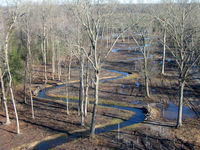
Constructed wetlands, when used to treat wastewater, can keep nitrogen and phosphorous from the water supply and cut costs by controlling the size of drainfields.
Feature
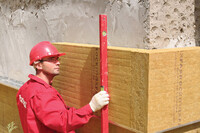
Polystyrene, in both extruded and expanded forms, is very widely used as rigid insulation in North America and worldwide. In below-grade applications, owing to its good insulation value, superb moisture resistance, strength, performance, and affordability, polystyrene dominates the market.
But a chemical that’s added to polystyrene to... Read more
Blog Post
The U.S. Green Building Council just sent out information from a report written by McKinsey and Company about energy efficiency and its role in U.S. mitigation of climate change. Here's what they found:
Energy-efficiency of buildings (along with other non-transportation efforts) could reduce U.S. energy consumption by 23% by 2020. Such... Read moreBlog Post
Blog Post
Starting in the 1970s, following the first energy crisis, major weatherization programs were launched to tighten up American homes. The Weatherization Assistance Program of the U.S. Department of Energy, which focuses on low-... Read more
Blog Post
News Brief
Recent updates to the industry standard for thermal comfort in buildings, the American Society of Heating, Refrigerating, and Air-Conditioning Engineers (ASHRAE) Standard 55, will for the first time recognize elevated air speed as a component of thermal comfort, giving building designers and operators the ability to turn up the fans, rather... Read more
News Brief
Problematic drywall imported from China has been making headlines since 2008, when homeowners began complaining about sulfur odors and corrosion of copper wiring. Most of the complaints have come from southern states, where high temperatures and humidity seem to aggravate the problems. The issue has grown to national proportions, spawning a... Read more
Blog Post
As houses get tighter, they becaome less able to 'breathe' on their own -- they need mechanical ventilation. Put another way, energy efficient houses... Read more
Blog Post
Blog Post
Blog Post
Blog Post
Blog Post
Cholesterol 0g
Sodium 22mg
Dichlormethane
Carbon Tetrachloride
Chloroform
0%0%
1%
-400%
-200,000%... Read more
Blog Post
Standard residential construction in much of the country is 2x4 framing with fiberglass insulation, achieving a paltry R-10 or so in the walls. If insulation is installed at all on the foundation walls, it's rarely more than an inch thick, and insulation is almost never put under slabs. In Vermont, we typically do a lot better. Act 250,... Read more
News Analysis

With the April 27, 2009, release of the LEED 2009 family of rating systems, the U.S. Green Building Council (USGBC) introduced a new element to its LEED package: minimum project requirements (MPRs). They vary slightly by rating system, but in general they aim to exclude structures from LEED that are too small, unoccupied, or mobile.... Read more


