
Feature
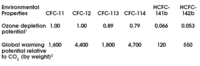
Ozone depletion and global warming are two of our most serious environmental problems—and foam insulation materials containing CFCs (chlorofluorocarbons) contribute significantly to both of these problems. The environmentally concerned builder or designer should make it a highest priority to avoid them. Even many of the non-CFC alternatives... Read more
News Brief
The American Institute of Architects convention in Boston this past June was the setting for a changing of the guard in the American architectural establishment. The Institute’s first woman president took the reins, the Committee on the Environment became its largest and fastest growing committee, and the first installments of the Environmental... Read more
Feature
Susan Maxman is the first AIA president to make sustainable design a priority.
Q.Where would you say architects as a group stand on environmental issues?
A.Architects tend to be reactive rather than proactive. It is important that we take the lead on these environmental issues. The architecture schools in particular tend to be conservative. They just aren’t... Read more
Quiz
Welcome to the quiz portion of Cladding: More Than Just a Pretty Façade
Learning Objectives
Upon completing this course, participants will be able to:
1. Explain how different commercial wall assemblies handle moisture.
2. Know what questions to ask to determine a cladding system's environmental impact.... Read more
Forum topic
We've updated the Salesforce BIT Community domain from "https://southfacecommunities.force.com/BITBuilding/s/" to "https://www.bitbuilding.org/s/" and there are a few links on BITuser that point back to the community that need updating.
BIT Building Community Dashboard - point to "https://www.bitbuilding.org/s/" Contact Us - point to "... Read moreForum topic
I was shocked to see this new research. Bad news is that acrylic paints are causing 58% of the microplastics pollution in our ocean. Yes, they are plastic. A recent study by Environmental Action, a Swiss-based scientific research firm, shows us that acrylic paint's role in plastic pollution is much greater than most of us realize. The good news... Read more
Forum topic
Has anyone had experience working with Hyper Metro (http://hypermetro.co/)? If so, did you find this company to provide value especially in dense urban environments where on-site segregation poses challenges to manage multiple C&D material streams on site? Hyper Metro claims to be able to provide rebates and to pay us for our trash.
Forum topic
Hello Everyone,
On September 9th a regional cross-network group gathered for the first in-person Peer Networks event since the beginning of the pandemic. All Peer Networks were represented at this Boston Region Mini-Summit! With this first one in the books, BuildingGreen is hopeful for paving the way to future regional events across the... Read more
Forum topic
Huge congratulations to everyone involved with a Top Ten winner this year!
In a rare feat--Leddy Maytum Stacy got two!
Also P+W, Lake|Flato with Cooper Cary, WRNS, SOM, Olsen Kundig, KieranTimberlake, DLR--nice work! (And who is Studio27?)
Here's James Wilson's take on what's special about each winning project.
... Read more
Forum topic
Has anyone heard about batu or cumaru as substitutes for ipe? I am looking for a durable deckling material, and would appreciate your recommendations for sustainable choices!
Forum topic
Dear all,
Greetings. I'm presenting virtually to an audience of architecture and engineering faculty in India on the topic 'Introduction to Climate Change and Adaptive Architecture.' What is expected of the presentation is a broad overview of how climate change affects the built environment, challenges faced and some coping mechanisms. I... Read more
Forum topic
Asking for a colleague:
"Have you ever had a large number of fire retardant tarps used to temporarily enclose a building during construction? Do you know of any solutions for recycling/reusing them or another product that doesn't use toxic fire-retardants that meets the performance criteria?"
I think we've all seen poly or fabric... Read more
Reports, Courses, Study Guides, Live Webinars
How much will it cost to achieve LEED v4 certification?
“We’d love a green building, but can we afford it?”
“We’re required to be LEED Silver, but we’re not sure how to get there under the new rating system.”
“Sure, we’re interested in LEED, as long as it doesn’t cost extra.”
LEED v4 and cost uncertainty
With... Read more
Forum topic
Since attending the SDL Summer Summit this year, I've continued soul-searching for more actionable firm-wide, walk-the-talk Climate Initiatives to push forward and sheepishly realized that our office operational emission accounting (and potential offsets) has literally fell off the radar. Since 2008.
:(
So my query:
1. Are... Read more
Forum topic
Good Afternoon -
I'm wondering if anyone has a sample project wellness plan or survey that they'd be willing to share? The 2.0 says additional resources are coming soon but I have a few project engineers that want to help get these going and are looking for a starting point.
You can email me direct if you don't want to post here... Read more
Quiz
Welcome to the quiz portion of Introduction to WELL Certification: On-Demand Webcast.
Learning Objectives
Upon completing this course, participants will be able to:
1. Identify the Seven Concepts within WELL.
2. Describe the differences between WELL and other frameworks such as LEED & Fitwel.
3. List... Read more
Forum topic
Team,
https://www.buildingservicesengineersdeclare.com/
See link above, a group of UK building services (MEP) engineers (like us) signed on above, committed to do life cycle carbon (including embodied MEP) in their work.
Are we behind? Should we match them? leap frog ahead of them?
Best,
Luke Leung
Quiz
Welcome to the quiz portion of The Chemicals on Our Carpets and Textiles.
Learning Objectives
Upon completing this course, participants will be able to:
1. Understand when and where certain treatments may be superfluous or even pose unnecessary risks.
2. Recognize which applications might necessitate certain... Read more