
News Brief
Turner Construction Company has released the results of an online survey of more than 700 building owners, developers, architects, engineers, and green building consultants. Conducted by Bayer Consulting, LLC, during July 2004, the survey revealed that 93% of executives already working on green projects expect their green business to increase... Read more
News Analysis

News Brief
U.S. Green Building Council membership reached 5,000 on September 2, when Ro-Bar Technical Services, LLC of Boise, Idaho joined the organization. Membership had reached 4,000 in February 2004 (see EBN
Vol. 13, No. 3).
Feature

News Analysis
College Publishing of Glen Allen, Virginia has announced that the inaugural edition of the
Journal of Green Building will be published in Spring 2005. The peer-reviewed, technical journal will “provide a high-quality, interdisciplinary forum for advancing the state of knowledge about green building and high performance, sustainable... Read more
Product Review
Radically different from conventional pressure-treated lumber, TimberSIL relies on an inorganic mineralization process, rather than toxicity, to protect lumber from decay and attack by insects.
Virtually all of the chemicals used in pressure-treated wood—CCA (chromated copper arsenate), ACQ (ammonium copper quaternary), copper azole, and even borates—are formulated to do one thing: kill organisms that decay or eat wood. It stands to reason that chemicals selected for their toxicity might also affect humans and ecosystems. Most uses of... Read more
Product Review
With the help of McDonough Braungart Design Chemistry, MechoShade designed their new PVC-free shade screen as a "technical nutrient" that can be recycled indefinitely.
Following six years of development, MechoShade Systems, Inc., the shade screen industry leader, has introduced a new product aimed directly at the green market. Their PVC-free EcoVeil™—made of a new thermoplastic olefin (TPO) yarn called EarthTex™, developed by MechoShade’s textile partner, the Twitchell™ Corporation—is the first solar shade... Read more
News Brief
The Aamjiwnaang First Nation near Sarnia, Ontario is experiencing an increasingly
skewed ratio of female to male births, according to a July 31 article in the
Globe and Mail. Until recently, the community tracked normally, but in 1994, the ratio suddenly shifted and has been heavily skewed toward females ever since. In 2003, the... Read more
News Analysis
Ills caused by global climate change range from increased frequency of asthma and heat stroke to more intense storms and species extinction. While environmentalists go far past calling the phenomenon a “nuisance,” they are applauding eight states and one city for doing just that. The attorneys general of California, Connecticut, Iowa, New... Read more
News Brief
The Slag Cement Association has recognized two projects for replacing energy-intensive portland cement with blast-furnace-slag cement, an industrial waste byproduct from the reduction of iron ore to iron (see EBN
Vol. 8, No. 6).
Clearview Elementary School in Hanover, Pennsylvania (see
EBN
Vol. 11, No. 11 or... Read more
News Brief
Several regions of the country are experiencing a
shortage of portland cement, the key ingredient in concrete. According to the Portland Cement Association (PCA), among the chief causes for this shortage are increased demand in the residential sector and limited availability of ships to carry imported cement, which in turn is blamed... Read more
News Analysis
At the June 2004 American Institute of Architects (AIA) national convention in Chicago, the Portland Cement Association (PCA) rolled out a sustainability initiative, “Concrete Thinking for a Sustainable World.” Part of PCA’s Cement Manufacturing Sustainability Program, the initiative will help the industry develop sustainability guidelines,... Read more
News Brief
, president of the nonprofit Trust for Sustainable Development and founder of the Villages of Loreto Bay in Baja California Sur, has been given the
Good Neighbor Award by the U.S.-Mexico Chamber of Commerce, a nonprofit bilateral coalition of businesspeople working to promote trade, investment, and joint ventures on... Read more
News Brief

Chicago Bungalow, constructed by the tens of thousands in the early 1900s to house the city’s working class. Bungalow owners can now take advantage of matching grants from the Chicago Department of Environment for up to $2,000 toward improvements in windows, doors, and insulation,... Read more
News Analysis
News Brief
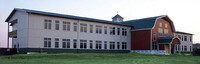
The Natural Resources Defense Council
Robert Redford Building in Santa Monica, California has won a
Charter Award from the Congress for the New Urbanism (CNU). The building, designed by Moule & Polyzoides Architects and Urbanists, simultaneously addresses green building and New Urbanist concerns (see
EBN
Vol... Read more
News Brief
, warns an article in the July 2004 issue of the
Journal of Light Construction (JLC). According to Kevin Hansen, who recently investigated abandoned tannery sites in the Wilmington, Delaware region for Tetra Tech, Inc., the leather-making industry used to soak animal hides in a slurry of lime and arsenic... Read more
News Analysis
U.S. Plastic Lumber (USPL) filed voluntary petitions for bankruptcy in late July 2004. The company is seeking debtor-in-possession financing, available only to companies in Chapter 11, to support its current operations and has hired Triax Capital Advisors to direct its reorganization. “Our filing provides U.S. Plastic Lumber with the... Read more
News Brief
Seattle’s
Environmental Home Center (EHC), profiled in “Getting the ‘Right Stuff’: A Guide to Green Building Materials Retailers” (EBN
Vol. 10, No. 4), lost its main warehouse, showroom, and offices to a fire on August 11, 2004. Two warehouses remain standing, however, and the company has laid out an aggressive recovery plan in... Read more
News Brief
Power to the People: How the Coming Energy Revolution Will Transform an Industry, Change Our Lives, and Maybe Even Save the Planet by Vijay Vaitheeswaran; Farrar,... Read more


