
News Analysis

With demand for healthy buildings on the rise, interior designers are developing protocols to put principles into practice.
Fresh air: good. VOCs: bad.
That much is clear—but very little about the health impacts of building design and building materials is as self-evident. Even the perennially recognized benefits of daylight, plants, and exercise—not to mention best practices for integrating them into building projects—are... Read more
Webcast
ON-DEMAND WEBCAST
Brent Ehrlich, Products Editor — BuildingGreen, Inc.
Susan Walter, Senior Project Architect — Wilmot/Sanz
Sarah Nettleton, AIA — Sarah Nettleton Architects
Sarah Lott, Researcher — Healthy Building Network
Mikhail Davis, Director of Restorative Enterprise — Interface
-->
If... Read more
News Analysis
Enhancing people’s health and wellness in the built environment is the focus of the WELL standard from the International Well Building Institute.
The International Well Building Institute (IWBI) officially launched the WELL Building Standard at its inaugural WELL Building Symposium in New Orleans. Billed as “the world’s first building standard to focus on enhancing people’s health and well-being through the built environment,” Version 1.0 of the standard was released... Read more
News Brief
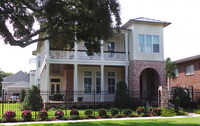
Projects in Mississippi and Alabama are certifiably hurricane-resilient under a Department of Homeland Security resilience program.
The U.S. Department of Homeland Security (DHS) has recognized six Gulf Coast homes through its Resilience Star pilot program. The designation is based on compliance with various Fortified Home standards developed by the Insurance Institute for Business & Home Safety (IBHS), with the pilot focusing on the Fortified Home–... Read more
News Analysis
The Global Real Estate Sustainability Benchmark goes after investment-grade data with the USGBC-affiliated Green Building Certification Institute.
If you think of the Green Building Certification Institute (GBCI) at all, you probably think of it as the organization that administers your LEED credential and reviews your LEED project for certification. What is it doing acquiring the Global Real Estate Sustainability Benchmark (GRESB), a system that scores real estate... Read more
News Analysis

The feds have marked performance verification as a requirement for green rating systems used by the federal government.
After years of work—and controversy—the U.S. Department of Energy (DOE) has released a final rule clarifying which green building rating systems federal agencies may use. DOE only names criteria, not specific rating systems, but based on these criteria—including one for performance verification—LEED comes out ahead of Green... Read more
News Analysis
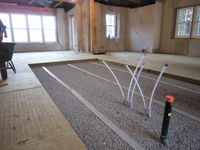
Roxul is now promoting its rigid mineral wool for sub-slab applications.
Readers of EBN are well aware of our concerns with extruded polystyrene (XPS). The green building community has three concerns about XPS: first is the HFC (hydrofluorocarbon) blowing agent, which is a highly potent greenhouse gas; second is the brominated flame retardant HBCD, which is now on the Stockholm Convention list of... Read more
Product Review

Transformative products eliminate toxic chemicals and fossil fuels, and improve building and site performance.
BuildingGreen, publisher of EBN, has announced the winners of its annual Top-10 Green Building Products awards. The 13th annual awards recognize green building products that make fundamental transformations to “business as usual” in the design and construction industry.
This year’s picks include... Read more
Product Review
The continuity of air and water barriers depends on the quality of workmanship, and Prosoco’s Cat 5 system is hard to get wrong.
It’s not exactly Color by Numbers, but Prosoco’s fluid-applied air barrier is close to being that simple. That’s saying a lot in a field where some alternatives are more like origami.
“The whole class of liquid-applied water-resistive barriers and liquid-applied flashings has been one of the major... Read more
News Brief
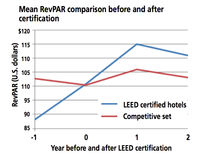
Continuing its series of investigations into the outcomes of greening hotels, Cornell finds LEED hotels benefit from higher revenues.
Contrary to an earlier study on consumer behavior suggesting that sustainability certifications do not increase booking revenues, a second Cornell report identifies the opposite trend by directly analyzing financial performance and narrowing its study sample to LEED-certified hotels.
“The Impact of LEED... Read more
News Brief
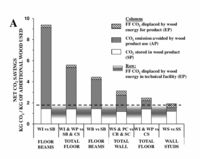
Using sustainably harvested timber in place of concrete, steel, and brick would have a massive positive impact, a new study asserts.
What would happen if we replaced all concrete, steel, and brick with wood products in new construction? A whole lot of good, suggests a new study from researchers at the Yale School of Forestry & Environmental Studies.
The analysis, “Carbon, Fossil Fuel, and Biodiversity Mitigation With Wood and... Read more
News Brief
The economics of lighting upgrades and other capital improvements are not straightforward; new guidance makes it easier for designers.
Most lighting professionals went to school so they could learn to design lighting systems—not so they could learn how to pay for them. Yet economic analysis has become part of their job, with clients expecting designers to explain things like return on investment and when their LEDs are going to “pay for themselves.”
... Read moreExplainer
Plastics are made from petrochemicals whose environmental profiles are complicated at best. But some stand out as, if not cleaner, at least less dirty.
Plastics such as polyvinyl chloride (PVC), polyester, polypropylene, polycarbonate, and polystyrene have long been common in our building products. The environmental movement has pushed manufacturers to tout durability and recycled content in their products, but a more sophisticated trend is to tout some plastics as being “... Read more
News Analysis
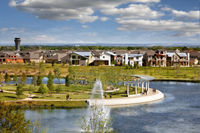
Research shows that when they moved to a more livable community, new residents reported more physical activity, social engagement, and cohesion.
Is it time to start talking about “walked-in” neighborhoods rather than walkable ones?
Ongoing research in Mueller, a mixed-income planned community in Austin, Texas, suggests that people who move to a pedestrian- and bike-friendly neighborhood report more physical activity, more social engagement, and... Read more
Product Review
CREE’s LED T8 sets a new benchmark for linear fluorescent replacements, but LEDs aren’t ready for all applications.
Linear fluorescents make up about 75% of commercial lighting, according to the U.S. Department of Energy (DOE), with billions of T8 tubes in use. Popular because of their low cost and energy efficiency, linear fluorescents also have some significant problems: they have poor color quality, they flicker, they emit small amounts... Read more
Feature
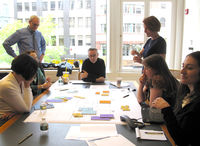
Making all your projects high-performance means getting in touch with what your client really wants and checking “green building” at the door.
There are the clients that we dream about—with signature push-the-envelope green projects and a flexible budget to suit—and then there are the clients that architects like Z Smith, AIA, principal at Eskew+Dumez+Ripple (EDR), see in real life.
Smith says that when it comes to sustainability, his projects... Read more
News Brief
Office plants make workers happier, which helps prevent the kind of disengagement that takes a toll on productivity, according a recent report.
New evidence suggests the office plant can help cut through the boredom and distractedness that settles over many workspaces.
A study published in The Journal of Experimental Psychology in July 2014 compiles three separate field experiments in which researchers controlled office workers’ visual access to... Read more
News Brief

Babies of mothers living in greener areas had higher birth weights in a new study—regardless of air quality, walkability, and other factors.
The world’s newborns have it made in the shade.
A new study shows positive birth outcomes when mothers live in verdant neighborhoods, building on mounting evidence that trees and other vegetation have far-reaching, if poorly understood, positive health implications (for another example, see Tired Brain?... Read more
News Brief
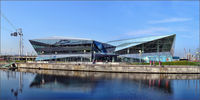
All projects can achieve the lowest BREEAM rating for no additional cost if sustainability strategies are incorporated from the beginning.
The Building Research Establishment (BRE), publishers of the most popular sustainable building rating system in the U.K., say basic green buildings now cost the same as conventional buildings.
In a recent cost analysis, BRE researchers selected three case-study buildings to evaluate as representative... Read more
News Brief
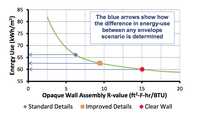
The Devil is in your details, and he’s letting staggering amounts of energy escape.
Designers routinely underestimate total heat flow through their wall assemblies by 20% to 70%, according to a new report prepared by the engineering firm Morrison Hershfield and sponsored by several other Canada-based partners. The good news? Tweaking envelope details may be more effective than adding another inch of insulation... Read more


