
Championing the
Changemakers
BuildingGreen champions the changemakers in sustainable design and building, with trusted insight, unparalleled education, and communities that are transforming the industry.
Log in to your profile

Image: Piranka

Blog Post
News Analysis
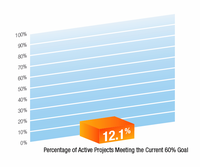
The 2030 Challenge established by Ed Mazria’s organization Architecture 2030 sets a phased timeline for reducing fossil energy use in buildings, targeting net zero use for all new construction by the year 2030. The American Institute of Architects (AIA) endorsed that challenge, but worried about designers committing to goals that... Read more
Blog Post
Blog Post
We just finished our first webinar on Green Building Product Certifications, and I promised people on the call that I'd create a blog post to continue the discussion – so here it is.... Read more
Blog Post
[Editor's note: Robert Riversong, a Vermont builder, continues his 10-part... Read more
News Brief

by Paula MeltonThe U.S. Green Building Council (USGBC) is seeking entries through July 1, 2011 for a Multifamily Midrise Design Competition. The contest centers on a historic New Orleans school building that was damaged in a 2008 fire. Entries must follow the LEED for Homes rating system for multifamily midrise buildings, be designed... Read more
Blog Post
Crowd-sourced commentary enriches proposed rules for building well.
I'm not sure if it was the topic or the all-star panel that drew a crowd to a session entitled "Beyond the Red List" at the recent Living Future conference in Vancouver. Along with other great panelists, Tom Lent of the Healthy Building Network teamed up with Robin Guenther from Perkins+Will to share a strong call to action on toxicity in... Read more
Blog Post
Posted the next day.
As Bourbon Street throbs beneath my hotel room window, it is a little hard to focus on anything else--and in my exhausted state it's all starting to get mixed up with Thomas Friedman's talk this morning.
... Read more
Blog Post
I've just arrived in the press room at the AIA National Convention in New Orleans, and am really looking forward to learning a lot, finding some exciting new products to share with you, and perhaps even meeting some of you in person.... Read more
News Brief
win = window.open(URL, "win", "toolbar=no,location=no,directories=no,status=no,menubar=no,scrollbars=yes,resizable=yes,width=740,height=500");
win.focus();
}
By Emily CatacchioOn May 2, 2011, the U.S. Environmental Protection Agency (EPA) launched the second Energy Star National Building Competition, titled... Read more
Blog Post
By HB Lozito
Ideas worth spreading have a way of crossing disciplines. At a recent TED event, HB Lozito found links to green building that may surprise you.Like many other people, I have been lusting after attending a TED talk for the last several years. I tend to eat them up while on my lunch break. Or better still, if I can... Read more
Blog Post
Reusing building materials is an increasingly pressing topic as the global recession continues and people begin to notice greenhouse gas emissions caused by the production of new building materials (see “A 2030 Challenge for Building Product Manufacturers,” EBN March 2011). Next week, I will attend the Building Materials... Read more
Blog Post
Blog Post
[Editor's note: Robert Riversong, a Vermont builder, continues his 10-part series of articles taking design and construction to what he sees as radical or "root" concerns. Enjoy--... Read more
Blog Post
"On a scale from 1 to 10, how nice are you?"
My nine-year-old neighbor put that question to me recently. He had been asked the question as part of an... Read more
Blog Post
Wed., May 18 | 3 p.m. ET Register now
What the heck do all these labels mean?"Green" labels are everywhere today, from your breakfast coffee to every other building product. While there are... Read more
News Analysis
The only program of its kind, CBECS gathers a massive amount of hard data on energy use of all kinds within the nation’s commercial building stock. The 2003 survey looked at 5,200 buildings, representing about 72 billion square feet of space. The data is used, among other things, to support energy-efficiency benchmarking in a variety of... Read more
News Analysis
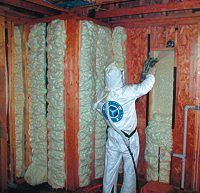
EPA takes another look at spray foam after increasing consumer health complaints. The action plan leaves open questions about how far EPA will go to clamp down on these products, but it's safe to think of this as a shot across the bow from EPA for the SPF industry.
The U.S. Environmental Protection Agency (EPA) has released a new action plan for chemicals used in spray polyurethane foam (SPF) insulation. Isocyanates, such as MDI (methylene diphenyl diisocyanate), are highly reactive chemicals that can cause skin, eye, and lung irritation, asthma, and chemical sensitization when absorbed through... Read more
Blog Post
After a long, cold winter in Vermont (and yes, it even... Read more
Blog Post
The 2011 Living Future "unconference" in Vancouver is a hopping, high-energy event. As usual, CEO, host, and MC Jason McLennan has set a high bar with his passion and willingness to push boundaries. Except Jason, all the... Read more


