
Championing the
Changemakers
BuildingGreen champions the changemakers in sustainable design and building, with trusted insight, unparalleled education, and communities that are transforming the industry.
Log in to your profile

Image: Piranka

Blog Post
Over the next ten weeks, I'm going to lay out my top-ten priorities for green building--starting, in Lettermanesque fashion, with #10 and working up to #1. These priorities are directed primarily toward the design and construction profession, but homeowners having a house built or work done on a house need to be part of... Read more
Blog Post
When I began researching concrete for last month’s EBN feature article "Reducing Environmental Impacts of Cement and Concrete," one of my goals was to figure out how toxins... Read more
News Analysis
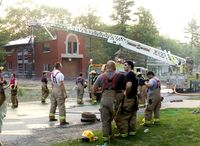
Green buildings may present special challenges for firefighters because of new technologies, building materials, and building techniques. That’s the concern Fire Safety and Green Buildings—Bridging the Gap, a new website at www.GreenBuildingFireSafety.org developed by the National Association of State Fire Marshals (NASFM); a handbook... Read more
Blog Post
Tradical® Hemcrete® is a non-structural, rigid, insulating, composite wall fill comprised (by weight) of about 38% hemp and 62% lime-based binder. The Tradical lime binder is manufactured in the... Read more
Case Study

Green to the (Structural) Core: A home for environmental and social action is true to the legacy of its namesake.
A quick glance at the tenant directory in the lobby of the David Brower Center reveals that the four-story structure in downtown Berkeley, California, is not a typical office building. Names like the Earth Island Institute, the Green Jobs Network, and the Bay Area Open Space Council, give visitors a clue that the 30 organizations occupying the... Read more
Case Study
Stepping Up to Zero Energy: With the second phase of its campus plan, a private school on an idyllic site aims for net-zero.
By William Hanley
Students at Marin Country Day School measure academic progress with their school’s topography. Located in a sharply sloping watershed that descends Ring Mountain to San Francisco Bay just north of the Golden Gate Bridge, the 35-acre campus is organized with the lower school at the lowest elevation and the upper school... Read more
News Brief

Google released SketchUp 8 on September 1, 2010, with a number of notable enhancements, many of which will make SketchUp more useful as a sustainable design tool. Environmentally speaking, the two big innovations with this release are volumes and geographical context. As with past versions, most of these features are available in the free... Read more
News Analysis

In a major consolidation among the crowded field of green product labels, Underwriters Laboratories (UL) has acquired Terrachoice, the manager of the EcoLogo Program. The move sets up a close partnership between EcoLogo and UL Environment, with EcoLogo being one of the oldest (since 1988) and most-respected eco-labels, and UL... Read more
Blog Post
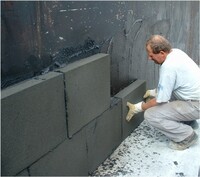
Foamglas is an inorganic, high-compressive-strength insulation with no need for flame retardants or other hazardous chemicals.
Blog Post
Last week we examined the amount of energy it takes to transport and treat water--and how we can conserve energy by using less water. This week,... Read more
News Brief
An environmental rating system for shoreline developments created by the Sustainability Centre for British Columbia is being adapted for use in the U.S. The Coastal Developments Rating System (CDRS) covers commercial and residential developments as well as public walkways, parks, and other waterfront developments. Developed with the aid of... Read more
News Analysis
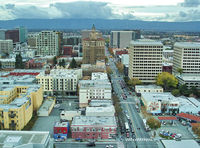
The Bay Area Air Quality Management District (BAAQMD) recently released guidelines for local governments considering air emissions related to proposed construction... Read more
News Brief
The U.S. Environmental Protection Agency (EPA) has launched a website for integrated environmental modeling. The online tool, called iemHUB, allows scientists to share digital modeling tools, data sets, and other information. Scientists use integrated environmental modeling to predict the spread of pollutants (during oil spills, for example),... Read more
News Analysis
Three new certification standards in development would certify not the sustainability of buildings or of products, but the environmental and social performance of manufacturers. While there are many forms of corporate reporting on sustainability through voluntary protocols, such as the Global Reporting Initiative, there have not yet been third-... Read more
News Brief
Associated Builders and Contractors, a national organization representing 25,000 construction firms, has rolled out a green certification for its members. To earn the certification (which has one tier), companies must meet several prerequisites that cover office practices like recycling, green cleaning, purchasing Energy Star-qualified... Read more
News Analysis
A process for providing precedent-setting rulings to project teams using the LEED rating system is under development at the U.S. Green Building Council (USGBC). The resulting “LEED Interpretations” process is to be unveiled in the Fall of 2010.
The LEED Interpretations process will look a lot like the process for Credit Interpretation... Read more
News Brief
News Analysis
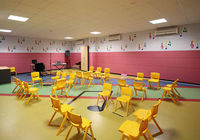
Norway ranks first in the world in sustainability for the second year in a row, beating out 33 other industrialized nations, according to a recently released study from the U.K. The 2009 Royal Institute of Chartered Surveyors (RICS) Global Zero Carbon Capacity Index ranks countries in terms of energy consumption and carbon-reducing policies.... Read more
Product Review

Pumping uses a tremendous amount of electricity. In looking at efficiency of hydronic heating systems, we have long focused on the fuel used to heat the water being circulated, without paying much attention to pumping energy. Fortunately, that’s beginning to change.
Two of the world’s leading pump manufacturers, Wilo (pronounced “veelo”)... Read moreNews Brief
The Montreal Protocol, the international treaty in effect since 1989 to limit the use of ozone-depleting substances, may save your eyes. According to a report from the U.S. Environmental Protection Agency (EPA), the more robust ozone layer resulting from the Montreal Protocol will prevent more than 22 million cases of cataracts for Americans... Read more