
News Brief
Daylighting for Sustainable Design
by Mary Guzowski. McGraw-Hill, New York, 2000. Hardcover, 450 pages, $79.95.
Daylighting for Sustainable Design is a treat to read, either by opening it up randomly and starting anywhere, or progressing cover-to-cover. Author Mary Guzowski uses high-quality color images and clear descriptions to let buildings from around the world tell the story of how daylighting works and the benefits it brings.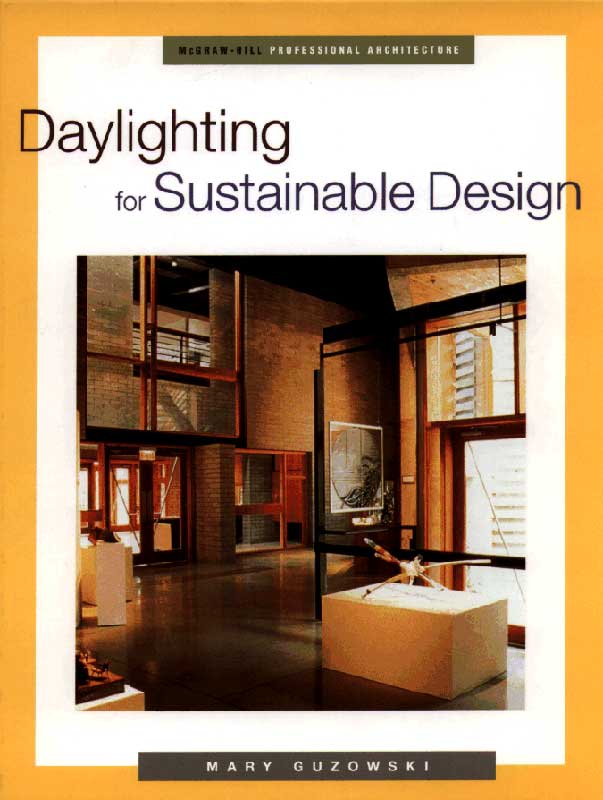
This is not a technical “how-to” book on daylighting, making it a good companion to more technical titles, such as Gregg Ander’s
Daylighting: Performance and Design. It complements these other texts, both with its gallery of projects and with well-rounded discussions of the benefits of daylighting beyond energy savings. In the chapter on health and well-being, for example, Guzowski covers, in some detail, therapeutic uses of light, color, and strong daily rhythms.
Much of the text flows from project to project, featuring 75 case studies, each two to six pages long. The case studies do not attempt to cover the buildings thoroughly, but they are quite good at exploring the daylighting features of each with extensive use of photographs, plans, sections, and renderings. Unfortunately, a few of the images appear to have been reversed by the printer, which makes it difficult to follow the discussion about orientation—unless one keeps a pocket mirror handy. While some of the projects are impressive environmentally, Guzowski acknowledges that others are not all that green except for the daylighting aspects.
Daylighting for Sustainable Design does not present the hard numbers on energy savings or explanations of how to use technical daylighting design tools, yet it does not oversimplify the design challenges or shy away from exploring complex issues. In fact, it succeeds in making these issues accessible to less-technically inclined readers and will likely become a very popular textbook for environmental design courses and design studios alike.
Published November 1, 1999 Permalink Citation
(1999, November 1). Daylighting for Sustainable Design. Retrieved from https://www.buildinggreen.com/newsbrief/daylighting-sustainable-design



Add new comment
To post a comment, you need to register for a BuildingGreen Basic membership (free) or login to your existing profile.