
News Brief
Saving Energy at the Park-N-Shop
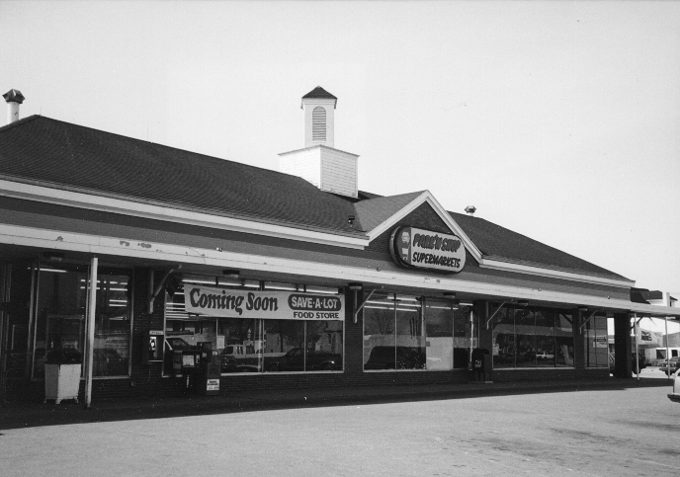
Based on this case study, the potential for energy savings at stores like this one across the continent are truly phenomenal.
Photo courtesy Barbara HarwoodWhen homebuilder Barbara Harwood stumbled across the quote for a new mechanical system for a grocery store owned by her husband, she knew that the loads were out of line. The quote called for a system sized to provide one million Btu/hour (1,055 MJ/hour) of heating and 50 tons (175 kW) of cooling for the 17,900 ft2 (1,660 m2) store.
Knowing that the space conditioning loads could be improved, Harwood began researching the possibilities of upgrading the building envelope to reduce the loads. A local engineering firm she hired wasn’t much help, however. They specified efficiency upgrades totaling $149,000, and then a replacement HVAC system costing another $113,000. Harwood finally traveled to the site herself and determined that the necessary modifications could be made for a whole lot less.
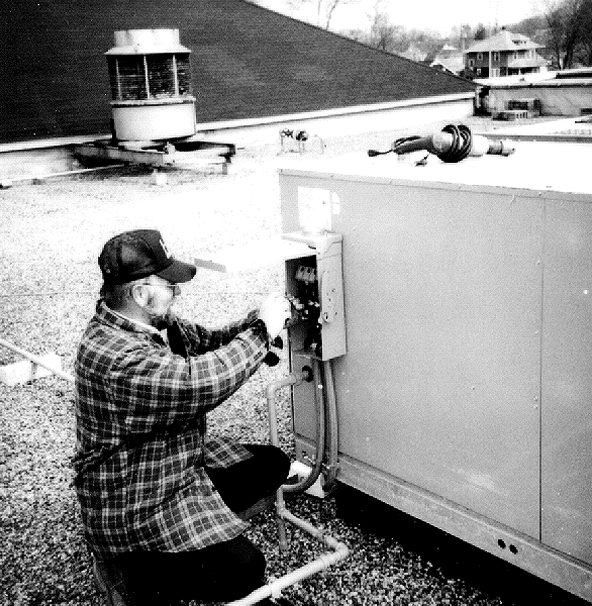
Hooking up the gas line on the new rooftop combination heating/cooling units. An old air-conditioning unit is in the background.
Photo courtesy Barbara HarwoodShe had several leaky old doors removed and blocked up the openings to match the existing concrete block wall. Then she had R-30 (RSI-5.3) cellulose insulation installed in the steel bar joists above the store’s dropped ceiling. One old door was replaced with a newer, airtight version, which was available for free from unrelated renovation in another part of the building. Another door, which she had forgotten to account for in her estimate, was dealt with inexpensively by sealing it with caulk, adding insulation, and drywalling it over. To keep within budget, she did the caulking and insulation work herself. The total cost for the envelope measures came to $10,700.
What is exciting about this project is the impact her retrofit had on the HVAC loads and equipment requirements. Once the envelope retrofit was complete, an HVAC system sized to provide 20 Tons (70 kW) of cooling was adequate. Installing this system cost $24,200, including a special concentric diffuser supplying air to the back part of the store. The cost of the entire project, including both envelope measures and the new HVAC system, came to $34,900. This figure is approximately equal to what the cost would have been to replace the existing heating and cooling systems to meet the loads as originally planned, so the payback for the retrofit was immediate!
In addition, simulations done by Bion Howard of Howard Associates show annual energy savings of $9,863 (see table). These savings should transfer directly to the bottom line.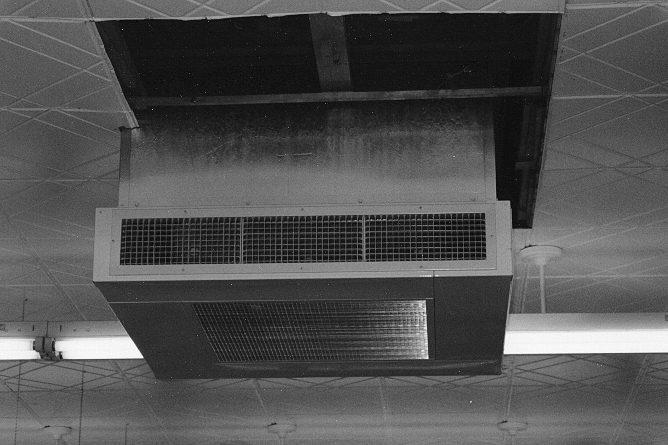
Air distribution in the store was improved with the installation of this concentric diffuser.
Photo courtesy Barbara HarwoodThese totals came to 230,000 lb (104,000 kg) carbon dioxide, 512 lb (232 kg) sulfur dioxide, 390 lb (177 kg) nitrous oxides, and 106 lb (48 kg) respirable particulates.
For more information:
Barbara HarwoodBBH Enterprises, Inc.
2718 Wagonwheel Drive, Suite 3
Carrollton, TX 75006
214/418-7772
Bion Howard
Howard Associates
P.O. Box 1007
Upper Marlboro, MD 20773
301/627-2780, 301/627-4735 (fax)
bhoward@interserv.com
Published July 1, 1996 Permalink Citation
(1996, July 1). Saving Energy at the Park-N-Shop. Retrieved from https://www.buildinggreen.com/newsbrief/saving-energy-park-n-shop



Add new comment
To post a comment, you need to register for a BuildingGreen Basic membership (free) or login to your existing profile.