
News Brief
Stalking the Wild Amaranth: Gardening in the Age of Extinction
Stalking the Wild Amaranth:
by Janet Marinelli, 1998. Henry Holt & Company. Hardcover, 230 pages, $25.
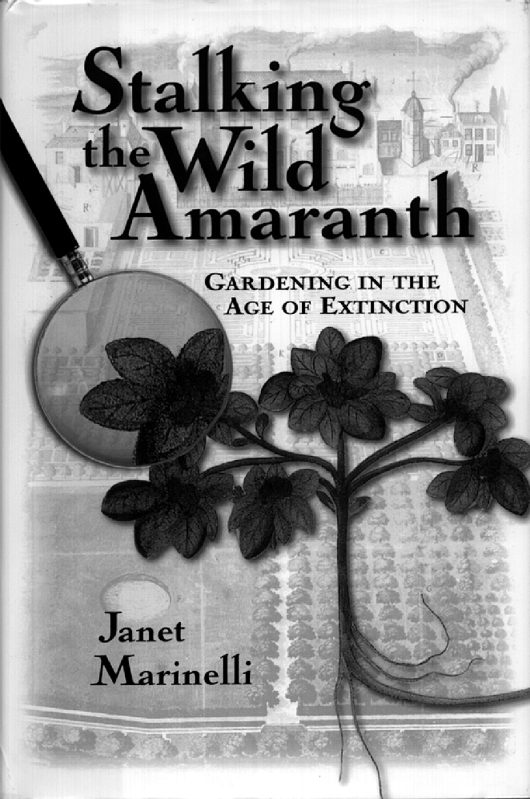
Marinelli makes the case that the act of building is inherently disruptive to existing ecosystems, as both the construction process and the building itself inevitably interrupt the natural movement of water, air, sun, and animals. She argues that a good garden can mitigate these impacts—for example, by including a wetland as a stormwater retention area.
Going well beyond a plea to avoid damaging natural ecosystems, Marinelli suggests that gardeners can use their expertise in growing plants to nurture endangered native species, and even help to protect them from extinction. She does an excellent job of weaving together personal adventures (and misadventures) with discussions of science and public policy, producing a book that both educates and entertains. She lays out the basics on how the typical American garden, based on traditions of the English garden, is leading to widespread distribution of a limited number of preferred species, at the expense of the natural diversity of each region.
Describing how invasive species have gotten established, she notes that thousands of plant species have been introduced by humans, intentionally or otherwise, into the United States; of these, Marinelli and her colleagues estimate that about 300 are currently invasive. About half were introduced specifically for use in gardens. Some, such as tamarisk and honeysuckle, are still promoted for planting, in spite of their well-known invasive characteristics.
Any conventional gardener who reads this book will find ways to begin using indigenous plants. For those who are already committed to gardening with native plants,
Stalking the Wild Amaranth will broaden their understanding of the science and policy reasons for doing so—perhaps they will even be encouraged to take the next step of using their gardens to propagate threatened or endangered native plants and thus help ensure the survival of these species.
Published September 1, 1998 Permalink Citation
(1998, September 1). Stalking the Wild Amaranth: Gardening in the Age of Extinction. Retrieved from https://www.buildinggreen.com/newsbrief/stalking-wild-amaranth-gardening-age-extinction



Add new comment
To post a comment, you need to register for a BuildingGreen Basic membership (free) or login to your existing profile.