
Blog Post
Optimism, Entropy and…Puppies?
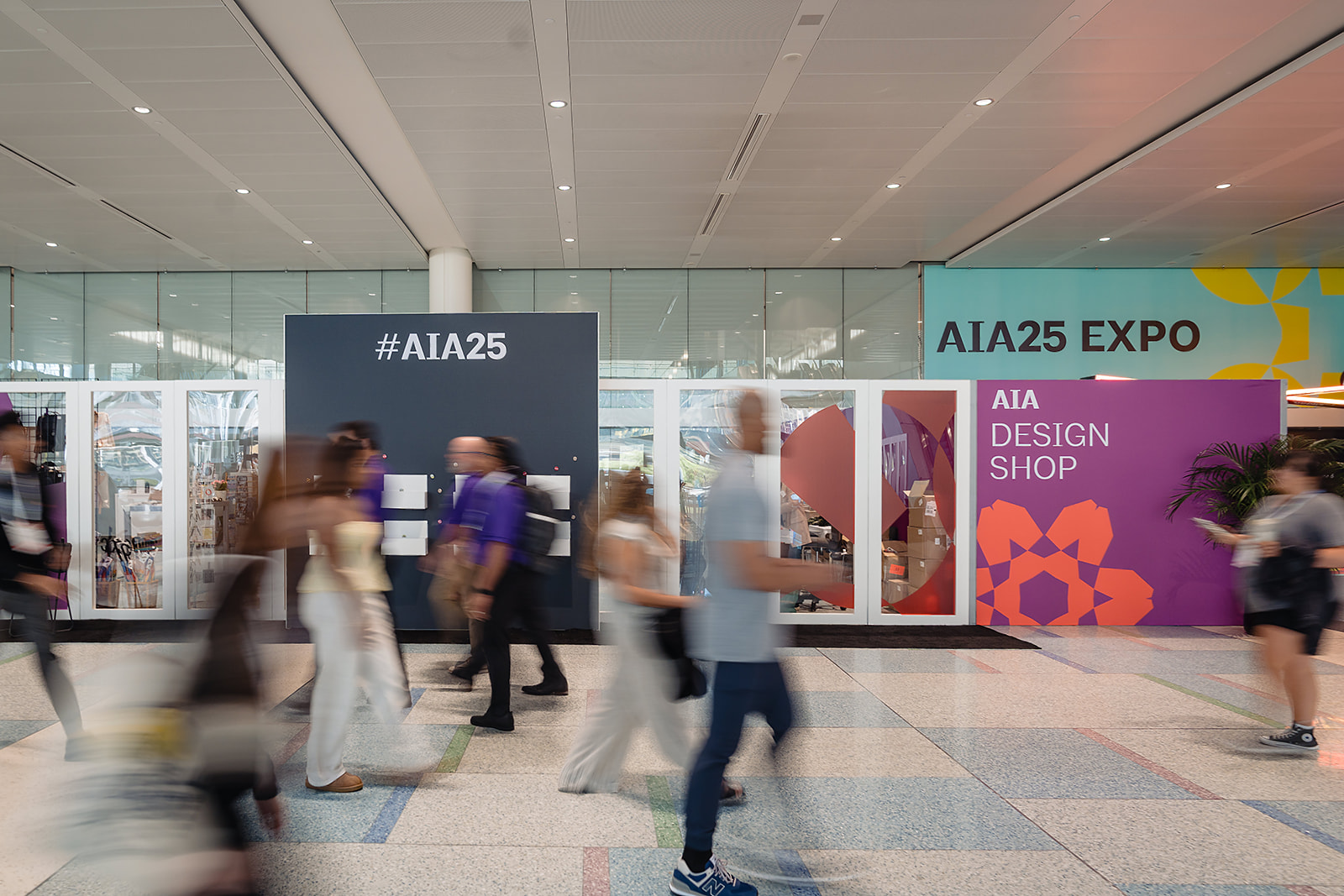
They escaped cities like Atlanta, Phoenix and Tulsa, which averaged 89 degrees that week, so this was supposed to be a mild junket on the banks of the River Charles.
Quiet grousing in the LEED Silver Boston Convention and Exhibition Center’s forecourt gave way to much louder debates inside about the keynoters who set the tone—AI is here to stay (Allie K. Miller), transportation infrastructure imperils us all (Pete Buttigeig), and architects need to be better storytellers (Dami Lee).
SUPPORT INDEPENDENT SUSTAINABILITY REPORTING
BuildingGreen relies on our premium members, not on advertisers. Help make our work possible.
See membership options »One theme was about job security, one about existential dread and one about a glaring occupational deficit—making the weather a more agreeable topic for once.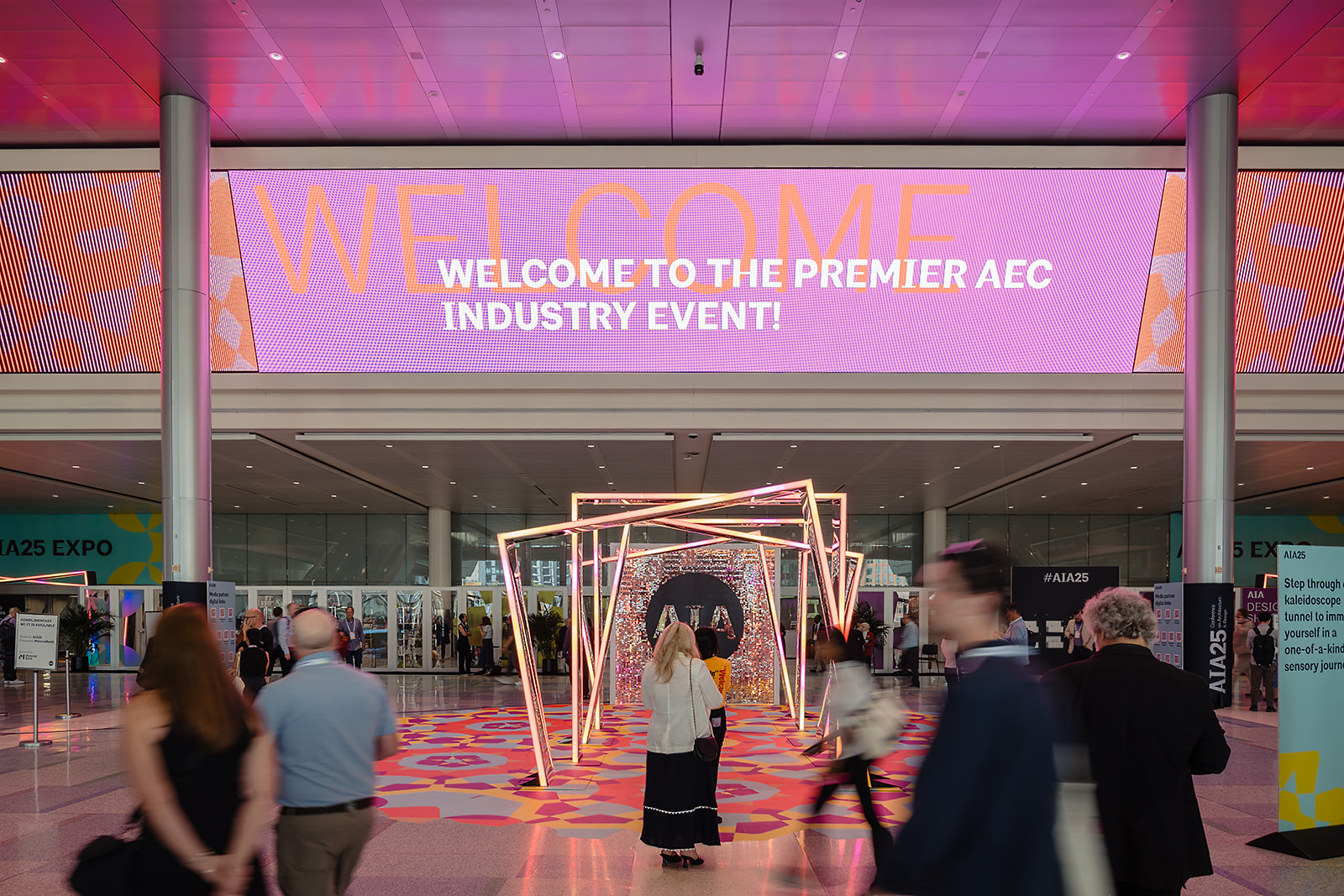
The approximately 12,000 attendees were caught between these urgent themes and the optimism threaded through nearly all of the remarks during the general sessions, reaching a fever pitch on June 6 on the main stage, when AIA’s interim CEO Stephen Ayers and this year’s Gold Medal recipient Deborah Berke both referenced their “happy places”—with Berke also declaring, “We’re all optimists in this room.”
AIA President Evelyn Lee doubled down on “all the optimism I see…and that buzz of possibility is what keeps us coming back,” as a bridge to the feel-good vibe that AIA has established at its annual meeting over the last decade.
“But I also see doubts, and I see concerns and I see worry,” Lee said. “We are seeing politics shift and technology race ahead,” said Lee, noting that the economic and social landscape in 1857, the year of AIA’s founding, is not dissimilar from the economic and social upheaval that seems to define its 168th year. “We are experiencing what’s called a polycrisis.” AIA National President Evelyn Lee and Pete Buttigieg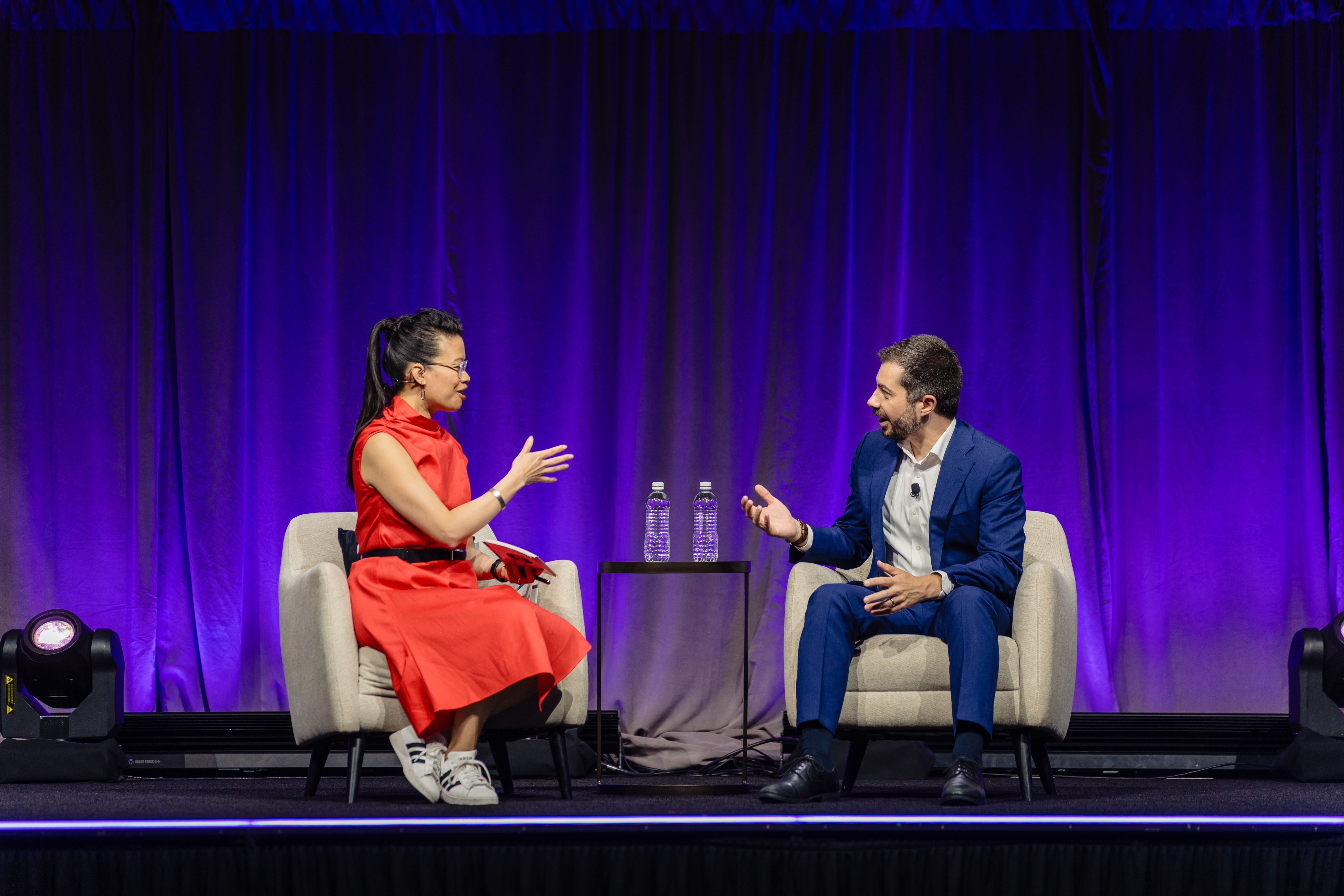
Hope and entropy is pure whiplash—and uncertainty about what, exactly, a room full of architects should actually do about this polycrisis once they get back to Atlanta, Phoenix and Tulsa.
Robin Puttock, an architect with more than 20 years’ experience who teaches at Kennesaw State University in Georgia, felt there are steps to take for architects, however nebulous they are now.
“The overarching conference message about opportunity can only be efficiently received and shared as solutions after we identify and understand the current conditions from many different perspectives,” she said.
Day two headliner and the former Secretary of Transportation Pete Buttigieg offered one idea to find actionable and hopeful things to do—engage with local affairs, even as a five-to-nine volunteer job for architects after their daily nine-to-fives. Bottom-up advocacy, he opined, is the only option in the face of top-down dysfunction.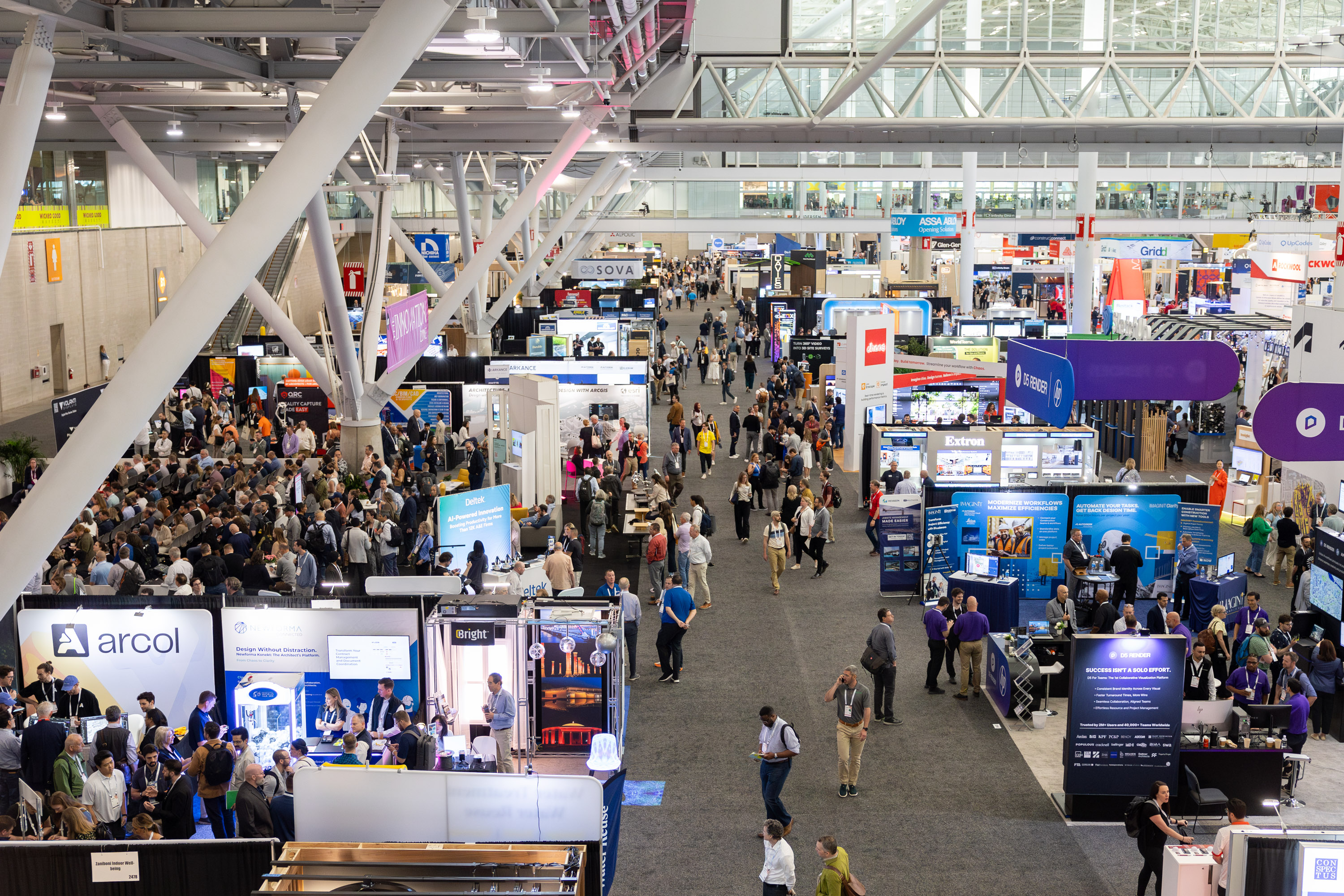
“I continue to believe in a sense of hope—and I know it’s an unfashionable word,” said Buttigeig, “but when everything gets burned to the ground, what happens next is an opportunity.”
But opportunity isn’t always the promised land. It’s a complicated word that generates a lot of anxiety that, in turn, generated a lot of educational seminars in Boston aimed at tactical competencies like adapting existing buildings to new uses and greater efficiency, better business practices, community engagement, equity and intercultural competency, and decarbonization. AIA also amplified topics like these in various zones on the expo floor—economics in the Prosper Zone, a LEGO activity in the Build Zone, robots in the Innovate Zone, and puppies in the Design Zone. (If there was one thing overheard in line or in conversation over three days, it was a version of, “Did you see the puppies?” No one asked after the robots.)
In timely economic news, the Trump Administration’s 50 percent steel and aluminum tariffs took hold midway through the AIA’s annual meeting, increasing the probability of continued challenges for architecture firms. If we’re talking about opportunity as the meta-theme, the big opportunity for architects is to rethink business as usual in specifying steel and aluminum. For many building projects, both new construction and renovation, this could mean the use of mass timber products like cross-laminated timber and glued-laminated timber. The opportunity here is also to source reclaimed materials for smaller projects. That’s not going to satisfy the big projects, but there is a lot designers of smaller projects can do to blunt the price factor that makes already small margins smaller. Of the 450 sessions in Boston, nine specifically addressed mass timber.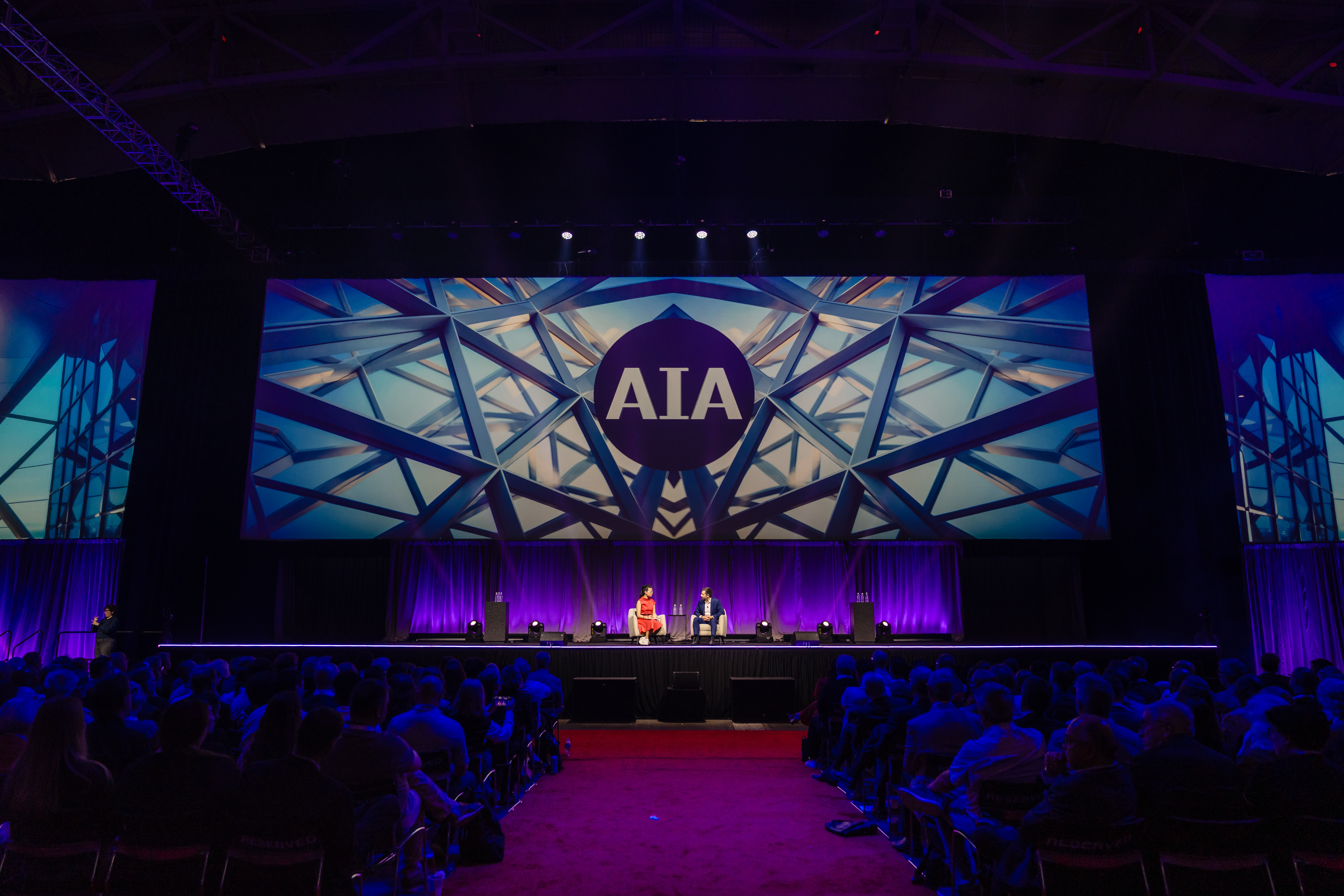
After more than 20 months of negative Architecture Billings Index (ABI) numbers, opportunity seemed less defined than hope. The ABI, sponsored by software company Deltek, is the AIA’s measure of industry health based on architecture firm billings from one month to the next, which is seen as an indicator of future construction spending. If billings are down, the prospect of growth for firms—or even work that can keep the lights on—becomes more distant. Six sessions, including one with AIA’s Chief Economist Kermit Baker on the expo floor, addressed the ever-softening market. In this vertical, one seminar stood out. It was led by Paul Doherty, from a consulting firm called The Digit Group, during which he argued that “singularity”—the moment artificial intelligence surpasses human intelligence—will actually be good for architects. Why? If robots are smarter, that allows architects to spend more time on more important things such as creating a circular economy focused on materials, and spend less time on menial job tasks related to design or change orders.
Published July 1, 2025 Permalink Citation
Richards, W. (2025, July 1). Optimism, Entropy and…Puppies?. Retrieved from https://www.buildinggreen.com/blog/optimism-entropy-and-puppies



Add new comment
To post a comment, you need to register for a BuildingGreen Basic membership (free) or login to your existing profile.