
Blog Post
Stopped, Dropped & Rolled
This story originally appeared in BuildingGreen Issue 2025.01
It had been a dry winter, like winters are these days, and the city was a tinderbox. Desiccated branches of invasive salt cedar and eucalyptus whispered as the breeze began, small flowers cascading as it passed over the crest of the Santa Monica Mountains, flowing down to the sea. We knew it was coming. Fire season, everyone said. The National Weather Service had issued a warning, the city of Los Angeles had declared a state of emergency. But somehow, when the flames began on Tuesday, January 7th, mid-morning, we were still surprised. Disasters are like that. They come suddenly, unexpectedly, no matter how prepared you think you are. 
At around 10:30 in the morning, the fire began burning near the Skull Rock Trailhead, adjacent to the Palisades Highlands. By 11:06, it was logged at 10 acres by Cal Fire. People filmed videos of the smoke rising, a shocking black plume bisecting the Pacific blue. One X user captured the moment the fire chased their group off a hiking trail in a panic. In the video, you can see how clear the sky is, how surrounded they are by dried brush, arcing over them like encircling arms.
The video went viral. People were furious—did the hikers set the blaze? (Since publication, an arson suspect has been arrested in this case.) Faced with the irrational violence of nature, everyone was desperate for somebody to blame.
By noon, Sunset Boulevard had slowed to a stop, gridlock trapping evacuees in mile after mile of stationary cars, motionless and glued to live coverage on the radio as their gas tanks emptied. People didn’t know where to go, what to do. Some headed to friends’ houses, only to be evacuated a second or even a third time. Some went to hotels, which doubled their prices or charged them special evacuee rates, alternatively opportunistic or kind. Some left the city entirely as hotels filled up as far away as Palm Springs, San Francisco or Joshua Tree. Anywhere to escape that relentless smoke.
Behind the fleeing cars, the fire spread quickly, consuming everything in its path. In the mountains, a mother with a broken arm rushed to the closest fire station to find help for her adult son, blind and living with cerebral palsy, who she was unable to lift on her own. She returned to find the structure he had inhabited consumed by flames. Her son was gone. Homes were lost, cars bulldozed unceremoniously out of the way as their panicked owners left them blocking roads, whole neighborhoods swallowed by flame as the fire quickly grew to cover 200 acres, burning both sides of Palisades Drive, casting an orange light onto the sea. The first evacuation order was put into effect, the first evacuation center established. Still, the fire spread. Just three hours later, it was six times its previous size. The sky over the west side city began to turn a uniform shade of smoky gray. At this stage, I still hadn’t started to panic. One fire, even a fire as big as this one, seemed manageable. We had survived big fires before.
SUPPORT INDEPENDENT SUSTAINABILITY REPORTING
BuildingGreen relies on our premium members, not on advertisers. Help make our work possible.
See membership options »“I felt my panic like a physical force, like someone was clawing the inside of my throat.”
But just a few hours later, at 6:18 p.m., Altadena caught fire too. Fueled by the winds, the flames spread quickly as the community rushed to evacuate with no time to prepare—and as all too often, no official notice at all. One resident reported evacuating only after hearing a neighbor driving down the street blasting their horn, another fleeing when she smelled smoke and discovered that her back yard was on fire. The intense winds whipped dust and smoke through the air, making it difficult to see. As the cots quickly filled up in the evacuation centers, elderly evacuees waited in the bone-chilling cold. At one nursing home, a 100-year-old woman was accidentally left behind in the chaos. No one was sure what to do or where to go. Emergency services struggled to respond to every crisis. 911 calls dropped. Another young man with cerebral palsy died of smoke inhalation, his amputee father perishing alongside him as they waited for an ambulance to arrive.
Across town, the Palisades Fire burned with greater and greater ferocity. The fire ripped through miles of homes lining Pacific Coast Highway in eastern Malibu. Burned evacuees made their way to the parking lot of Duke’s restaurant seeking medical care, in a scene onlookers described as apocalyptic. With the blazes in Altadena and the Palisades still raging, new fires began to burn in Sylmar, San Bernardino, Studio City, near the Hollywood Hills, and Ventura, flames appearing in neighborhood after neighborhood until it seemed that the entire city was on fire. Fueled by strong winds, the flames grew through the night. An army of local, federal and even international firefighters failed, despite their best efforts, to contain the blaze.
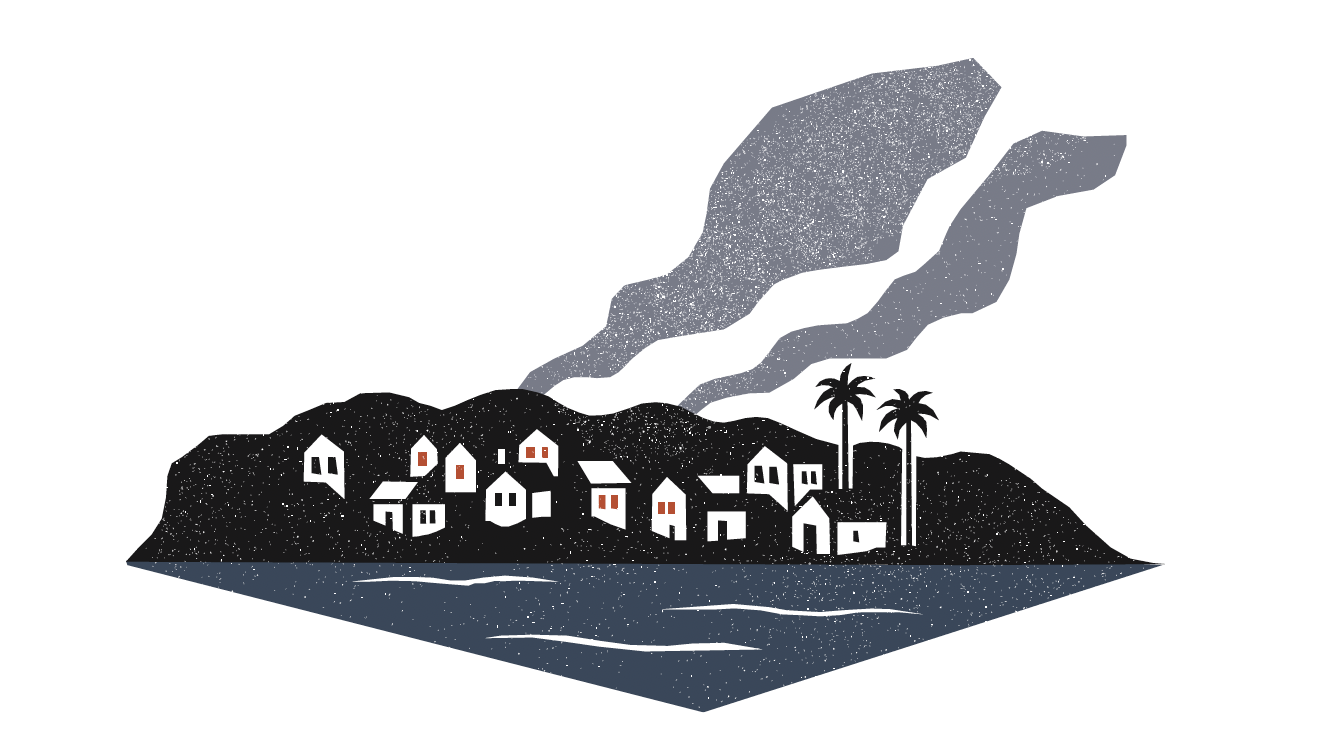
The fires grew stronger and stronger still until, just before midnight, the first civilian casualties were announced. More would follow. The fires would rage for weeks to come, with the Eaton and Palisades fires, the last two burning, finally contained on January 31st. Nearly 20,000 structures had been damaged or destroyed, with countless more rendered uninhabitable by smoke damage. At least 31 people had died. Faced with an estimated fifty billion dollars worth of damage to rebuild, we all wondered, what now?
The answer for many, was GoFundMe. Founded in the early 2010s as part of the burgeoning crowdfunding movement, GoFundMe quickly became many people’s source of financial support in times of crisis. Unlike earlier established competitors like Kickstarter or Indiegogo, which were focused on fundraising for creative or entrepreneurial projects, GoFundMe doesn’t require users to hit a specific goal or provide incentives in order to receive the funds they raise, making it an obvious choice for families who need money fast, and feel like they can’t depend on the traditional mechanisms of home and fire insurance. The company benefits too, netting 30 cents of each donation plus 2.9 percent of the more than $9 billion of relief that GoFundMe users have raised since the platform’s inception.
In a chronically uninsured country, GoFundMe has become one of the only places where people can reliably draw on community support, a fact that the founders of the company have been openly critical of, publicly calling on Congress on multiple occasions to create more robust national solutions for crisis relief. One Covid-era GoFundMe statement insisted, in part, that “GoFundMe was never made to be a source of support for basic needs, and it can never be a replacement for robust federal relief.”
With little change on the national level, GoFundMe continues to be a source of critical funds for millions of individuals. I have personally contributed to GoFundMes for chemotherapy, veterinary bills, the costs of emergency surgery and more, with the company netting a profit off my prosocial spending every time. Donations made via GoFundMe are not tax deductible, unless your friend has gone through the laborious process of establishing themselves as a nonprofit, a process which is difficult, if not impossible, for most individuals in the midst of a life crisis. Still, a GoFundMe page is seen as more legitimate, somehow, than just asking your friends for funds directly. There is space to tell your story, a public list of donations so your community can see their name acknowledged, officially listed as a generous person doing good. These design decisions make the platform feel more legitimate, as though instead of being a desperate place for last chance financial support it were part of the official apparatus that exists in all developed countries other than the one that I call home.
The speed with which GoFundMe pages began to pop up after the Altadena fires tells a bleak story. Many homeowners I spoke to in the course of reporting this piece told me that they had lost fire coverage in the months and weeks leading up to the fires, and were either uninsured or underinsured when disaster struck. GoFundMe became a source of hope for families desperate for economic support. At the time of writing, the search term “Altadena” turned up thousands of requests for support in fire recovery from families, individuals and organizations desperate to rebuild. The platform reports that they have raised over $200 million for fire victims within the initial two weeks after the flame first caught.
But not all requests are created equal. As one study by the American Public Health Association discovered, this type of crowdfunding is “best positioned to help in populations that need it the least.” The study found that returns on this kind of fundraising were unequal, with campaigns from areas with more medical debt, higher uninsurance rates and lower incomes raising substantially less money than their counterparts in higher-income communities. A high percentage of fundraisers originating in low-income areas failed to raise any money at all. Pre-existing inequalities are simply perpetuated, or even exacerbated, when disaster strikes.
This makes intuitive sense—when you reach out to peers and community members for support, they can only contribute as much as they can share. Unfortunately, in practice this means that the majority of GoFundMe monies are raised by people with a network of friends and community members with disposable income to share, or the storytelling skills to appeal to people outside of their networks.
This gap is especially dire given research from the University of Freiburg showing that low-income communities in California have a higher risk of being exposed to the consequences of wildfires. This study found that homes in communities classified as disadvantaged by the US government were 29 percent more likely to be destroyed by wildfires within 30 years than homes in less disadvantaged communities. These communities are also often underinsured and under-resourced, leaving them with no alternative to turn to but crowdfunding—with little financial support available in their own communities of origin.
As I delved into the pages and pages of Altadena fire recovery GoFundMe campaigns, I began to observe a series of unsettling patterns that confirmed these larger trends. People with large followings on other corners of the internet like Instagram and TikTok had little trouble reaching lofty goals. Larger wildlife relief funds raised millions—but not all of these funds appeared to be managed with any sort of oversight process that would hold them publicly accountable for the dispersal of the money they raised. People seemed to do better when their campaigns emphasized the general rather than the personal side of the tragedy. Fundraising pages whose titles identified them as raising money for a single mom with a special needs son and a family of four who lost everything had netted hundreds of thousands of dollars, whereas multiple pages that told similar stories but whose titles only contained the names of the families or individuals concerned failed to raise as little as $5,000 each.
Compassion requires empathy, and it’s easier for humans to be empathetic when we can imagine ourselves into the generalities of a situation, rather than confront its particulars, which we may not relate to. Canny GoFundMe storytellers draw on this effect to restore their own economic stability, but the larger trends show us that this is not a sustainable solution for communities. However, with the costs of insurance skyrocketing in fire-prone areas, leaving some unable to find coverage at all, crowdfunding will likely remain a critical source of disaster relief in the fires yet to come, patching the increasingly wide gaps between what we need from our insurance and what it actually provides.
This is true for the family of Carola Secada, a first-generation immigrant and homeowner who has lived in Altadena with her partner and their two children for many years. “We’re the group that is privileged and blessed to have insurance, and yet we were underinsured,” said Secada, whose family have joined a number of their neighbors in a class-action suit against their insurance company. Even once the insurance paid out, Secada and her family were still left homeless, owing over $200,000 on a mortgage for a home that no longer existed. GoFundMe was there to fill the gaps. “Our family did start a GoFundMe page for us, when this all started. We were very blessed that we almost doubled our initial ask,” she told me. For Secada and many underinsured Altadena residents like her, GoFundMe spelled the difference between their actual needs and what insurance was able to cover.
At the time of the fires, Lockwood and many of his neighbors who had lost insurance coverage were on the California FAIR Plan, a state-run fire insurance program that provides basic insurance for property owners who are unable to secure private market coverage for their homes. In many parts of the state, FAIR Plan coverage is the only kind of fire protection available, with approximately 20% of high-risk zip codes within the state relying on coverage exclusively from the plan. As the climate crisis worsens, the number of homes covered by FAIR Plan policies has continued to grow at an exponential rate. At the time of the fires, 22% of impacted structures in the Palisades and 12% of impacted structures in Altadena were covered by the plan, leaving the state with a potential shortfall of over four billion dollars, which will likely be covered by an increase in private insurance rates.
But even before a post-fire rate change, many people I talked to felt that their expensive private insurance had failed to deliver. Lockwood isn’t the only Altadena homeowner who told me about their negative experiences with State Farm in particular, which is the state’s largest insurer, covering about 20% of Californians. Representatives of the company recently met privately in Oakland with California’s Insurance Commissioner, Ricardo Lara, and the nonprofit Consumer Watchdog to request an emergency interim rate increase of 22% for homeowners, 15% for renters, 15% for condominiums and 38% for rental dwelling coverage, a request that is currently under review with the commissioner, with a decision pending. According to internal estimates, the company will have to pay out $7.6 billion in claims associated with the fires. They have publicly questioned whether they will be able to pay out future claims this year.
Kate Beyda, my aunt who lost her home in the fires, told me that she paradoxically considers herself lucky that her home was completely, rather than partially, destroyed, simply because it made dealing with insurance easier. “The truth of the matter is that you’re luckier to have your house completely burned down than you are to have it stand with insurance,” she said. “Because if there’s anything standing, then they can nitpick. In our case, all I had to do was send the pictures, and they were like, Here’s the check.”
Some Altadena residents whose homes were left standing in the wake of the fire’s devastation have struggled to get their overburdened insurance companies to recognize the gravity of their situations. Secada told me that one of her neighbors whose house had miraculously survived the fire was struggling to get her insurance company to pay to make the house habitable. “She has the only house standing on the block, so she paid a third party to do internal testing on lead and asbestos, both of which were at ridiculously high levels,” Secada said. “She has two children. Her insurance wanted her to clean up and rebuild her own space, and she had to advocate for herself to ensure that they would replace everything inside the house because it was so toxic. And frankly, as difficult of a situation as that is, she was lucky that she had the privilege and education to be able to advocate for herself.”
Underinsurance is a major issue for the diverse communities of Altadena, especially Black residents, who bore an outsized burden of the fire’s impact. A recent UCLA study found that 61% of Black households in Altadena were located within the Eaton Fire perimeter, compared with 50% of non-Black households. Nearly half of the Black households in fire areas sustained major damage, compared to 37% of non-Black households. A majority of Black Altadena homeowners are seniors over the age of 65, a group that is particularly vulnerable to having incomplete or insufficient insurance coverage, and possibly more likely to fall prey to predatory financial scams.
Many community members wondered whether these elders would be able or willing to take on the complicated and lengthy process of rebuilding, speculating that many of Altadena’s older community members might instead opt to sell their newly valuable land to the developers waiting to turn disaster into profit. While most of the people I spoke with expressed support for these elderly homeowners to do whatever they needed to do to survive in the wake of the fires, a lingering question remained—what would the looming spectre of mass land sales do to Altadena’s community character?
Unlike the Palisades, which is one of the most expensive neighborhoods in California, and, indeed, the country, Altadena has historically been a community that was both demographically and economically diverse. As far back as the late 1800s, Altadena was home to abolitionists such as Owen Brown—the son of John Brown and a participant in the famous raid on Harpers Ferry—who is buried on a hilltop overlooking the city. Octavia Butler famously immortalized the Black communities of Altadena and Pasadena in her speculative fiction, some of which imagined a future L.A. ravaged by flames. The locals I spoke to fear that the devastation of the fire was only the beginning of the loss this unique community will face.
“These families have been here forever,” said local activist Rhea Roberts-Johnson, speaking of the Black Altadena communities in which she was raised. “If they don’t rebuild their homes in Altadena, they’re going to be pushed far out—to the Lancasters, the San Bernardinos, uprooted from everything they know.”
“What’s an ethical way for them to sell their lot to whoever they want and get compensated fairly and equitably?”
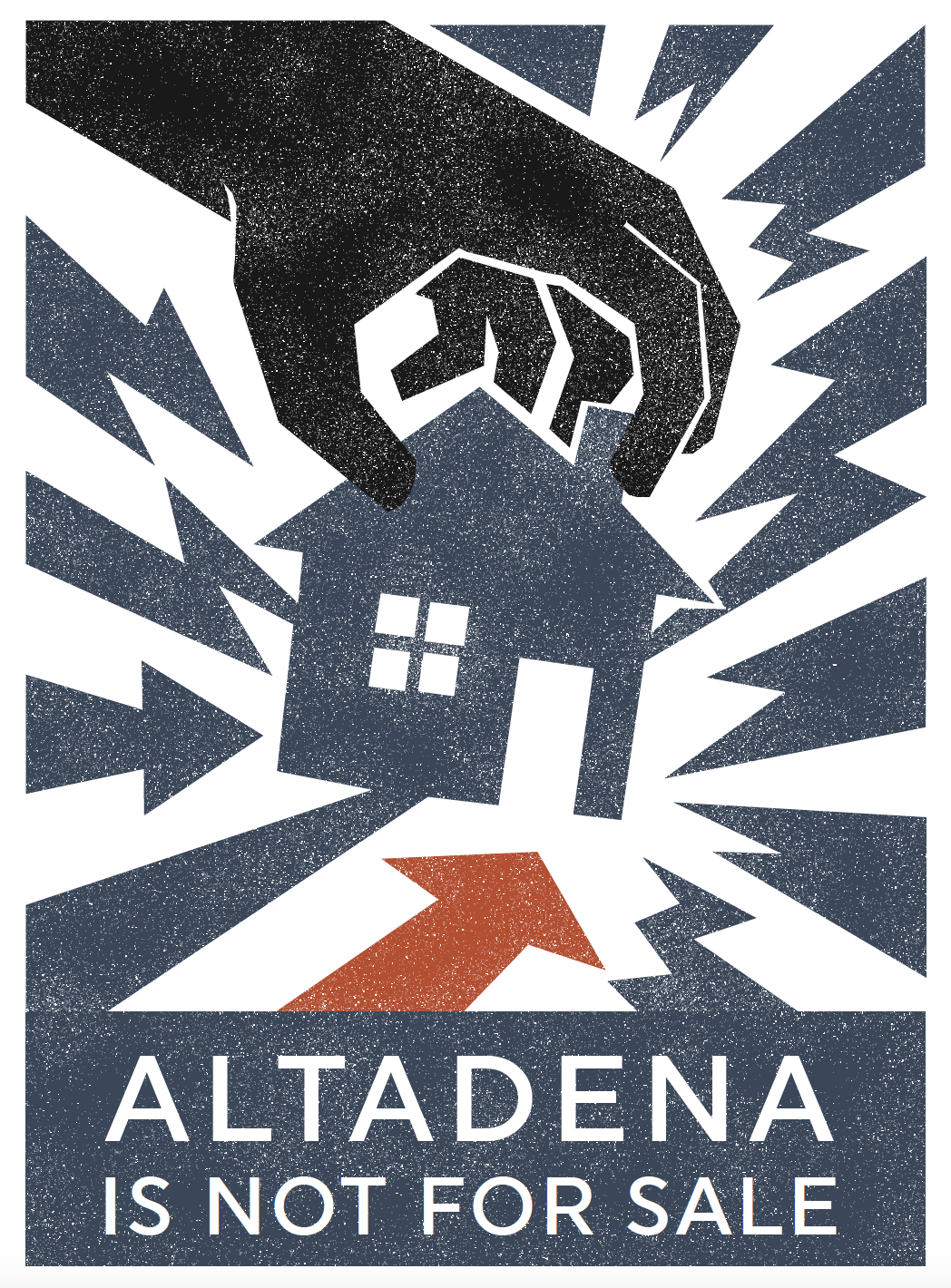
The idea of the signs caught on almost immediately with a neighborhood determined to hang onto its community and identity. Roberts-Johnson distributes them free of charge for anyone who wants them, whether she knows them or not. She has also partnered up with friends at the organization Altadena Community Land Trust, who use her artwork to raise awareness of the organization’s goals. Created as a way to secure affordable housing for the future, community land trusts allow individuals or families to purchase homes, not the land they stand on, at a more affordable price, signing long-term renewable leases and agreeing to resell at a restricted price to others within the community if they decide to relocate.
These trusts help maintain more equitable access to land and homes, as developers interested in the commercial potential of communally held land are unable to buy in. However, not everyone agrees that rebuilding the community as it was is a feasible goal. Although most of the people I spoke with agreed that they wish they could snap their fingers and return to the Altadena they loved, realistically some residents said they would have a difficult time managing the costs and logistics of a rebuild. Carola Secada told me she worried that elderly members of the community might not be able to manage the challenges of rebuilding, opting instead to sell their newly valuable land. “I’m very concerned about not only developers coming in,” she said, “but also if our elders do not have the bandwidth or want to spend their golden years doing this rebuild, what’s an ethical way for them to sell their lot to whoever they want and get compensated fairly and equitably?”
These worries seem justified by the flood of burned down lots appearing on the real estate marketplace in both the Palisades and Altadena. The first vacant lot in Altadena was listed for sale in late January, before all of the fires had officially even been extinguished. Now, a large number of properties in both areas are available for sale, with owners in both neighborhoods seemingly preferring to sell their burned lots rather than deal with the complicated logistics of rebuilding. In the Palisades, resident Dustin Bramell created a portal where neighbors who were interested in purchasing land in the community could add their information, in an effort to keep investors out, while still enabling those who lost property in the fire to move on with their lives.
Some property owners also worry that, even if they were to rebuild, they might not be able to secure the level of insurance coverage they’d need to adequately protect their homes, instead ending up underinsured and on the FAIR Plan. “You don’t cancel your insurance, because you might not get it back again,” my aunt told me of her own home. For Altadena residents who occupy the higher echelons of the neighborhood income scale, and residents of the demographically wealthier Palisades, paying what could very well be increasingly expensive premiums on burned down houses may be viable—but if lower income Altadenans can’t afford to keep paying for coverage, they may have no choice but to sell their lots.
Roberts-Johnson says that she fears the changes this mass exodus could bring to the neighborhood where she was raised. “Something about Altadena that has always made it so incredibly special is how diverse of a community it is,” she said. “If we have certain groups of people who aren’t able to live here anymore it will change the entire community and what we know of it.”
Residents also expressed concerns that the distinctive aesthetic of the neighborhood, which is known for its unique combination of Spanish and Craftsman bungalows, Victorian and English cottage style houses, courtyard apartments and even Fairytale architecture—a combination that feels particularly unique and idiosyncratic.
As a construction professional, Lockwood said that he believed the city would use the permitting process to maintain a specific aesthetic standard. “You’d be amazed by how much the city will tell you what you’re going to build,” he said. “They want to make sure it matches the neighborhood.” But other neighbors weren’t so certain that Altadena would be able to maintain its unique historic character with more fire-resistant new builds created from materials like concrete, especially as the price of wood continues to rise.
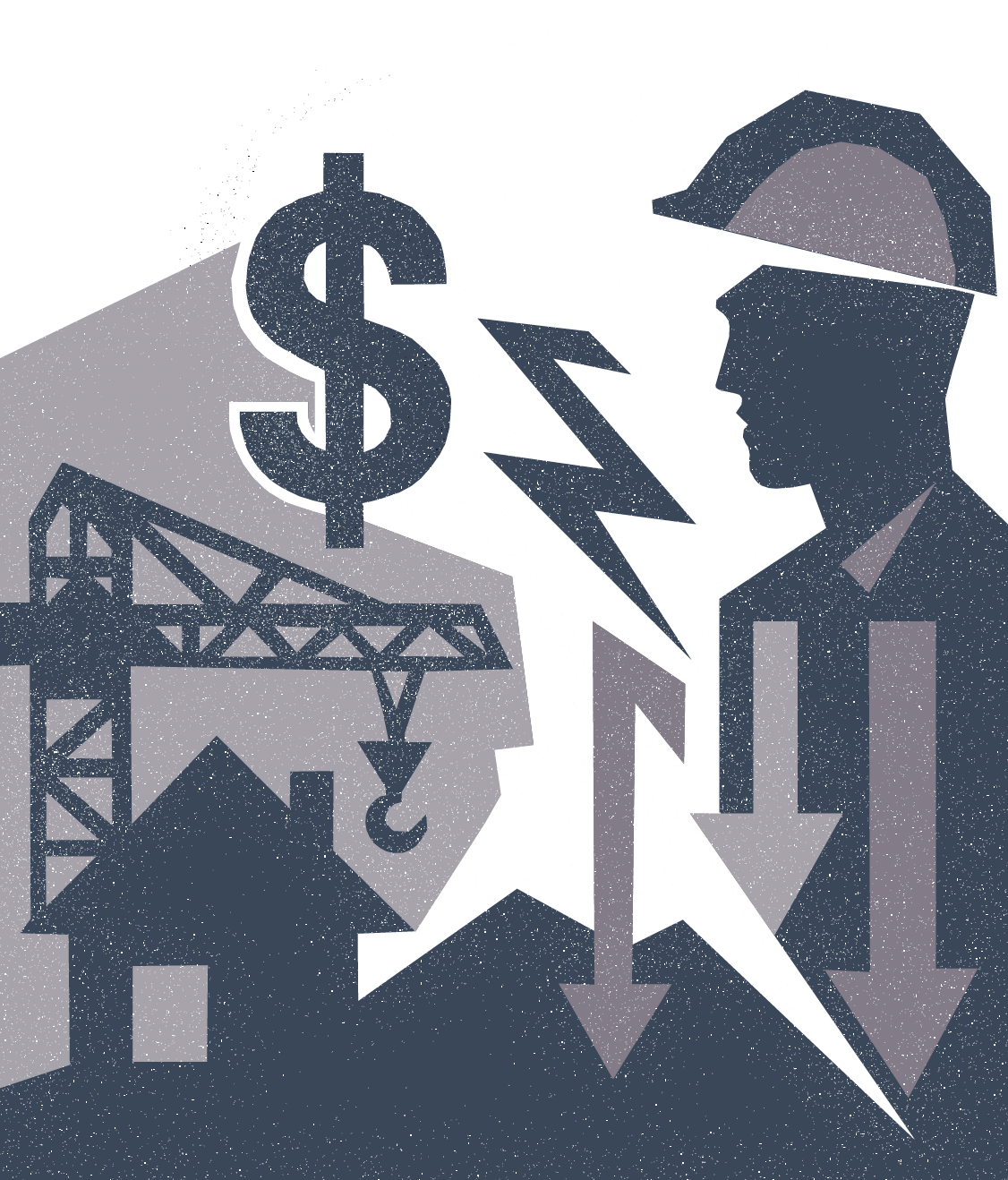
The increasing cost of wood isn’t the only construction expense Altadenans and Palisadeans will have to contend with. Material costs soared sharply in the wake of Covid, and an uncertain economic landscape paired with what is developing into an ongoing trade war will only make things worse. Then there’s the construction labor market, which already faced shortages even before the fires. A survey by the Associated General Contractors of America reported that 88% of construction firms nationwide reported struggling to find workers, with 81% of firms surveyed reporting that they had raised base pay for their workers over the past year. All of this combined with California’s already severe housing shortage means that the demand for materials, on the ground construction labor, and skilled professionals in a variety of trades from land surveyors to plumbers far outstrips the currently available supply.
“There’s this profoundly sad feeling of just wanting to be able to go home again. But that home isn’t there.”
“I’m sure building costs will continue to rise,” said AAHA studio principal architect and founder Harper Halprin. “A lot of building materials are quite expensive; we have a price-inflated construction market. We haven’t even started to see the onslaught of price gouging. It’s already very expensive to build regardless, and people are severely underinsured, so there is a big mixture of components coming together.”
Gary Lockwood said he feels that rebuilding costs will be difficult to predict with the extreme volatility of the materials and labor market. He also added that time may be a significant factor in what kind of reconstruction feels realistic to Altadenans. “In my opinion, construction won’t start for at least three years,” he said. “It’s going to take a really long time. For one thing, they have to do so much testing and now there’s so much demand. I have clients that live five miles away from the fire, and they got their houses practically condemned from the smoke that was inside the house.
Even once the rebuilding begins, many Altadena residents are mourning the loss of their old lives as they realize they’ll be shifting from the house they had to the house they can afford to rebuild—and what makes logistical sense in a neighborhood whose vulnerability to the dangers of fire will only grow as climate change worsens.
“The thing that they’re going to rebuild is by definition going to have to be so different,” my aunt told me. “It’s going to be a completely different life.” Their old house was a roomy, Spanish-style hacienda built of adobe and wood that my uncle had lovingly renovated largely by himself over the years, with two stories and a pool that the fires polluted so severely, it isn’t worth the labor of restoring it. The new house, my aunt said, will be one story, made of concrete and steel, a fireproof structure with sprinklers in every room. “Can we make that house ours?” she wondered. “Yes, but it’s going to take time.” There’s this profoundly sad feeling of just wanting to be able to go home again. But that home isn’t there.”
Altadenans continue to hold onto hope that the neighborhood they cherished will return one day, in one form or another. “Aesthetically I would love it to remain the same,” said Rhea Roberts-Johnson. “That’s one of the things that made Altadena so beautiful and unique. It’s not one of those land developments where there’s like five different homes and they all look the same. Ideally, we would rebuild it as it was, just an updated version with better materials that are fire, earthquake and flood resistant, but preserve that same character and uniqueness that has always made our community so special.”
For Carola Secada, Altadena’s aesthetics are secondary to the home it offered her and her family. “I am a first-generation immigrant queer mama,” she said, “and Altadena has been the first and only community where I have felt at peace with all parts of my identity and not have to hide any part of it.” Secada told me that seeing her neighborhood come together in the wake of the disaster has given her some hope. “The way that that community has shown up around this has been straight up ’60s Black Panther style mutual aid,” she said. “Most people don’t want to sell, and so many of us are working to support each other through this period of tremendous loss.”
The Paseo, a shopping center in nearby Pasadena, has given Carola and her coalition Dena Heals two storefronts, which they’ve transformed into a wellness center and mutual aid marketplace where families affected by the fires can come shop for free and eat meals provided by World Central Kitchen.
Many residents told me that this radical spirit is what makes Altadena so special. If there’s one thing that they were feeling hopeful about in the wake of the fires, it’s this—that the community has come together to come up with new, radical ideas for its own survival. “One thing that I can say for certain is that there’s going to be a lot of conversation in upcoming months, a lot of back and forth,” Secada said. She, for one, welcomes this debate. It wouldn’t be Altadena without it.
Published January 21, 2026 Permalink Citation
Beyda, E. (2026, January 21). Stopped, Dropped & Rolled. Retrieved from https://www.buildinggreen.com/blog/stopped-dropped-rolled



Add new comment
To post a comment, you need to register for a BuildingGreen Basic membership (free) or login to your existing profile.