News Brief
Septic Tanks Produce Fewer Greenhouse Gases Than Estimated
by Catacchio, Emily
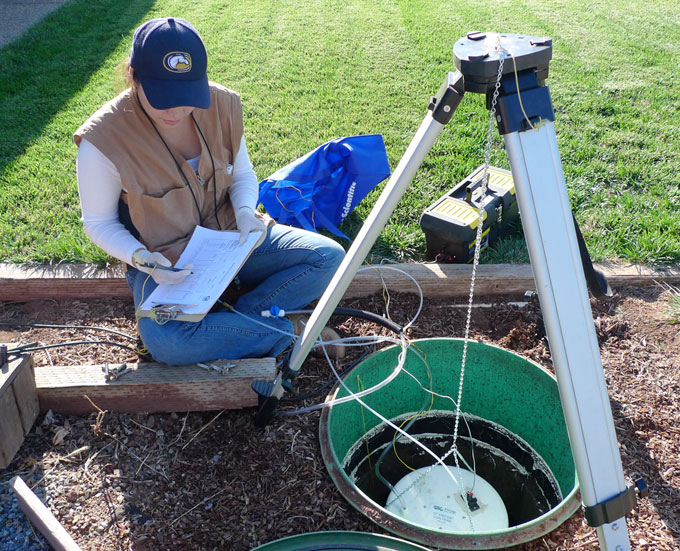
A recent study published in
Environmental Science and Technology reports that the actual rate of greenhouse gas production from septic tanks is half what has previously been estimated. One-fifth of the U.S. population uses residential septic tanks to treat wastewater; during this process, micro-organisms decompose the matter and produce greenhouse gases such as methane, carbon dioxide (CO2), and nitrous oxide (N2O). Estimates of 0.23 metric tons of carbon dioxide equivalents per user per year, made by the Intergovernmental Panel on Climate Change (IPCC), are based on how quickly microbes convert organic matter into methane. According to study participant Harold Leverenz, P.E., Ph.D, a post-doctoral researcher at the University of California–Davis, IPCC “assumes all organic matter entering the tank is converted under anaerobic conditions. [But the team] found that only a portion of the influent organic matter actually undergoes anaerobic decomposition.” Further, “the team found that dissolved organic matter which exits the tank in the effluent is converted under aerobic conditions to carbon dioxide,” which causes less methane and more CO2 production, reducing the overall CO2 equivalent produced.
Published December 31, 1969
Permalink
Citation
(2011, April 29). Septic Tanks Produce Fewer Greenhouse Gases Than Estimated. Retrieved from https://www.buildinggreen.com/taxonomy/term/318/0


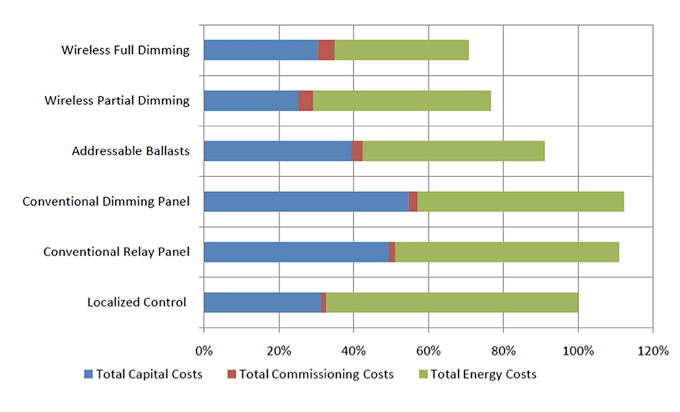
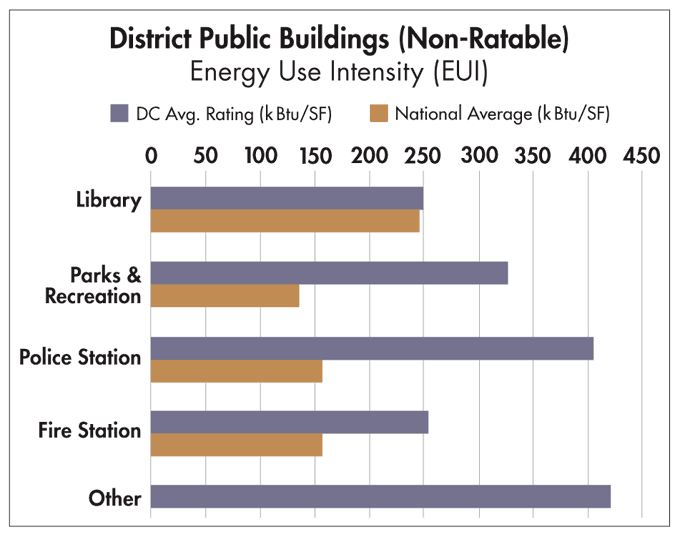 U.S. homes expend far less energy on home heating than they did in the 1970s, but overall residential energy consumption remains virtually the same, reports the U.S. Energy Information Administration (EIA). According to EIA’s Residential Energy Consumption Survey, home energy use from appliances and electronics has surged by nearly 84%—from 1.77 quadrillion Btu (quads) in 1978 to 3.25 quads in 2009—despite higher efficiency standards for appliances. Energy consumption per household actually dropped an average of 31%, and net stability is due in part to an increase in the number of households. EIA points to several other factors that contribute to stable overall energy consumption, including dramatically increased ownership of clothes washers, dishwashers, and central air conditioners. Additionally, according to EIA data, 72.6% of households have at least one computer (39.4% have two or more), 88.6% have one or more rechargeable electronic devices (44.3% have four or more), and 98.5% own a television (more than half of households have at least three televisions). “Screen size and average energy consumption per television have continued to grow over time,” says the EIA website. For more information on the survey, visit
  Scientists have long known that when river water and seawater mix, as they do in river deltas and estuaries, the chemical reaction releases large amounts of waste energy. A recent breakthrough may enable the use of this reaction as a renewable energy source. Researchers at Stanford University, the University of Milan, and Penn State University created a device they call a “mixing entropy battery” that, when dunked alternately in seawater and river water, was able to store entropic energy created by the difference in salinity. According to an abstract on the website of the American Chemical Society (

Add new comment
To post a comment, you need to register for a BuildingGreen Basic membership (free) or login to your existing profile.