
Blog Post
Architecture or Perdition?
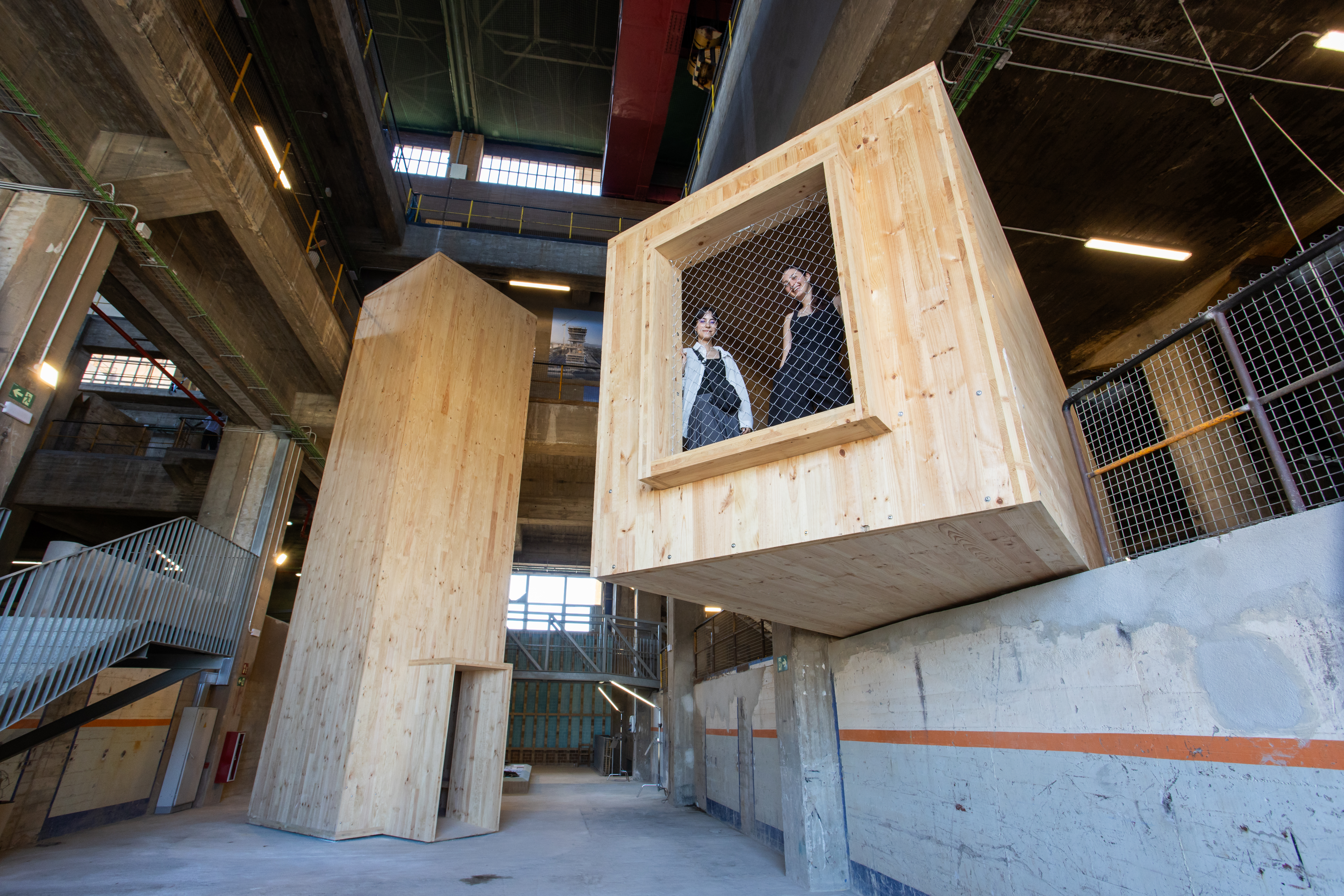
The UIA exhibition was held inside the now-defunct industrial complex Les Tres Xemeneies de Sant Adrià de Besòs in Barcelona. Photo by Anna Mas.
The UIA theme was “Becoming. Architectures for a planet in transition.” Photo by Anna Mas.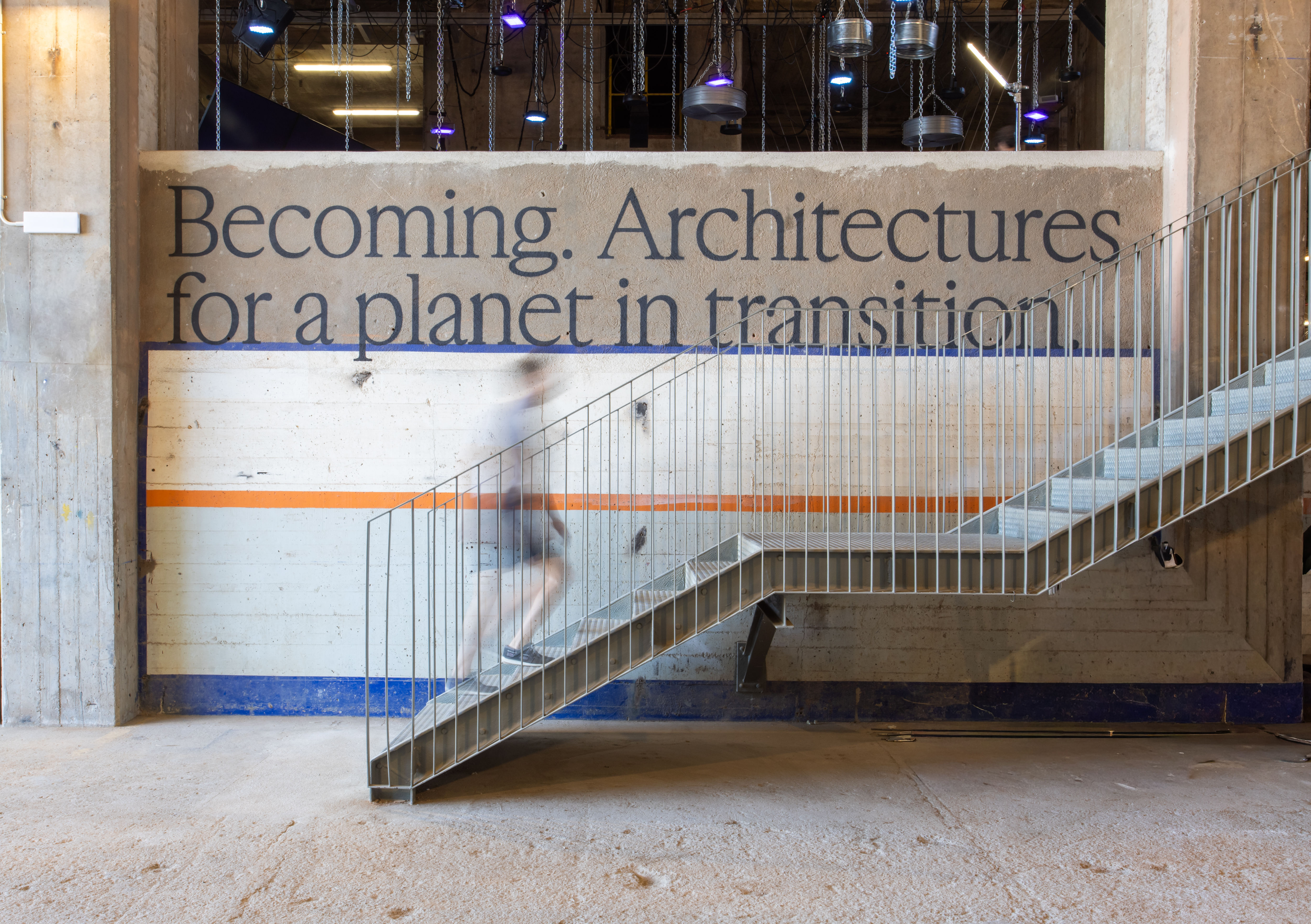
More compelling were the showcases of design work and research in individual sessions. The architect Marina Tabassum spoke about working in what she calls a “locally grounded way” in the estuary waterscape of Bangladesh. “My understanding of architecture started from understanding vernaculars,” she said, introducing her firm’s first project, the Panigram Eco Resort, made of bamboo, clay and thatch, which employed a local labor force whose constructive layering techniques “imprinted” and enriched the architecture’s design—an ethos that other firms such as Shigeru Ban Architects (a featured speaker at UIA 2026), Kéré Architecture, Elemental, and Mass Design Group have embodied in their work, too.
Architect Marina Tabassum spoke about working in what she calls a “locally grounded way” in the estuary waterscape of Bangladesh. Photo by Anna Mas. BuildingGreen relies on our premium members, not on advertisers. Help make our work possible.
SUPPORT INDEPENDENT SUSTAINABILITY REPORTING
That was certainly the public message—even in private receptions. Velux, the window and skylight manufacturer, gathered invited architects in the belly of Antoni Gaudi’s Casa Milà—the Catalan architect’s final multifamily project—in a space converted from a parking garage to a lecture hall. The company has been promoting “Re:Living,” to help owners, architects and developers contemplate renovation as not just a sustainable practice but an affordable one, and invited Winy Maas from MVRDV, Xu Tiantian of DnA, and Arno Brandlhuber of B+ to talk about responsiveness as a driver of design. Their talks were wide-ranging, but Brandlhuber framed architecture’s new horizons as a practical matter of labor above all that might work best when it’s out of the hands of large firms.
“We have a renovation rate in Europe of 1%,” he said, a frustratingly low number that the European Commission’s “Renovation Wave” initiative aims to fix, “but renovation is not something you can do with BIM—it has to be done with local offices, it has to be smaller offices, and it has to be younger offices.”
What does “becoming” really mean?
If the global building industry were a country, it would be the second largest emitter of GHG after China, which releases 15 billion metric tons each year, according to the nonprofit Climate Analytics. If you believe the U.S. International Trade Administration, China’s building sector is shifting away from rapid expansion toward higher-quality, environmentally sustainable development, with government support for green construction creating new commercial opportunities for companies offering advanced, low-carbon building technologies. Looking beyond “becoming,” UIA’s cri de guerre, its next meeting will be in Beijing in 2029, and if the design profession manages by then to successfully “become” better at adapting to climate change, it will have to be done in China first in demonstrable ways—some say impossibly.
The venue for the main stage included small punctures in the north wall that let in beams of light and functioned as a stage-in-the-round. Photo by Anna Mas.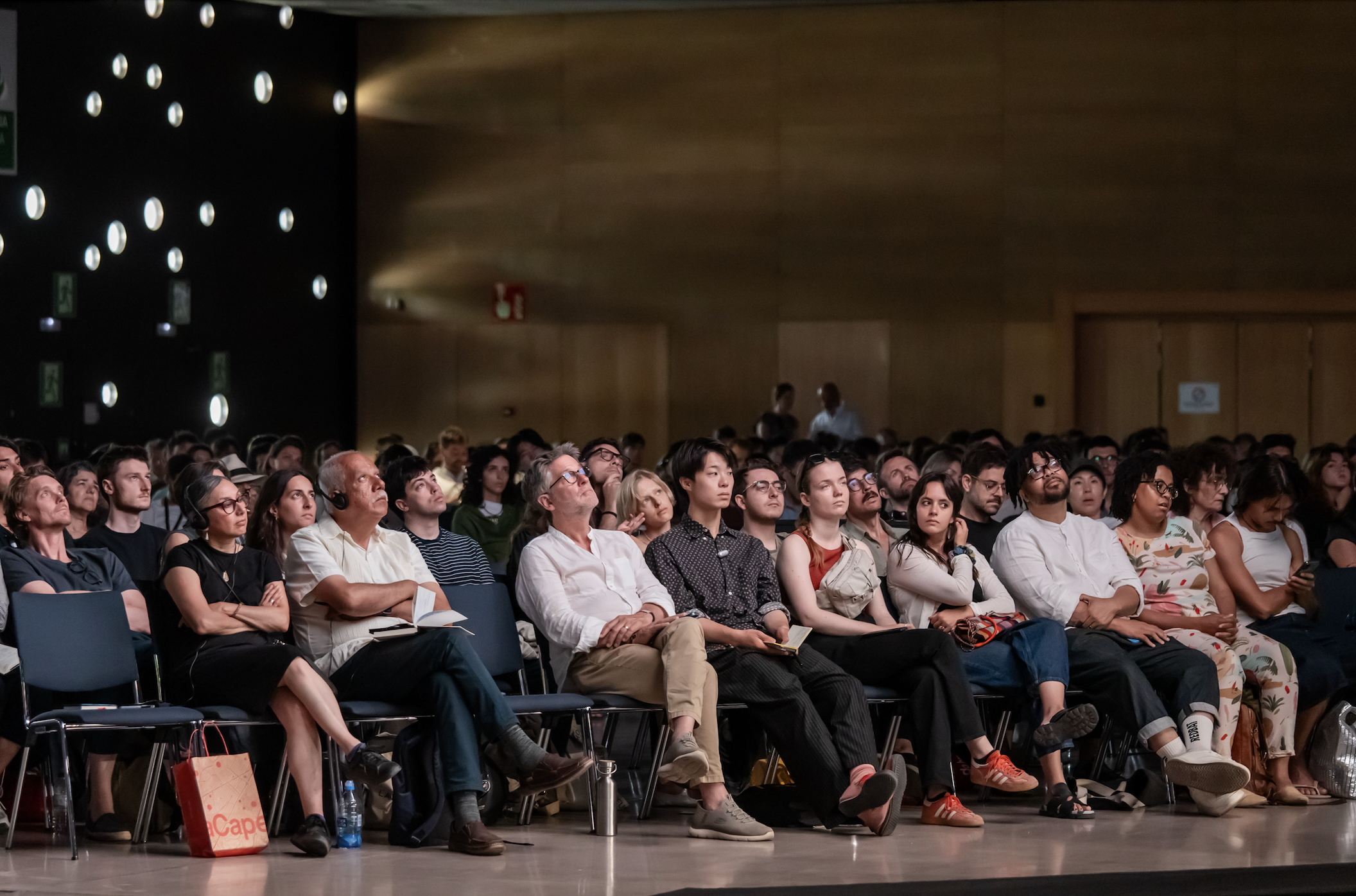
For UIA, they’re also pedagogical frameworks. L’Union Internationale des Architectes was founded in 1948 in Lausanne to stitch together the architects’ associations of individual countries—itself a postwar act of optimism. Today, UIA represents more than 100 countries and works beyond its original remit of cooperation and education, having taken up the mantle of sustainability. Over the past 25 years, UIA expanded programs and its global congresses in that direction, promoting climate-responsive, resource-efficient and socially inclusive architecture—embedding the UN’s Sustainable Development Goals into its ethical and professional guidelines and requiring the architects of its member countries to prioritize climate action. In 1996, UIA established a set of standards, the UIA/UNESCO Charter for Architectural Education, for minimum “competencies” for teaching and learning that include ethics and climate issues.
Architect Shigeru Ban is having a very good year. He was among the featured speakers at UIA, focusing on basic materials for shelter in times of extreme need. Photo by Anna Mas.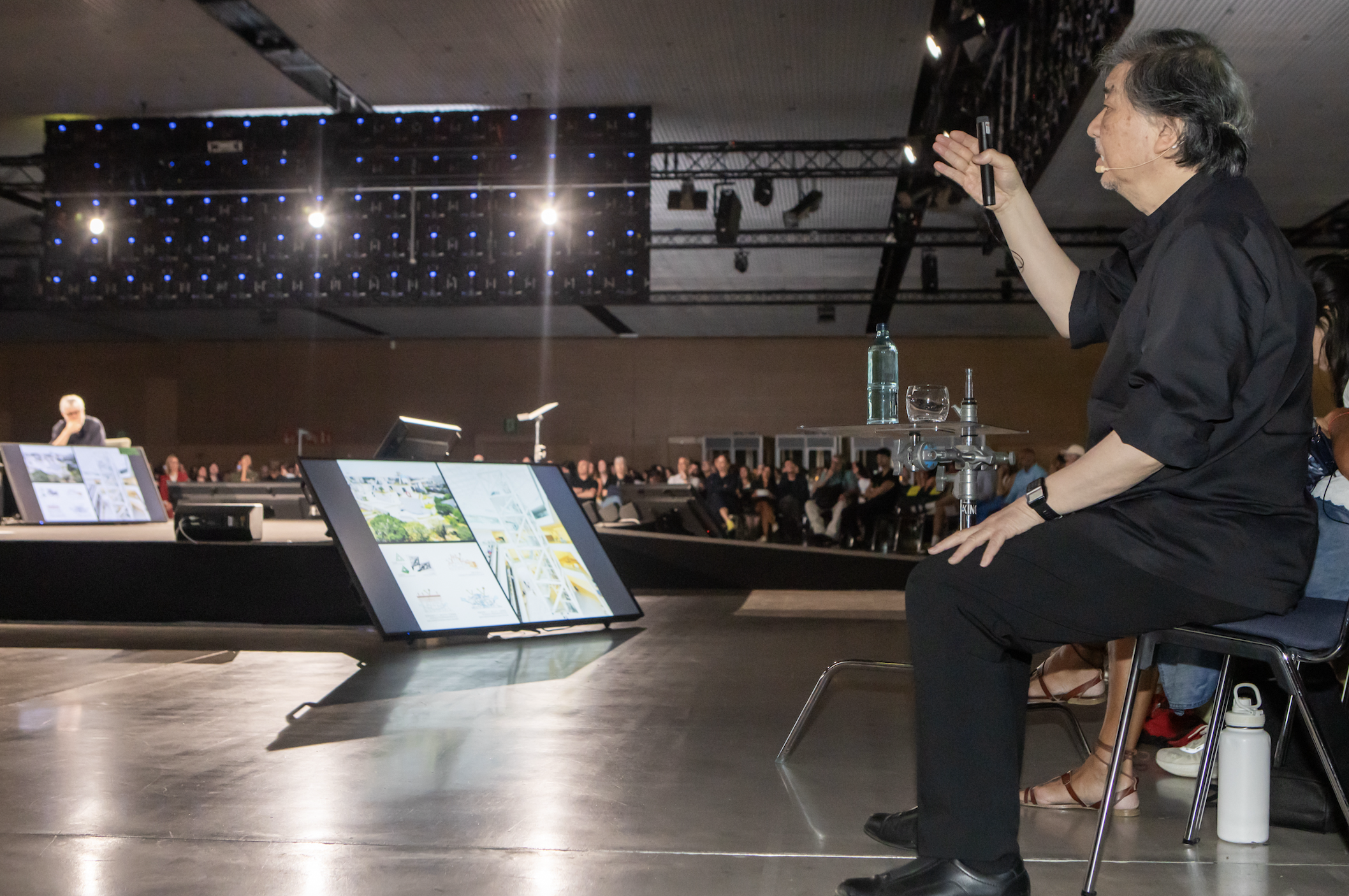
Indirectly but repeatedly, pragmatic solutions emerged as a theme elsewhere in Barcelona, driving an especially potent session about magazine publishing, which historically has focused on the contemporary architectural practices of those firms, as well as more laconic and provocative themes like ecology, community and identity. Jack Self, editor and publisher of UK-based Real Review, framed magazines as a post-digital lesson on adaptation. “We can’t compete on immediacy, but we can compete on context and sense-making,” he says, mirroring the value of architecture and design to approach thorny challenges (climate being just one). “The communication of architecture is not limited to drawing. There is discussion and there is discourse, and they’re essential to the communication of architecture.”
Exhibition photo by Anna Mas.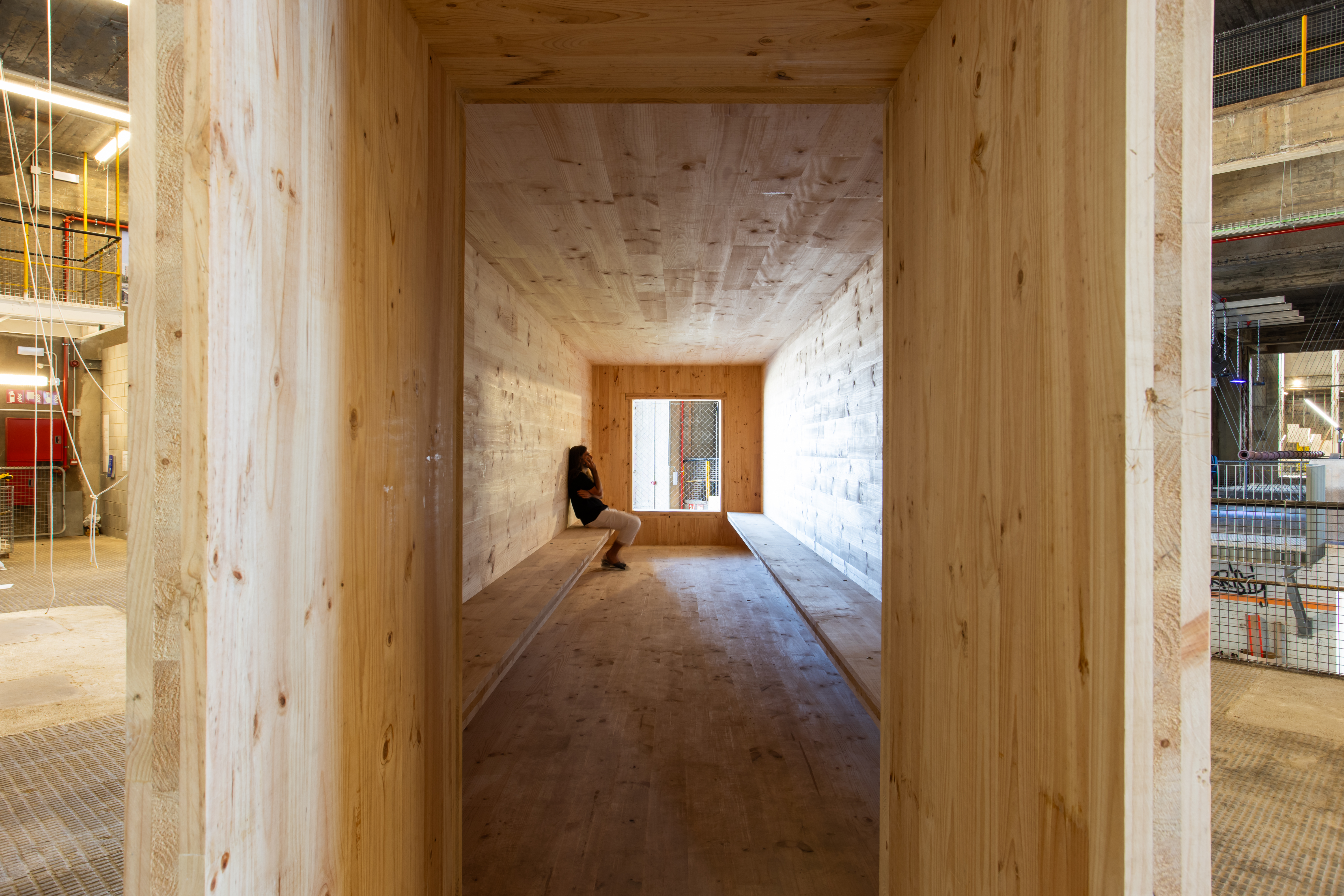
The commanding exterior of Les Tres Xemeneies de Sant Adrià de Besòs in Barcelona. Photo by Anna Mas.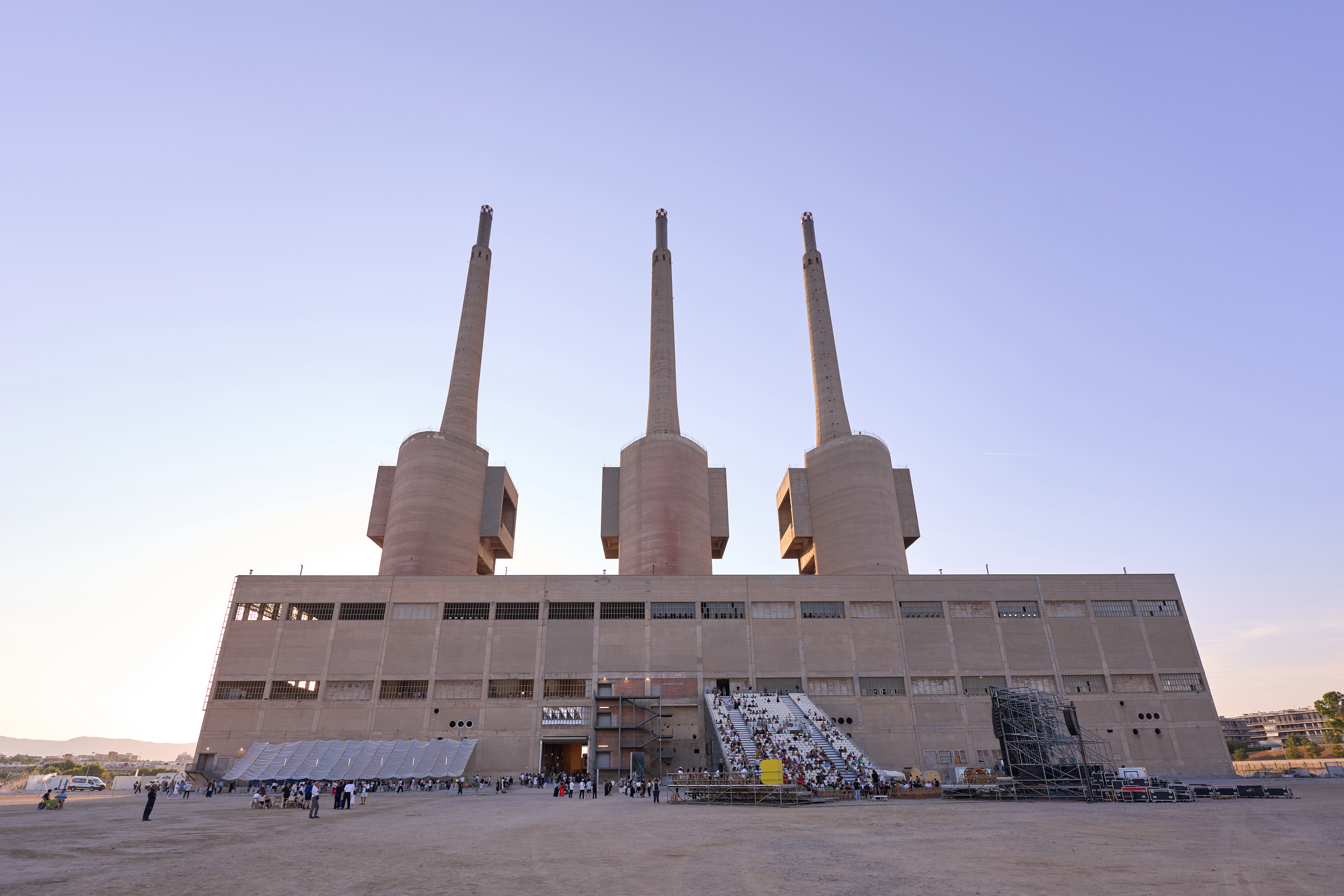
Published July 8, 2026 Permalink Citation
Richards, W. (2026, July 8). Architecture or Perdition?. Retrieved from https://www.buildinggreen.com/blog/architecture-or-perdition



Add new comment
To post a comment, you need to register for a BuildingGreen Basic membership (free) or login to your existing profile.