
Blog Post
Quelling Environmental Anxiety at the Venice Biennale
The designers who participated in the 19th Biennale d’Architettura di Venezia all began with the same environmental anxiety—what the critic Ian Volner called a, “searching, no-bad-ideas rap session on the human prospect”—and concluded with vastly different forms of community-mindedness, ethical decarbonization and radical regeneration. But the Biennale is a funny phenomenon—caught between serious “searching” that Volner describes, and the alternate reality of the Midway fairgrounds that allows the “rap session” to freely unfold. Calculating Empires, Kate Crawford and Vladan Joler, photograph by William Richards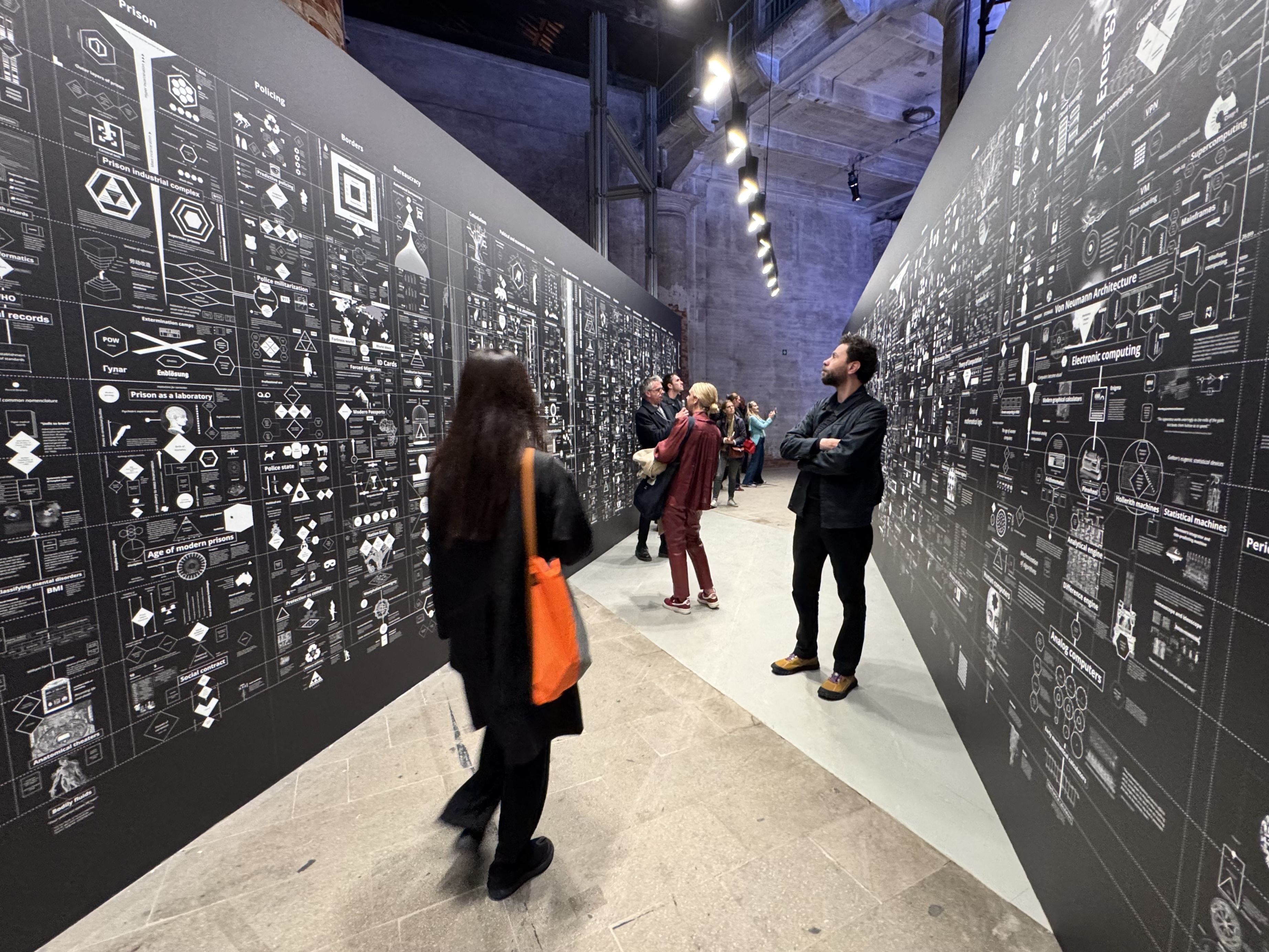
The show, which wraps up this month, has three concentric circles that take over the city. At the center, hundreds of designers propose a series of provocations and salves within the galleries of the main Arsenale exhibit hall at the invitation of architect-curator Carlo Ratti of MIT. Dozens of countries also spent millions of dollars to advance their design diplomacy at their permanent Giardini pavilions and in ancillary spaces around the main exhibit hall, the second ring from the center. The outer ring of activity, where design’s glitterati meet over negronis at all times of day and night, includes hundreds of exhibitions, receptions and lectures in palazzos, churches and halls around town.
Resonantly, Ratti’s prompt “intelligens” urged participants to reflect a few big ideas focused on our ambitions for a sustainable future, our greatest anxieties about technology and our greatest social and environmental failures. But the experience of understanding those ideas through the perspectives of Biennale exhibitors is quite small—you’re often peering through the windows of architectural models like Lina Ghotmeh’s sprawling headquarters for the Hermès workshops in Normandy, France, or squinting to read diagram labels or peering through a viewfinder at the Albanian pavilion. In the end, there’s nothing architectural about the scale of the Biennale at all, even if it’s ostensibly about architecture. It unfolds at the scale of gallery art objects and the interplay of text and image. Hermès Headquarters, photograph by William Richards BuildingGreen relies on our premium members, not on advertisers. Help make our work possible. Even in Arcadia, Olalekan Jeyifous, Photograph by Marco Zorzanello/Courtesy La Biennale di Venezia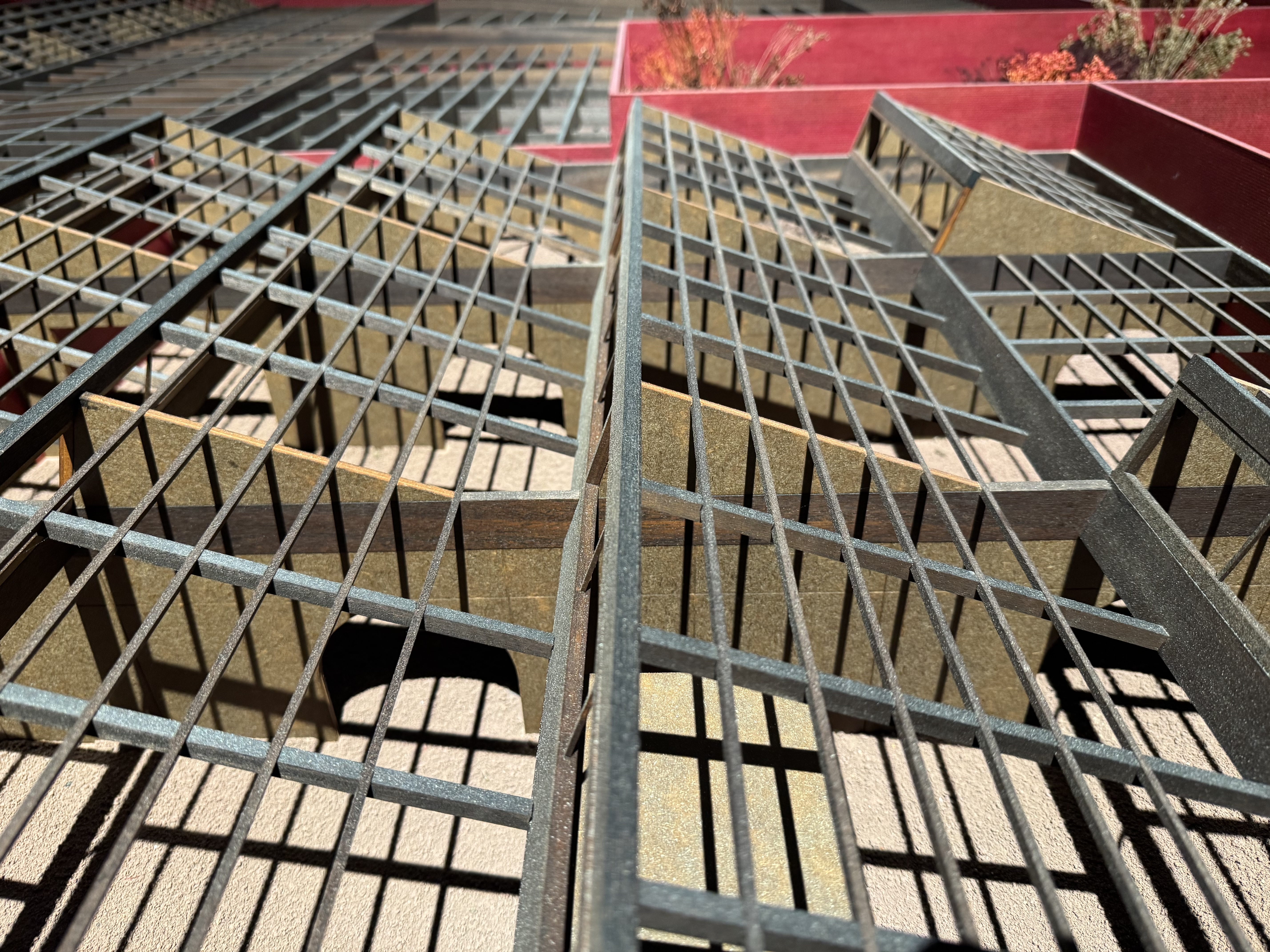
SUPPORT INDEPENDENT SUSTAINABILITY REPORTING
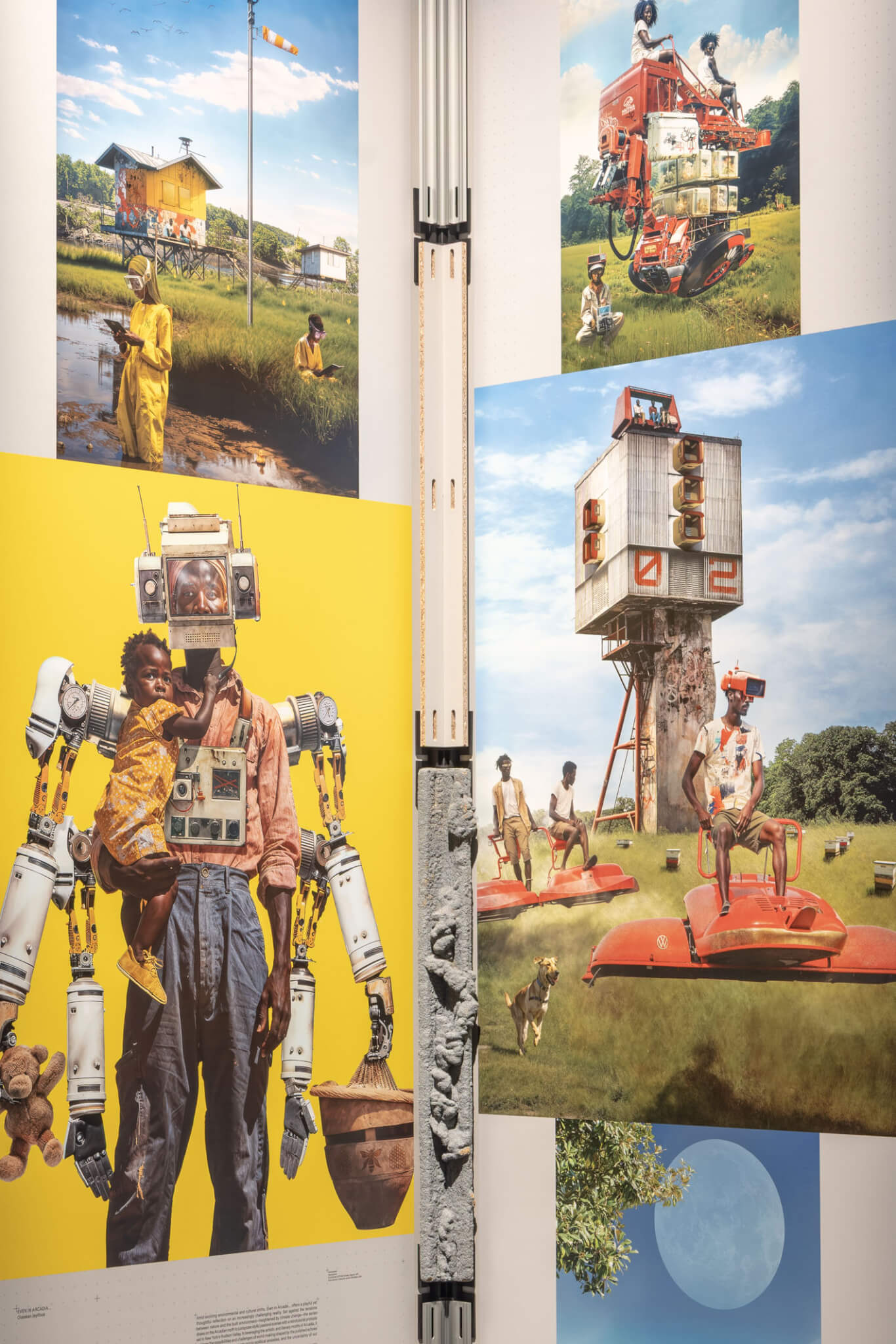
Working backwards, there were a lot of stunning images at the exhibition, like Olalekan Jeyifous’ hyperrealistic “Even in Arcadia…” series, or MIT’s Civic Data Design Lab’s immersive video room “Atlas of Popular Transport” (coupled with a book by the same title). In the main Biennale exhibit hall at the Arsenale, Kate Crawford and Vladan Joler’s “Calculating Empires: A Genealogy of Technology and Power Since 1500,” a 156-foot relational chart that takes up two facing walls that scratches the nerdy itch of anyone who appreciates data visualization. It’s meticulous, usually sobering in its historiographic lens, and sometimes funny. (Who doesn’t relate to “the dunce” from time to time?) Taken together, they offer anthologies of our artifice (as art is wont to do) in the systems we’ve devised to carry cars, trucks, and jitneys to their destinations, and in the systems we’ve devised to carry information to its inevitable purpose: more information. It’s an epistemological slurry, but both the Atlas and the Genealogy essentially describe the legacy of power structures, which has a counterpoint at the Biennale in the dozens of other exhibits that attempt to decolonize design.
Take the “Geology of Britannic Repair,” the 2025 British Pavillion’s installation, for instance, whose “Earth Compass” attempts a new kind of map that connects Nairobi and London in a “celestial vision of change.” There’s a lot to unpack there—and the central gallery’s star map is tuned to the night sky above the two cities on December 12, 1963, at the moment of Kenya’s independence from Great Britain. “Amid the rubble of broken earths,” say the curators Owen Hopkins and Kathryn Yusoff, “architecture offers possibilities for repair, reparation and renewal from which new worlds might emerge.” Calculating Empires, Kate Crawford and Vladan Joler, photograph by William Richards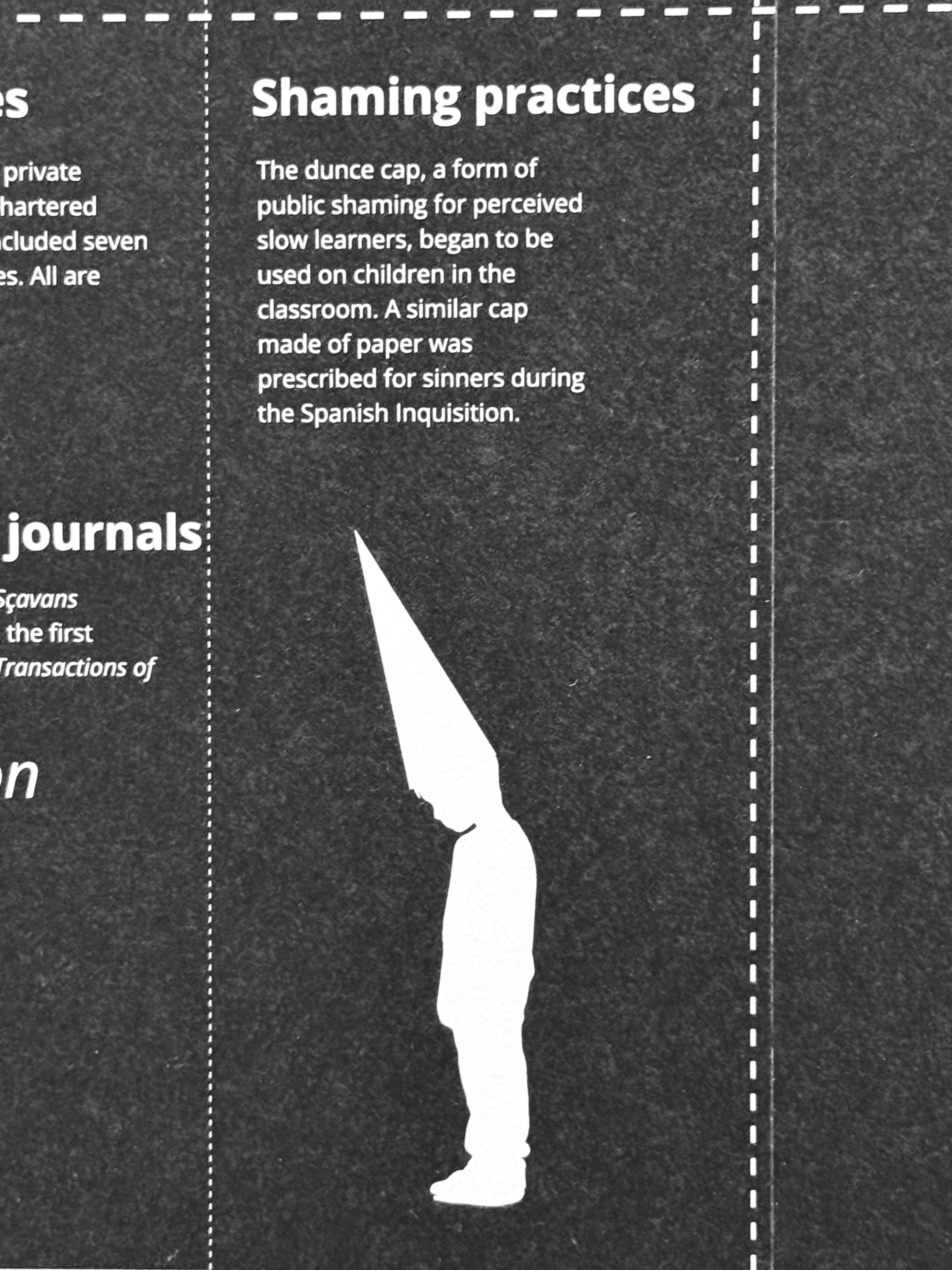
Emergence is a classic theme for this year’s Biennale and its predecessors—ideas, designers or even histories we thought we knew come to the fore in urgent or new ways. Ratti’s MIT colleagues Benjamin Bratton, Nicholas de Monchaux, Ana Miljacki and Calvin Zhong rented out an entire palazzo to curate this theme (independent of his influence, but in a nod to “intelligens”). Their show, “The Next Earth: Computation, Crisis, Cosmology,” at the Palazzo Diedo tends toward urgent rather than new by asking 37 teams and individuals to reinterpret norms of domestic life, genteel garden design, lurid spectacle and geometry to ask if our systems of thought are still valid for Earth’s inevitable transformation to what’s next.
The most cynical (but the most fun) installation is by MIT’s Mark Jarzombek, who created a diorama of small figures acting out protests, news conferences, smug satisfaction, and sunbathing in various scenes of a ruined Capri. “From ‘Environmental Bubble’ to Environment Trouble” is wry and has lots of layers, especially for architectural historians who will revel in work of Reyner Banham. But as a work of cartoonish realism, Jarzombek’s installation is a damning indictment of the entire enterprise of the Biennale. (Some of these scenes played out weeks after the opening, during the July wedding of Lauren Sanchez and Amazon founder Jeff Bezos.) Tree Form, Sheila Kennedy, Caitlin Mueller and WholeTrees Structures, photograph by William Richards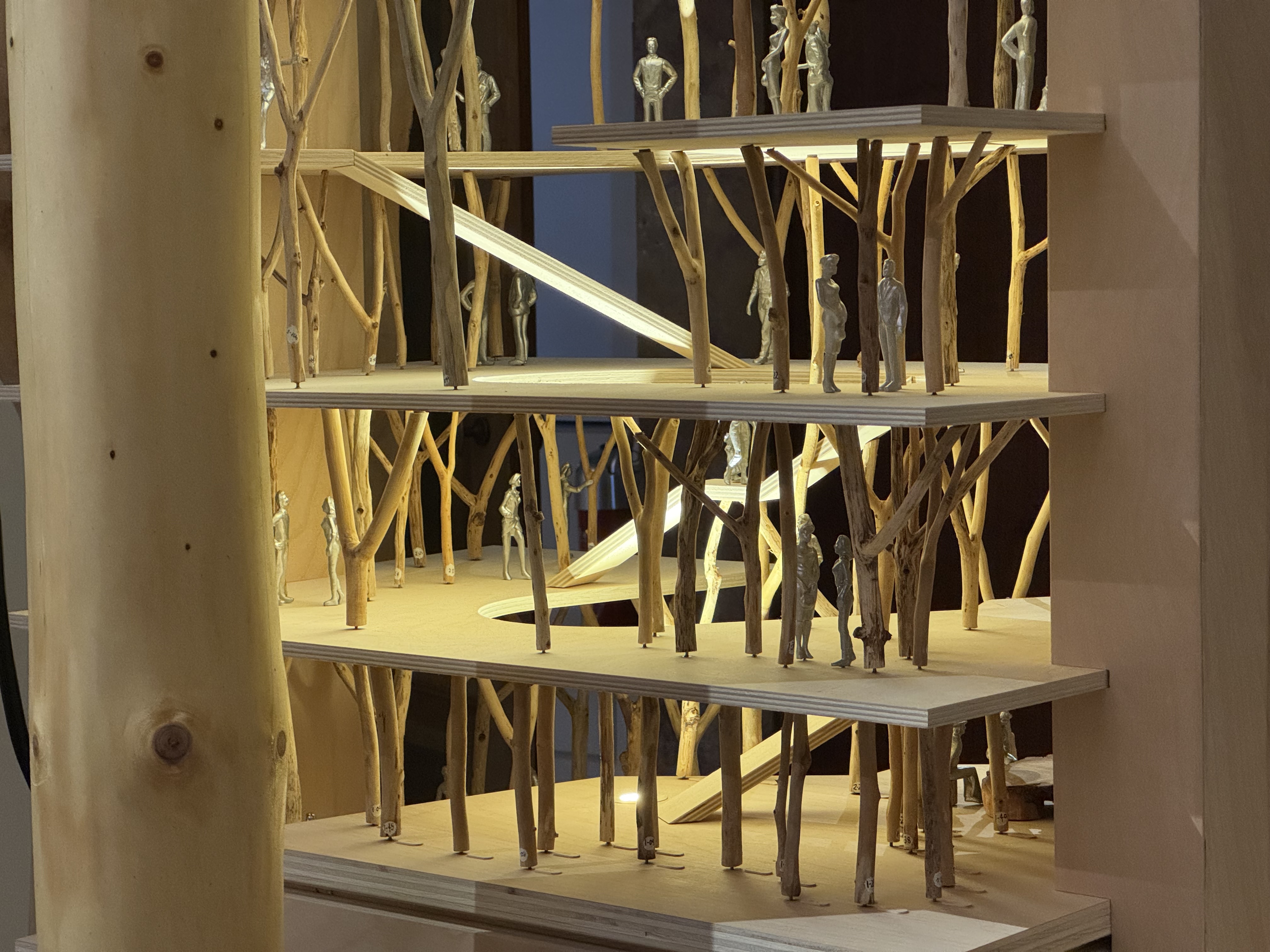
One room away at the Palazzo Diedo is “Tree Form,” a collaborative work by the architect Sheila Kennedy, MIT researcher Caitlin Mueller and WholeTrees Structures. Its trunk and limbs form the structural members of a building (think Swiss Family Robinson, but less rustic). Cosseted by the tree’s central branches, a miniature multistory building shows how the system might scale up. It’s a proof of concept for a project Kennedy, Mueller and their colleagues are working on to make the natural, if irregular, geometries of trees a viable option to support a range of buildings. Tree Form, photograph courtesy of WholeTrees Structures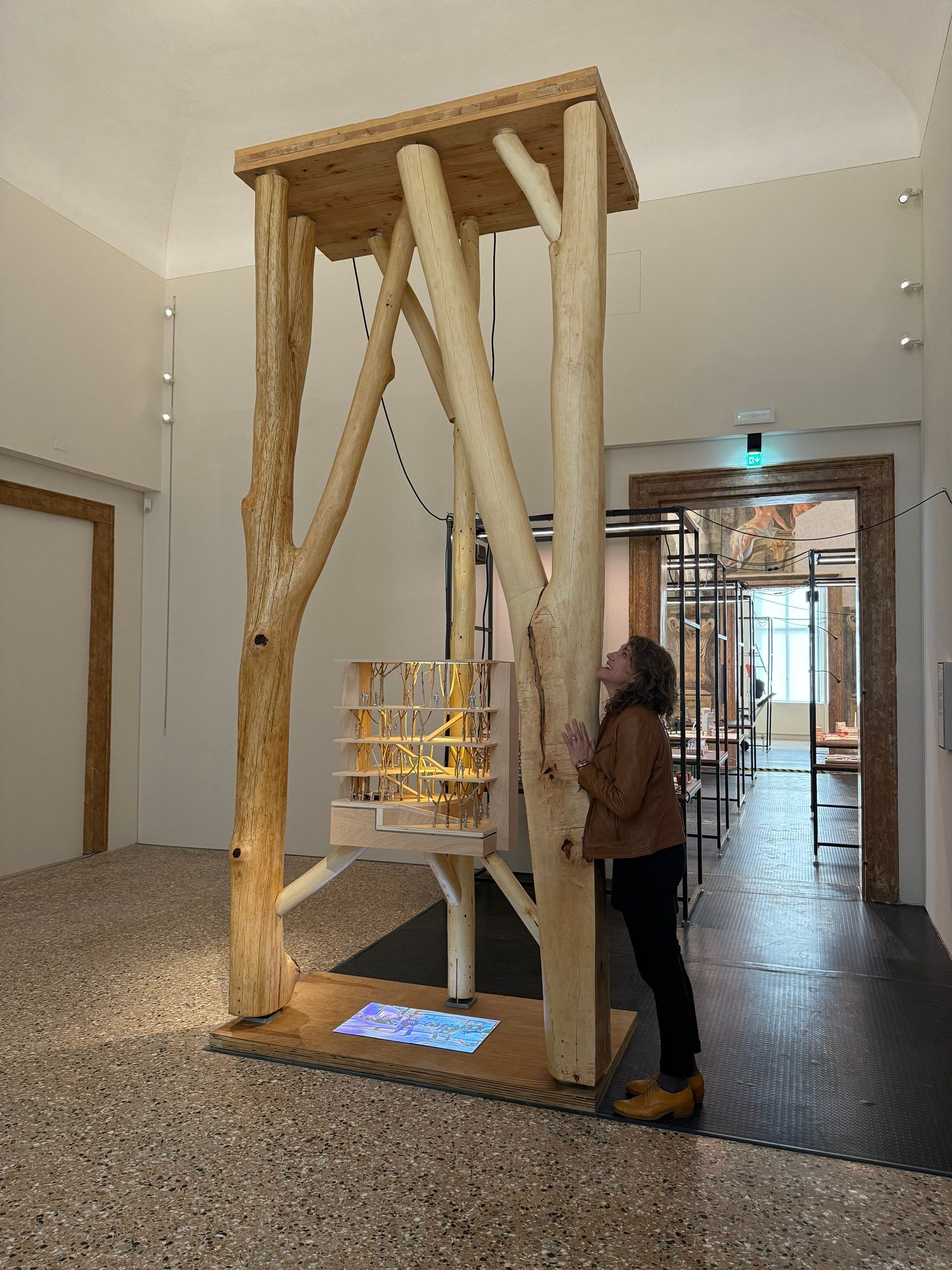
“Tree Form” promises to transform “low-value trees with branching forks into higher-value structural markets for regenerative architecture.” They, with obvious carbon benefits, and an inventory of ideal forms are possible through de rigueur digital twin modeling. The craft and care evident in this slender installation are superior to anything else in the show, and it’s arguably the only thing you can imagine taking home for the living room. That may or may not be a litmus test for “art,” but the biophilic appeal of Tree Form is certainly in league with its conceptual rigor—and design is nothing if not about covetous desire.
Another off-site exhibition at the Palazzo Franchetti, “Beyti Beytak / My Home is Your Home,” a companion to Qatar’s official Giardini entry (and the debut of its first permanent pavilion), is a coherent exegesis of housing and enduring community values in the Middle East. Bookending the show are rooms on the “oasis,” an ideal for how we live, and the “art of gardens,” an ideal for how we live with nature. In between, social housing, community centers and museums unfold as typologies with specific histories in Algeria, Egypt and Pakistan, but also elemental building blocks for Qatari ambitions in Doha and elsewhere. © GBR – Geology Of Britannic Repair, Lumumba’s Grave. Image by Chris Lane.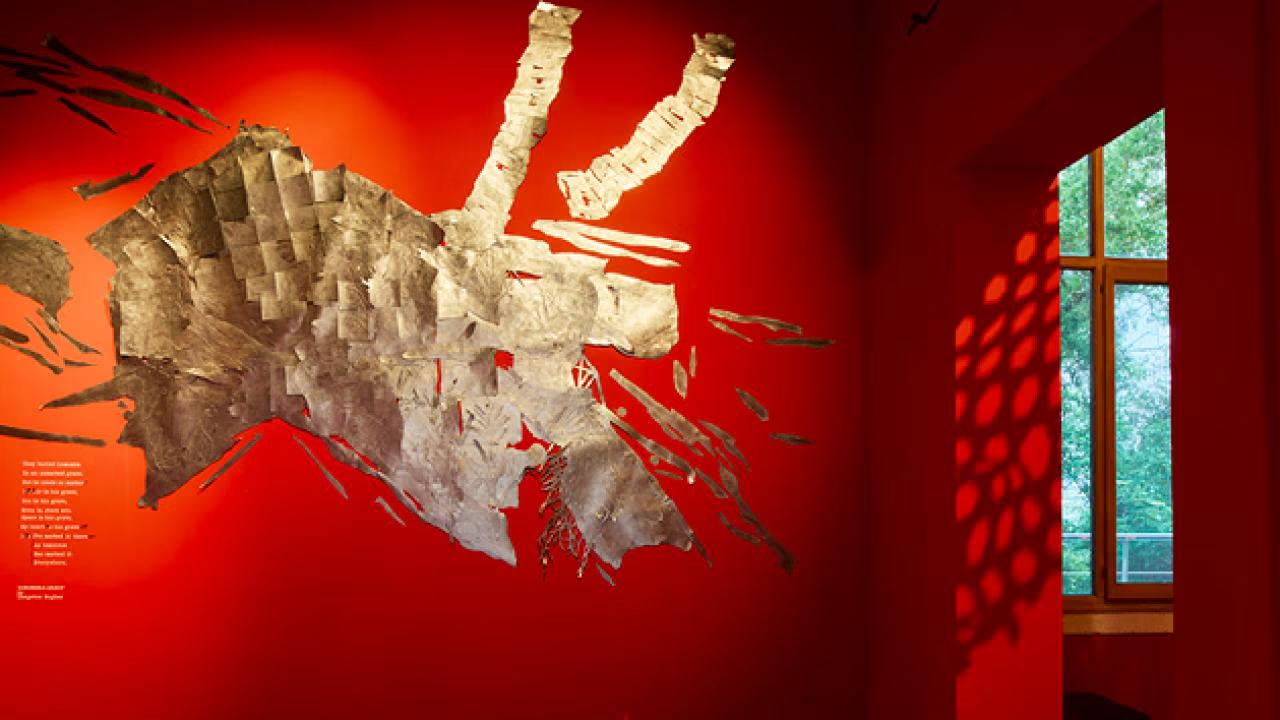
Curators Aurélien Lemonier and Sean Anderson assembled the work of 30 architects through archival plans, sections, and watercolors, architectural elements, and photography from four dozen museums, collections and individuals. Among them are some of the New York– and Paris-types who have projects in Qatar such as Diller Scofidio + Renfro (Al-Mujadilah Center and Mosque for Women) and Ateliers Jean Nouvel (National Museum of Qatar).
But the showstoppers are Egyptian architect Hassan Fathy’s renderings, plans and elevations (not to mention his incredibly slick signature) and the Mumbai architect Sameep Padora’s “Memories of Landscape,” a 22-foot wide, fictive world that captures his vision of seasonal change and human and animal migration as the imagined context for a recently completed project for an artist’s residency, the Hampi Arts Lab, in Vijayanagar, India. It was last exhibited in 2014 at the Buenos Aires Biennale stretched flat against the wall there and reading as a tapestry, but in Venice, it’s curved to envelop the visitor. Here, the themes of Beyti Beytak come together—oasis, garden, residences for artists and the community that grows from their foundations. Fathy renderings, photograph by William Richards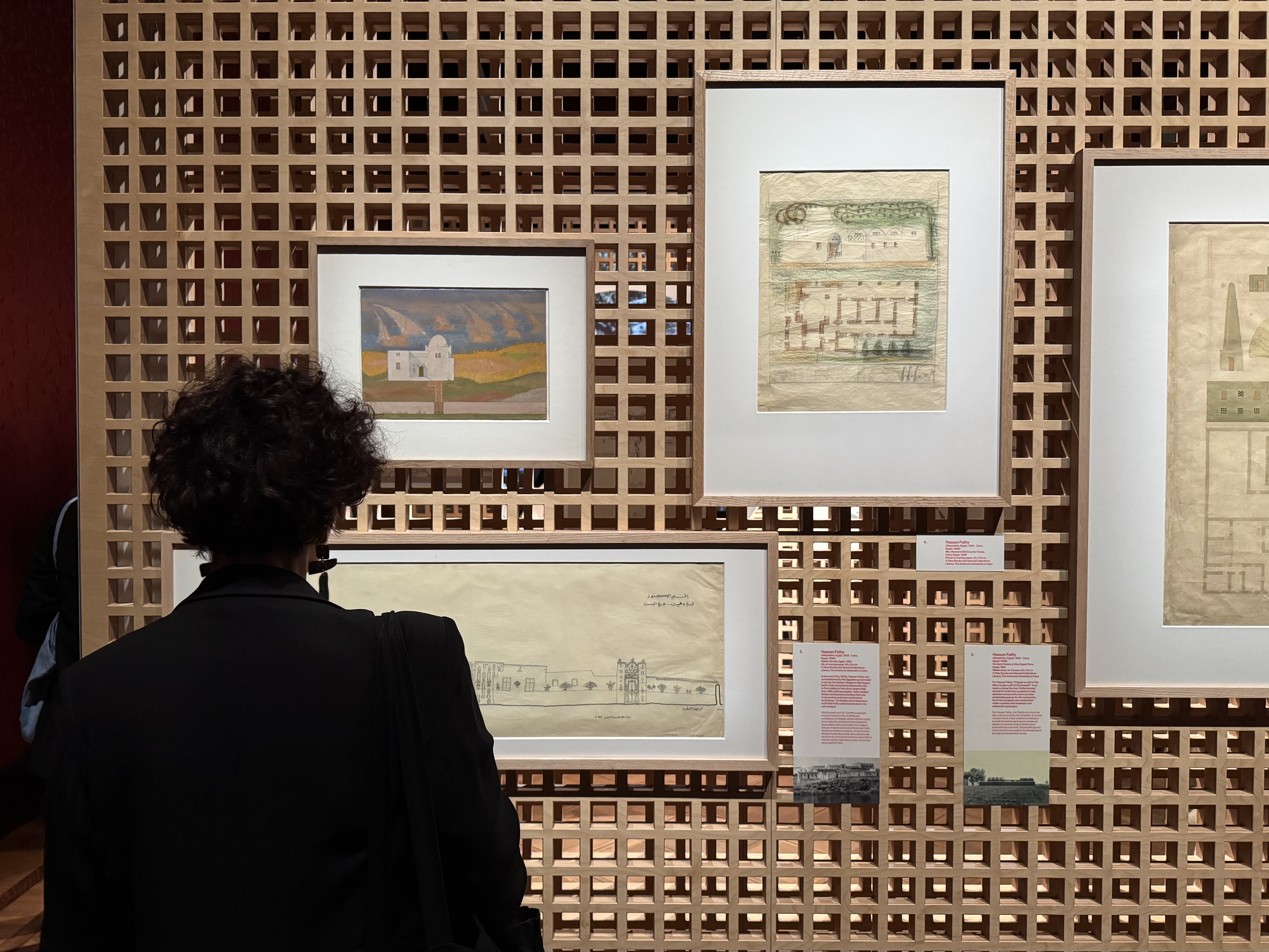
Padora’s large-scale fantasy also sends us away with a message to think a little more holistically than a single plan or heroic architectural model might suggest: An ecology in balance should be the aim for development. That means human and environmental goals and, in its quiet way, “Memories of Landscape” is more than a low-dose Xanax for our anxieties about the future. It’s a map. Memories of Landscape, photograph by William Richards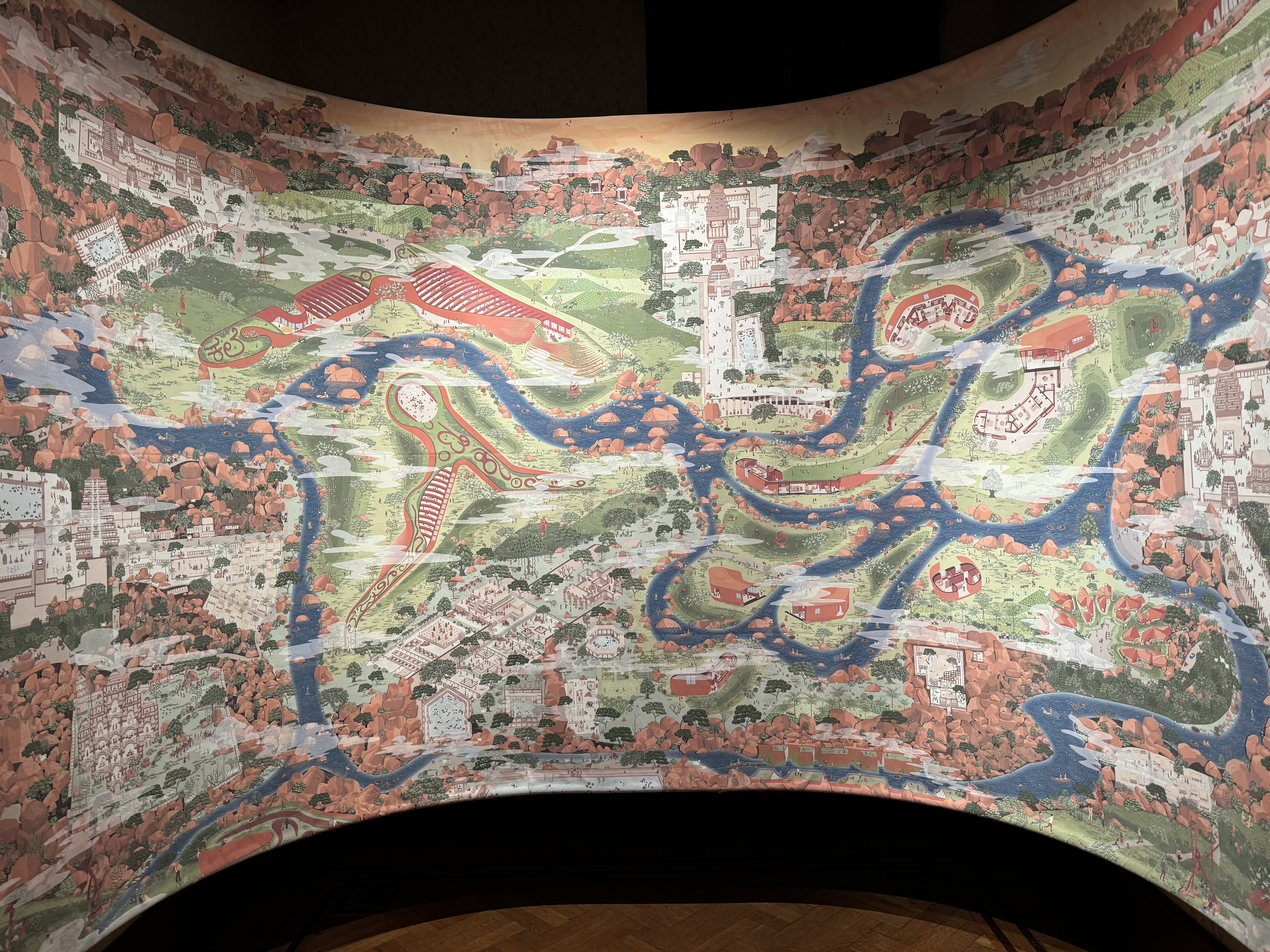
There’s a part of Venice that might also be on that map. Walking the long road from the Palazzo Franchetti to the Qatari pavilion across town, there’s an allée named for Giuseppe Garibaldi that connects the Giardini with one of the Castello neighborhood’s main commercial arteries. It’s a welcome oasis between town and festival grounds. Most festivalgoers disembarking at the dock or hustling quayside skirt it, probably inadvertently, so the pace is slower and there are fewer people.
Some days, it’s lined with potters and jewelers selling their wares from the Veneto region on folding tables that have been lovingly embellished with tablecloths and tiered displays. It’s an impromptu community. Vendors eat bagged lunches. They’re not participating in the in the Biennale, but you could say they’re the fourth concentric ring of the city’s fabric, representing the art that arguably matters most—handmade objects that can be hand-carried home. It’s evidence of a regenerative economic and social life that human development tries so hard to get right. It’s an antidote to the heady rap session, but no less of a potent idea.
Published November 10, 2025 Permalink Citation
Richards, W. (2025, November 10). Quelling Environmental Anxiety at the Venice Biennale. Retrieved from https://www.buildinggreen.com/blog/quelling-environmental-anxiety-venice-biennale



Add new comment
To post a comment, you need to register for a BuildingGreen Basic membership (free) or login to your existing profile.