
Blog Post
Seeking Common Ground on Climate Change Policy
How to build a stronger country and a cleaner planet
Last week's column took a quick look at the science of climate change and how scientific hypotheses have shifted over time based on new evidence. In developing public policy, I believe we should start with a firm foundation of science--whether the issue is banning lead in gasoline, regulating the annual harvest of salmon, or adopting policies on energy efficiency. The better the science, the better the resulting policies or laws.
So, what about climate change? Today, the overwhelming consensus among scientists is that human activities are warming the earth's climate and dramatic reductions in greenhouse gas emissions are needed to stave off potentially catastrophic consequences.
However, policymakers often don't turn to scientists when they're shaping public policy. And, given the shift in scientific consensus on climate change over the past four decades (see last week's column), it is somewhat understandable why there is skepticism about the reality of global warming today--35 years ago, many scientists thought that global cooling was occurring and that we might enter a new ice age.
So, is it possible to find constructive common ground while we're waiting for definitive "proof" of global warming that even today's climate change skeptics will believe? I think it is.
What if we were to focus, initially, only on those measures to reduce greenhouse gas emissions that are worth doing even if global warming isn't happening? Below are a few sample measures that should make sense no matter where you stand on climate change.
SUPPORT INDEPENDENT SUSTAINABILITY REPORTING
BuildingGreen relies on our premium members, not on advertisers. Help make our work possible.
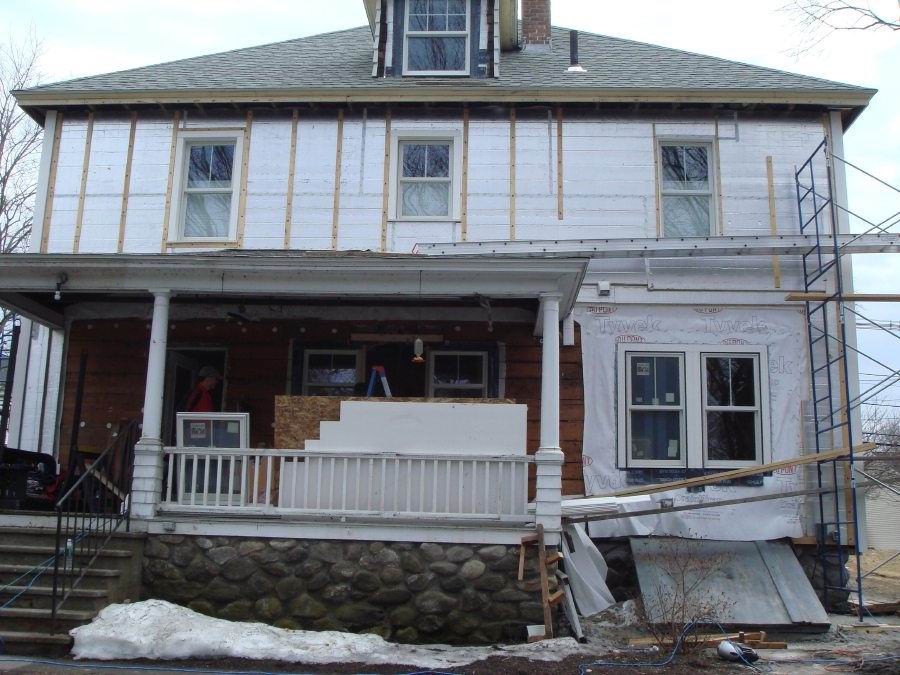
See membership options »1. Reduce vulnerability to interruptions in heating fuel or power by dramatically boosting the energy performance of houses.James Wolsey, a past director of the Central Intelligence Agency, argues that American citizens are highly vulnerable to terrorist actions that could target the supply or distribution of heating oil, natural gas, or electricity. If we insulate our houses really well and design them to keep unwanted heat out in the summer, they can keep us safe even if we lose heating fuel or electricity. We don't need to wait for a tragedy to demonstrate this need for resiliency or "passive survivability."
2. Reduce our dependence on oil that is imported from unstable regions by encouraging alternatives to automobiles.Within a decade or two, the majority of our oil will likely be imported from Middle Eastern countries where the wellbeing of Americans is not always a high priority. Radical factions in countries like Saudi Arabia and Kuwait could topple U.S.-friendly governments or destroy major refineries. (Had a terrorist plot against the massive Abqaiq oil refinery in Saudi Arabia in February, 2006 succeeded, loss of the refinery's 6.8 million barrels per day of production would have had a dramatic impact on gasoline and diesel fuel availability and prices in the U.S.) And had we not been worried about access to Middle Eastern oil, would we really have launched a trillion-dollar war in Iraq?
To reduce this dependence on foreign oil, which has been a priority of every U.S. president (Republican and Democrat) since Nixon, we should invest in public transit (including bus lines, bus rapid transit, light rail, and high-speed intercity rail), build bicycling and walking pathways, and create denser, more pedestrian-friendly communities where automobiles aren't as necessary.
3. Put Americans back to work and strengthen the U.S. economy by investing in local energy conservation and forward-looking technologies that can compete worldwide in the 21st century. Insulating and weatherizing houses is one of the best ways to boost employment and keep money in the local economy--rather than sending that money far away to buy fossil fuels. Investments in renewable energy technologies like wind, solar, tidal, and geothermal, will enable the U.S. to regain world leadership in the 21st century green economy--rather than ceding that role to China, India, or Europe.
Each of these measures would dramatically reduce greenhouse gas emissions, yet each makes sense whether or not global warming is happening. There are many others like these. Even if we don't all agree on climate change, can't we agree that America would be better off without being at the mercy of Mideast governments? Wouldn't we feel more secure if we knew we could remain safe in our homes if power or heating fuel were interrupted? Don't we all want to boost employment and ensure that there will be a strong economy for our children and grandchildren? If we do these things, the dramatic reductions in greenhouse gas emissions will be a bonus--icing on the cake.
I invite you to share your comments on this blog.
You can also follow my musings on Twitter
Published January 11, 2010 Permalink Citation
(2010, January 11). Seeking Common Ground on Climate Change Policy. Retrieved from https://www.buildinggreen.com/blog/seeking-common-ground-climate-change-policy



Add new comment
To post a comment, you need to register for a BuildingGreen Basic membership (free) or login to your existing profile.