
Got any information, studies, or links to base your opinion on?
Blog Post
Green Building Myth #4: Green Products Are Hard to Find
The last few weeks I've written about common myths of green building: that it has to cost more to build green, that green building is mostly about materials, and that green products don't work as well as conventional products. This week I'll cover the myth that green building products are hard to find.
When I first started writing about green building products twenty years ago (a couple years before launching Environmental Building News), they were few and far between. There was only one company I knew about that made paints, adhesives, and sealers that were formulated specifically to minimize harmful emissions: AFM (American Formulating and Manufacturing) in California. There wasn't yet a certification for wood products produced in an environmentally responsible manner. Decking made from recycled plastic wasn't on the market yet. And compact fluorescent lamps (CFLs) were only available only from specialty distributors.
Times have certainly changed. Not only have those start-up companies that offered "green" products grown and broadened their distribution, but mainstream companies have dramatically greened their product lines. Consider insulation for example. Twenty years ago, cellulose insulation was available. It wasn't nearly as good a product as it is today, but it was about the only insulation material with significant recycled content. Within short order, fiberglass insulation manufacturers began adding recycled content to their product--either from recycled glass bottles or glass cullet from window glass manufacturing. More significantly, nearly all of the foamed-plastic insulation materials (extruded polystyrene, polyisocyanurate, and spray polyurethane foam) 20 years ago were made with blowing agents that depleted stratospheric ozone (which protects the earth from harmful ultraviolet light). Except for expanded polystyrene (beadboard) you couldn't find ozone-safe rigid-foam insulation. Today, those ozone-depleting blowing agents are totally gone. None of the insulation on the market today damages the ozone layer.
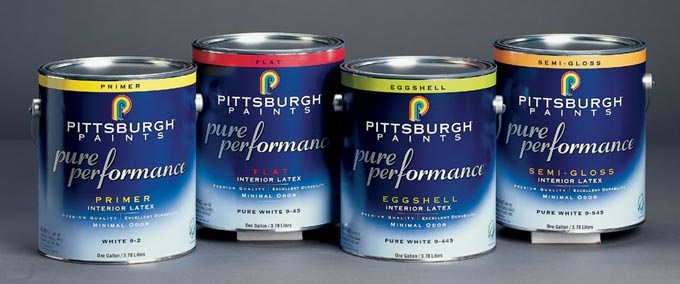
With paints, the changes have been at least as significant. No longer is "healthy" only the purview of small, specialty manufacturers. Many of the major paint manufacturers, including Benjamin Moore, Sherwin Williams, PPG, and Glidden Professional, now offer paints with little or no volatile organic compounds (VOCs). In most areas, you no longer have to special-order the healthier options or try to find specialty suppliers.
WalMart is now the nation's largest seller of CFLs, and you can buy a wide range of these energy-saving lights from independent hardware stores, grocery stores, and home centers. Some retailers even take back older CFLs (and linear fluorescent lamps) when they fail, offering a convenient recycling and safe disposal service for homeowners.
With kitchen and bath cabinets, conventional practice still uses particleboard made with urea-formaldehyde (UF) binder that offgasses significant levels of formaldehyde (a known human carcinogen). Finding cabinets made without UF binders can still be a challenge, but it's much easier than it was even five years ago. As demand has increased for non-formaldehyde products, manufacturers have responded.
SUPPORT INDEPENDENT SUSTAINABILITY REPORTING
BuildingGreen relies on our premium members, not on advertisers. Help make our work possible.
See membership options »Twenty years ago, before the federal 1.6 gallon-per-flush standard went into effect, finding water-conserving toilets was a huge challenge--and locating models that worked well was even harder (see last week's column on myths about the performance of green products). Today, not only do all toilets sold in the U.S. meet the 1.6 gpf standard, but there are over 500 models that meet an even stricter standard of 1.28 gpm AND satisfy rigorous flush performance standards. Look for the WaterSense label in searching for water-saving toilets, lavatory faucets, and (starting next month) showerheads.
Twenty years ago, natural linoleum and cork flooring--greener alternatives to vinyl (PVC) flooring--were only available from specialty suppliers and commercial flooring distributors in larger cities. Today, these are widely available from most flooring retailers.
The last example I'll mention is bathroom fans. This might sound trivial, but until Panasonic introduced quiet, reliable bath fans about 20 years ago, the only models available were so noisy that homeowners almost never used them, leading to mold, decay, and other problems. Today, there are dozens of highly durable and very quiet bath fans on the market. Look for products that are rated for continuous operation (an indicator of durable components) with noise ratings of 1.5 sones or less.
* * *
Yes, some green products are still hard to find, but getting hold of such products is far easier than 10 or 20 years ago. As demand continues to grow, these products will become even more available--and more affordable.
I invite you to share your comments on this blog.
To keep up with my latest articles and musings, you can sign up for my Twitter feeds.
Published March 23, 2010 Permalink Citation
(2010, March 23). Green Building Myth #4: Green Products Are Hard to Find. Retrieved from https://www.buildinggreen.com/blog/green-building-myth-4-green-products-are-hard-find
Comments
Gentleman, I posted a couple

Gentleman,
I posted a couple of interesting articles over on the previous post where you were having this discussion:
http://www.buildinggreen.com/live/index.cfm/2010/3/16/Green-Building-Myt...
Your thoughts?
Hi Bill! If I had any studies
Hi Bill!
If I had any studies, I wouldn't be saying: "I have yet to see..." would I?
If you have any, please direct me to them, as you kindly did at another venue.
As for the energy saving fallacy when you're also using electric heat, that doesm't need any study - it's just plain logic.
By the way, have you considered the fact that, because incandescents are so simple to make, their production is highly automated and they can be made economcally locally in Western countries with high labor costs, while most CFLs seem to come from the Far East, where the labor needed for their complex assembly is cheap - but they then create lots of global warming through having to be shipped long distances as high-bulk, low-weight cargo in container ships burning high-sulfur fuel not very efficiently?
As I said: cradle-tograve energy analysis...
Still pushing CFLs as green?
Still pushing CFLs as green?
I have yet to see a cradle-to-grave energy analysis comparison with incandescent bulbs that includes all the embodied energy in the construction of the far more complicated CFL.
As for energy saving _in use_, I would have to agree that that would be true in a hot climate like Saudi Arabia or Nevada, where cooling is the norm. However, if you have to use _any_ electric heat in your home or business it's a fallacy - there's no saving because what heat you don't get from the incandescent has to be supplied by the heater.
This is exactly the kind of a
This is exactly the kind of article I like to see - it seems that people are often more than happy to READ about green materials, but less inclined to go out and BUY them or USE them if they're not easy to attain or if they seem expensive. Articles like this are key to get people to go green. Much appreciated.



Add new comment
To post a comment, you need to register for a BuildingGreen Basic membership (free) or login to your existing profile.