
It's really interesting that a lot of people think green building means materials. That's so silly! Having taken a LEED exam prep course, I understand that a lot more goes into it - A LOT! There are so many credits to be considered when taking on a LEED project, which is to say that many more concepts are involved. "Where we build" is one of the most interesting parts to me. I guess I have to admit that before I took my LEED training course, I guess I thought green building was about materials, water efficiency, and energy reduction...I never thought location had anything to do with it. It's such a fascinating aspect of green building. I encourage those interested in sustainability - and definitely LEED - to take a training course. The subject matter was very interesting.
Blog Post
Green Building Myth #2: It's All About Materials
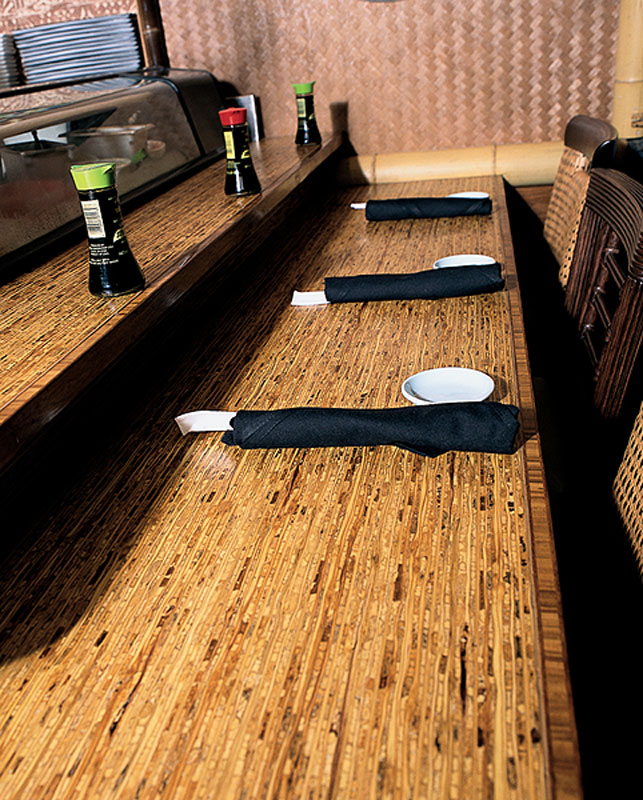
Last week I wrote about one of the common myths of green building: that it has to cost more to build green. This week, I'll tackle another myth: that green building is mostly about materials.
This isn't quite as significant a misconception as it was a few years ago, but there are still a lot of people who think green building is largely about using products that are made from recycled waste materials, or agricultural products, or rapidly renewable products like bamboo. It is still common to hear about how "green" a building is because of the recycled-glass tiles in the entrance foyer or the carpet that's made from recycled soda bottles.
Using recycled-content and bio-based materials is a great idea, but materials are only one--relatively small--aspect of green design. Usually more important are the following:
- Where we build. The location of a home or commercial building has a huge impact on how much energy is used (and pollution generated) in getting to and from it. In fact, it's not unusual for the "transportation energy intensity" of a building to be greater than the direct energy intensity of that building. In other words, for many structures, especially office buildings and retail stores, more energy is spent getting workers and customers to and from those buildings than the buildings themselves use. As energy codes are strengthened, this becomes a more and more significant issue.
- Energy performance. To be considered green, a building has to be energy efficient. This is usually the number-one priority in green design, and it's the reason that energy-saving features typically earn the most points in green building rating systems like LEED (though I often argue that location is even more important). With existing buildings--where we can't change the location--reducing energy consumption is almost always the number-one greening priority.
- Indoor air quality. A building that makes people sick can't be green. As we focus on other measures, it is vitally important that we pay attention to indoor air quality. This involves addressing moisture sources (that can cause mold); seepage of radon into the building from surrounding soil or rock; formaldehyde offgassing from cabinets and wood panel products; and VOC offgassing from sealants, adhesives, and coatings.
- Water efficiency. In some parts of the country, conserving water is a top priority. Even in areas that aren't particularly arid, water can be a significant issue during times of drought, or if sewage treatment capacity is limited. As we saw in the Southeast in late 2007, drought can be a huge issue even in areas where water has long been plentiful. In the eastern U.S. our reservoirs are generally a lot shallower than in the West, so the impacts of drought are felt more quickly, and we're not conditioned to think about water conservation. Some experts suggest that, in the coming decades, water may be an even bigger concern than energy.
Green building is about the integration of a lot of issues, including all of those listed above. Material selection is certainly something we should pay attention to, but it's rarely the top priority. Don't ignore the materials being used in a new building or renovation project, but pay more attention to these other considerations.
I invite you to share your comments on this blog.
To keep up with my latest articles and musings, you can sign up for my Twitter feeds.
SUPPORT INDEPENDENT SUSTAINABILITY REPORTING
BuildingGreen relies on our premium members, not on advertisers. Help make our work possible.
See membership options »Published March 10, 2010 Permalink Citation
(2010, March 10). Green Building Myth #2: It's All About Materials. Retrieved from https://www.buildinggreen.com/blog/green-building-myth-2-its-all-about-materials
Comments
For me green building is all

For me green building is all about what have been said, it is the orientation; energy; water; material and health, so it is an integrated package in order to qualify to be green!
Also, i would like to say that it is not only the builders responsibility, it is the owners too and mostly is the public authority/city hall who should develop the city master plan to allow for green areas, transportation, high rise buildings in addition to regulations/green codes and finally offer incentives to encourage people to be green.
Excellent post, but you left
Excellent post, but you left out "Size". The big two do not include "Materials" or even "Energy Efficiency"; they are Size and Location. A trailer in a mobile home park probably has a lower carbon footprint than an ego-villa that was featured on the Solar Home Tour. (What the occupants eat for dinner is probably #3, but we'll leave that alone).
Your second tier looks good, but you left out "Beauty". Unless it's beautiful, who cares? The occupants won't, so they won't take care of it or will spend money and energy to change it.
Great Post!! This is definat
Great Post!! This is definately less of a misconception than previously, but is still surprisingly widespread! And in my opinion generates most of that nasty Greenwash! Another great term I came across recently is Eco-Bling - the idea of just sticking a wind turbine or solar panel onto a building in order to give it that 'green' factor....Now i'm not saying that these technologies are not good, just that the thing to bear in mind is that when a buildings energy consumption is a as low as possible, suddenly many low/zero carbon technologies make more sense, as they can significantly meet energy requirements. Just as with all these other aspects these technologies need to be part of this integrated way of looking at things which Alex is getting at, otherwise you end up with a 'part' but not a 'whole' solution. I think this integrated concept is probably the most important one anyone looking at green building (or dare I say the future of building in general) can grasp...
I agree with your perspective
I agree with your perspective, but I hink that is missing an also importante element regarding greenbuilding. Land use management should also be considering when we are talking about greenbuilding. Personaly I can't accept that a fantastic and well built building is built in an important natural area and destroys natural values. I think this issue alshoud be brought to the greenbuilding discussion.
I totally agree with the comm
I totally agree with the comments made. So much of the issues with building green is related to the builder. I have been involved in energy efficiency for 20 years and I love to see new technologies and building materials as they come to market. As an energy evaluator, I use a thermal imaging camera to see how well residential and commercial buildings are functioning when it comes to being energy effective. I am surprised to see in so many cases, that the issues I find are not in the use of materials but HOW they are used.
I see that common framing practices cause issues with thermal bridging that cause heat loss factors that exceed what should be acceptable. Attention to details in framing can help the improvement in enveloping effectiveness. I have also seen good ideas in the use of brick finishes that had almost 50% heat loss factors.Something was missed in the application and the lack of attention to details is a very costly one for the energy needs to run the facility.
As a result of doing some thermal imaging for the owners of a hotel group, they are now concerned about what they have seen and are adopting new building practices that do not add to the bottom line, but will improve the overall effectiveness of their buildings, using the same materials that they have previously.
Green Building encompasses ma
Green Building encompasses many things. As a designer I am truly amazed that the majority of builders do not understand how to build. Building Green is not just about materials, its about the land and its surroundings and how the building is sited. Sun-orientation is key to energy efficiency. The floor plan revolves around this concept not the other way around. Use materials that are local and good for the environment. Use what nature gives us in a conservative approach. Take only what we need and always replenish what is used.



Add new comment
To post a comment, you need to register for a BuildingGreen Basic membership (free) or login to your existing profile.