
I had trouble getting the right CFLs for me, until I found this article. It has some helpful info on how to get CFLs that look great at the same time as saving energy. The info on dimmable bulbs was especially useful http://thegreenertruth.com/2010/03/the-problem-with-light-bulbs-a-compac...
Blog Post
Fiber-Optic Daylighting from Parans
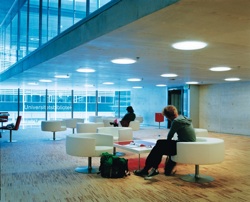
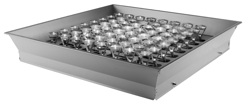
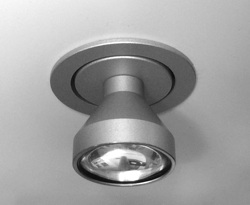
Here's how it works: Sunlight is collected by one or more Swedish-made Parans solar panels mounted on the roof or a wall. A 39" by 39" (1 m2) SP2 solar panel has 62 Fresnel lenses, each of which focuses sunlight into a tiny optical fiber that's just 3/100ths of an inch (0.75 mm) in diameter. These 62 fibers are joined together into four bundles, each about a quarter-inch (6 mm) in diameter. These fiber bundles can transmit the light more than 66 feet (20 meters), delivering daylight to rooms on lower floors or interior. Five different luminaires are available for delivering light to occupied spaces. In the SP2 solar panel, three small motors are used in getting the individual Fresnel lenses to actively track the sun as it moves across the sky. These motors use electricity (so the SP2 must be wired), but consumption is minimal--is under two watts. The actual tracking is controlled by a photosensor that continually feeds sunlight data into a microprocessor. This means that the solar panel can be installed or relocated without any programming. As described in company literature, "At installation, the SP2 immediately scans the sky to detect the direction to the sun. It then learns and remem¬bers the solar path so that it always is ready to collect sunlight."
The actual optical fibers are made of PMMA (PolyMethylMethAcrylate), a type of plastic that maintains light transmission of 95.6% for each meter, and clad with a fluorinated polymer. The bundle of fibers is sheathed with Megolon, which is a halogen-free thermoplastic resin.
As for cost, a typical system starts at about $10,000, according to Eric Huffman, of HUVCO. That would provide one SP2 collector, four bundles of optical fibers, and one to four luminaires. He notes that the system qualifies for the 30% federal tax credit.
The system is manufactured in by Parans Solar Lighting AB in Göteborg, Sweden, while HUVCO Daylighting Solutions is the U.S. distributor and also manufactures roof-mountain hardware and some of the fixtures. It was first introduced in Sweden in 2004 and became available in the U.S. in 2008. To date, about 20 installations have been completed in the U.S., according to Huffman.
SUPPORT INDEPENDENT SUSTAINABILITY REPORTING
BuildingGreen relies on our premium members, not on advertisers. Help make our work possible.
See membership options »When I asked Huffman about a fiber-optic daylighting system that was under development at Oak Ridge National Laboratory in 1999 (when we ran article on distributed daylight in EBN), he said that that system had been brought to market by Sunlight Direct, but then was taken off the market in 2009. Apparently, that system had some technical problems, including "catching things on fire."
For more information:
HUVCO Daylighting Solutions
Rohrersville, Maryland
800-832-6116, 301-432-0678
www.huvco.comI invite you to share comments on this blog. Is natural daylight important enough that building owners will want to spends tens of thousands of dollars to capture and distribute it throughout a building?
To keep up with my latest articles and musings, you can sign up for my Twitter feeds.
See more on this product in the GreenSpec Guide
Published March 3, 2010 Permalink Citation
(2010, March 3). Fiber-Optic Daylighting from Parans. Retrieved from https://www.buildinggreen.com/news-article/fiber-optic-daylighting-parans
Comments
What a very cool idea! Howev

What a very cool idea! However, at $10k it is such a let down. Sounds like a company without sufficient capitalization. Imagine, if Honda charged for their first Civic car what the actual R & D costs were at the time of the cars introduction. They would never have made that first critical step in their transformation from a motorcycle company to a world class car company.
I would hope that this organization secures better investment for the long term in a product that could potentially be a true game changer. Why would anyone want to pay for electricity to produce light when they can just get the light directly!
I hope they can reconsider soon. I'm sure "China Inc" is working on a mass market roll out. In my experience I advise that this product should not cost more than about 950 dollars for 4 fixtures.
WIth best wishes,
Joseph



Add new comment
To post a comment, you need to register for a BuildingGreen Basic membership (free) or login to your existing profile.