Waste Management Offers Fluorescent Recycling

News Brief

Waste Management Offers Fluorescent Recycling

One of the largest waste collection and recycling companies operating in the U.S., Waste Management, Inc., has acquired an existing business, LampTracker, which offers a mail-back recycling program for fluorescent lamps. The company sells special containers for collecting and shipping fluorescent tubes, compact fluorescent lamps, and other items containing mercury. To protect the lamps from breaking and limit mercury exposure, the packaging consists of a small box wrapped with a mercury vapor barrier inside a larger box. When the box is full, the client ships it to LampTracker, which recycles the lamps; the cost of the packaging materials includes shipping and recycling fees. Federal and state laws require businesses to properly dispose of any equipment containing mercury; although such disposal can occur in a hazardous waste landfill, the U.S. Environmental Protection Agency strongly encourages recycling fluorescent lamps. More information is available at www.wmlamptracker.com.

Published December 31, 1969

(2007, August 2). Waste Management Offers Fluorescent Recycling. Retrieved from https://www.buildinggreen.com/departments/newsbrief

Add new comment

To post a comment, you need to register for a BuildingGreen Basic membership (free) or login to your existing profile.

Carbon-Neutral Products Approved for LEED Innovation Point

News Brief

Carbon-Neutral Products Approved for LEED Innovation Point

In a July 16, 2007 ruling for the LEED for Commercial Interiors Rating System, the U.S. Green Building Council endorsed the use of carbon-neutral products to achieve an innovation point. Both the original query, which was submitted in June of 2006, and the eventual ruling contain extensive qualifications and restrictions on this path to an innovation point. The query clarifies that emissions from all phases of a product’s life cycle—not just emissions from the manufacturing plant—must be offset and that the carbon-neutral status must be certified by an independent third party. USGBC’s ruling includes a list of acceptable programs and protocols for accounting for carbon offsets and notes that, because the carbon-trading industry is evolving so rapidly, the requirements are subject to change.

Published December 31, 1969

(2007, August 2). Carbon-Neutral Products Approved for LEED Innovation Point. Retrieved from https://www.buildinggreen.com/departments/newsbrief

Add new comment

To post a comment, you need to register for a BuildingGreen Basic membership (free) or login to your existing profile.

Merchandise Mart Pursuing LEED

News Brief

Merchandise Mart Pursuing LEED

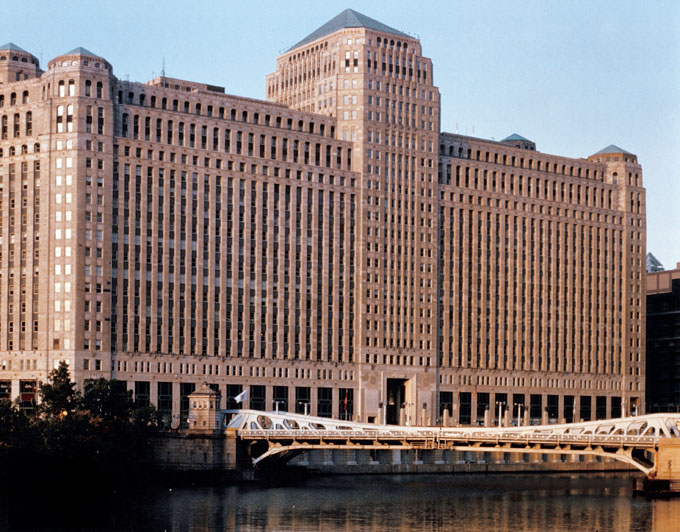
With more than 4.2 million square feet (39,000 m2), Chicago’s Merchandise Mart is the largest commercial building in the world. As owner of the building, Merchandise Mart Properties (MMP) already employs some green practices, such as recycling waste and using cleaning products with low levels of volatile organic compounds (VOCs). MMP is now pursuing certification for the 77-year-old building through the U.S. Green Building Council’s LEED for Existing Buildings rating system. To achieve certification, MMP plans to adopt a purchasing policy emphasizing products with recycled and low-VOC content, update its construction standards to include green practices, increase the energy efficiency of equipment throughout the building, and implement green guidelines for events held in the building, among other strategies. MMP will also work with its tenants who wish to achieve certification in the LEED for Commercial Interiors rating system. MMP began documenting its compliance with LEED standards in July 2006 and hopes to achieve certification by November 2007.

Published December 31, 1969

(2007, August 2). Merchandise Mart Pursuing LEED. Retrieved from https://www.buildinggreen.com/departments/newsbrief


Add new comment

To post a comment, you need to register for a BuildingGreen Basic membership (free) or login to your existing profile.

San Francisco to Mandate Environmental Standards for Private-Sector Buildings

News Brief

San Francisco to Mandate Environmental Standards for Private-Sector Buildings

A spokesperson for San Francisco’s Department of Environment confirmed that chances were very good that legislation would be enacted to formalize recommendations put forth in a June 2007 report by the Mayor’s Task Force on Green Building. Following the proposed recommendations, large commercial and high-rise residential buildings, both new and renovated, would be required to satisfy LEED Certified standards immediately, and LEED Gold standards by 2012. Also by 2012, smaller residential buildings would have to satisfy the introductory level GreenPoint Rated standards. Various incentives will be made available for buildings that exceed the standards. Following committee hearings on issues such as the fiscal impact of the ruling, San Francisco’s combined city and county legislative body could pass an ordinance enabling Mayor Newsom to sign it into law as early as January 2008. If legislation is enacted according to the report’s recommendations, San Francisco will be on a path to having the nation’s most rigorous environmental building standards. See www.sfenvironment.org (under Quicklinks, click on “Green Buildings Task Force Report”) and www.builditgreen.org/greenpointrated/ for more information.

Published December 31, 1969

(2007, August 2). San Francisco to Mandate Environmental Standards for Private-Sector Buildings. Retrieved from https://www.buildinggreen.com/departments/newsbrief
Add new comment

To post a comment, you need to register for a BuildingGreen Basic membership (free) or login to your existing profile.

USGBC Members Approve Energy Requirement

News Brief

USGBC Members Approve Energy Requirement

Members of the U.S. Green Building Council (USGBC) approved a measure that effectively increases the minimum energy performance of LEED-certified projects by 14% for new buildings and 7% for major renovations. Introduced in November 2006, the measure requires all projects to obtain a minimum two out of ten points in the energy optimization section of the four currently balloted LEED rating systems, which all apply principally to commercial buildings (see

EBN

Vol. 16, No. 3). All projects registered after June 26, 2007—the date the measure passed—must meet the new requirements. More information about the energy optimization section is available at www.usgbc.org/ShowFile.aspx?DocumentID=2303.

Published December 31, 1969

(2007, July 10). USGBC Members Approve Energy Requirement. Retrieved from https://www.buildinggreen.com/departments/newsbrief

Add new comment

To post a comment, you need to register for a BuildingGreen Basic membership (free) or login to your existing profile.

Additional Product Certification Programs Approved for LEED Innovation Point

News Brief

Additional Product Certification Programs Approved for LEED Innovation Point

On May 4, 2007, the U.S. Green Building Council expanded a previous ruling regarding Cradle to Cradle (C2C) certification (see

EBN

Vol. 16, No. 5) by endorsing a LEED innovation point proposal from two related certification programs: the SMART Building Product Standard and the California Gold Carpet Standard. As with C2C, these new standards were approved by LEED’s Materials and Resources Technical Advisory Group with reservations, primarily due to the lack of a clear screening process for third-party product certification programs. In this case, the approval is explicitly slated to sunset after twelve months, though the approval could be revised or superseded sooner if a screening process is established.

Published December 31, 1969

(2007, July 10). Additional Product Certification Programs Approved for LEED Innovation Point. Retrieved from https://www.buildinggreen.com/departments/newsbrief

Add new comment

To post a comment, you need to register for a BuildingGreen Basic membership (free) or login to your existing profile.

Clinton Foundation Tackles Existing Building Retrofits

News Brief

Clinton Foundation Tackles Existing Building Retrofits

The Clinton Climate Initiative (CCI) will undertake a global project to encourage retrofitting buildings with energy-efficient technologies, former President Bill Clinton announced in May 2007. The program brings together several energy service companies and banks to help initiate and finance retrofit programs in 15 cities around the world, including Chicago, Houston, New York, and Toronto. The energy service companies have agreed to perform energy audits and building retrofits, initially focusing on commercial and municipal buildings, while the banks have agreed to arrange a total of $5 billion in financing. CCI hopes the retrofits will lead to energy savings of 20%–50% in each building. The U.S. Green Building Council and the American Society of Heating, Refrigerating, and Air-Conditioning Engineers, among other organizations, have agreed to provide educational support for the program. More information is available at www.clintonfoundation.org.

Published December 31, 1969

(2007, July 10). Clinton Foundation Tackles Existing Building Retrofits. Retrieved from https://www.buildinggreen.com/departments/newsbrief

Add new comment

To post a comment, you need to register for a BuildingGreen Basic membership (free) or login to your existing profile.

EPA to Screen Chemicals for Endocrine Disruption

News Brief

EPA to Screen Chemicals for Endocrine Disruption

In passing the 1996 Food Quality Protection Act, Congress required the U.S. Environmental Protection Agency (EPA) to test pesticides for disruption of the human endocrine system, which produces and regulates hormones. After years of delays, EPA announced in June 2007 that it would test 73 pesticides that people commonly encounter in homes and workplaces, including in landscaping and in building materials. Actual testing won’t take place until 2008. Critics of the announcement, including the Natural Resources Defense Council, which sued in 1999 to make EPA begin testing, argued that existing data already identifies some chemicals as endocrine disruptors. The 73 chemicals to be tested are a fraction of the thousands of pesticide ingredients that the 1996 law requires EPA to test. The list of chemicals is at www.epa.gov/endo/pubs/prioritysetting/draftlist.htm.

Published December 31, 1969

(2007, July 10). EPA to Screen Chemicals for Endocrine Disruption. Retrieved from https://www.buildinggreen.com/departments/newsbrief

Add new comment

To post a comment, you need to register for a BuildingGreen Basic membership (free) or login to your existing profile.

Western Climate Initiative Extends to Canada

News Brief

Western Climate Initiative Extends to Canada

The Western Regional Climate Action Initiative, started in February 2007, continues to grow. Created by five states—Arizona, California, New Mexico, Oregon, and Washington—the alliance grew to include Utah and, recently, the Canadian provinces of British Columbia and Manitoba. The initiative requires the signatory states to work together to establish greenhouse gas reduction goals within six months of signing and to create a regional cap-and-trade system for emissions within 18 months. States must also participate in the Climate Registry, a multistate registry of greenhouse gas emissions created in March 2007 to serve the goals of the initiative but open to all states and tribes. The Climate Registry is online at www.climateregistry.org.

Published December 31, 1969

(2007, July 10). Western Climate Initiative Extends to Canada. Retrieved from https://www.buildinggreen.com/departments/newsbrief

Add new comment

To post a comment, you need to register for a BuildingGreen Basic membership (free) or login to your existing profile.

ICC Joins USGBC to Create Educational Materials

News Brief

ICC Joins USGBC to Create Educational Materials

function pop(URL){

win = window.open(URL, "win", "toolbar=no,location=no,directories=no,status=no,menubar=no,scrollbars=yes,resizable=yes,width=740,height=500");

win.focus();

}

The International Code Council (ICC) and the U.S. Green Building Council (USGBC) have agreed to create a green building educational manual for code officials, scheduled for release in December 2007. The organizations are also exploring other business opportunities and collaborations through a memorandum of understanding. According to Allan Bilka, senior staff architect with ICC, the collaboration will serve code officials, contractors, and others who, he said, “are being impacted by the green movement and are struggling with how to interpret the various requirements.” More information is available at www.iccsafe.org/green/.

Published December 31, 1969

(2007, July 10). ICC Joins USGBC to Create Educational Materials. Retrieved from https://www.buildinggreen.com/departments/newsbrief

Add new comment

To post a comment, you need to register for a BuildingGreen Basic membership (free) or login to your existing profile.