
News Analysis

LEED has 37 times more certified projects than Green Globes. LEED recently clocked three billion square feet of space, while Green Globes is barely a blip. LEED has close to 200,000 accredited professionals; Green... Read more
Blog Post
Using... Read more
Webcast
Green Globes has a new leader and powerful industry backers. But is it truly “better, faster, cheaper”—or none of the above? We match it up point-by-point with LEED in this special members-only event.
LEED has 37 times more certified projects than Green Globes. LEED recently clocked three billion square feet of space while Green Globes... Read more
News Brief
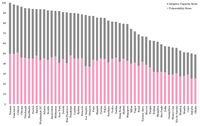
In the interest of analyzing the best cities for long-term real estate investment, the international property group Grosvenor recently ranked the resilience of 50 cities across the world. Toronto,... Read more
News Brief
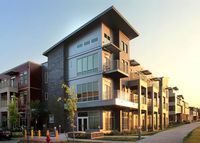
The Housing Authority of the City of Milwaukee is celebrating LEED certification for two of its recent affordable housing projects—Westlawn Gardens, a neighborhood redevelopment project... Read more
Op-Ed

News Brief
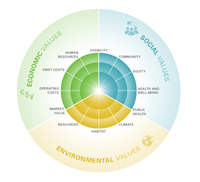
The international architecture firm RTKL recently released a free online tool called the DART to help designers maximize the value of a project in terms of sustainability goals. The... Read more
Product Review
News Brief
News Brief

A Minnesota state agency is currently reviewing 293 sites where it thinks vapor intrusion from soil might be putting people at risk—but its not radon they’re concerned about; it is industrial solvents dumped... Read more
News Brief
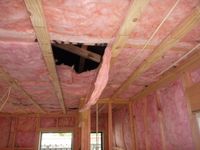
The audit, which was conducted for New Zealand’s Energy Efficiency... Read more
Product Review
Using biobased content in building products in place of petrochemicals seems like a no-brainer, but in order for that content to have a positive environmental benefit, it has to come from a responsible source and function as well as or better than the material it replaces.
Most biobased coatings, such as milk paint, are generally not... Read more
News Analysis
News Brief

Greenwash Action, a joint initiative of the Sierra Club and Greenpeace, is gearing up to defend LEED and campaign for changes to Green Globes—the green building rating system that the organization claims has been complicit in a greenwashing scheme.... Read more
News Brief
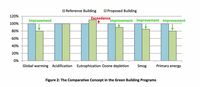
Two free resources are now available to help demystify life-cycle assessment (LCA) for different audiences.
The “Athena Guide to Whole-Building LCA in Green Building Programs” is intended to help designers... Read more
News Brief
Feature
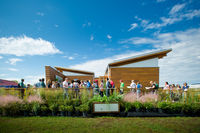
These emerging water strategies are finding momentum and filling the need to address efficiency and resilience on multiple scales.
As a result of the severe drought in California, St. Helena City Council announced mandatory water rationing for its homes effective January 2014. It imposed a limit of 65 gallons per person per day—one-third of the average water consumption in the state—with a $374 charge for every 748 gallons above the limit to take effect in a few... Read more
News Analysis
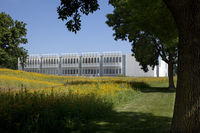
Federal government projects take three of the top honors for 2014 in the AIA Committee on the Environment (COTE) awards, which combine sustainability with design excellence.
The 2014 American Institute of Architects (AIA) COTE Top Ten Green Projects were selected in the most competitive program ever, with more than 80 submissions—not including those submitting for the “Top Ten Plus” award for ongoing high performance from a past Top Ten winner.
Among the big winners in this year’s awards is the U.S... Read more
News Brief
Existing buildings represent our greatest opportunity to conserve energy and water, and the EBie awards, in their third year, aim to make that hard work just a little more glamorous. Urban Green Council has announced its... Read more
News Brief

The same body that reviews LEED project documentation will be the third-party certifier for the forthcoming health standard called WELL.
The International Well Building Institute (IWBI), creator of the WELL building standard, has announced a partnership with the Green Building Certification Institute (GBCI), the body that certifies LEED buildings and accredits LEED professionals. According to a joint press release, the collaboration will help streamline dual certification to... Read more


