
News Brief
Aimed at curbing global warming, a proposed rule would ban HFC-134a, used in XPS production and for refrigeration.
As part of President Obama’s unfolding Climate Action Plan, the U.S. Environmental Protection Agency (EPA) has announced its intention to ban certain blowing agents and refrigerants. Hydrofluorocarbons (HFCs) were introduced in the 1990s to replace ozone-depleting substances, but many have extremely high global warming... Read more
News Brief
The U.S. Department of Energy seeks to require states to adopt the latest version of the key energy standard.
Preliminary research by the U.S. Department of Energy (DOE) has shown that the ASHRAE 90.1-2013 energy efficiency standard would achieve greater energy efficiency than the 2010 standard. In a Notice of Preliminary Determination posted May 15, the DOE has taken the first step in issuing a ruling that will likely establish... Read more
Explainer
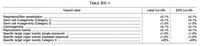
The new Globally Harmonized System for the MSDS will make reporting requirements stricter and should make the forms easier to read.
The building design and construction industry has long relied on material safety data sheets (MSDS) to provide basic information about chemical ingredients and VOC emissions when specifying building materials.
But it’s not a perfect fit for the industry. Intended to give first-aid information to... Read more
News Brief
A product category rule for flat glass used in glazing will standardize life-cycle assessments for the industry and lead to EPDs.
NSF International has released a product category rule (PCR) for flat glass produced in the U.S. The document builds on efforts to encourage transparency and improve data quality through life-cycle assessments (LCAs) and environmental product declarations (EPDs), as explored in The Product Transparency Movement: Peeking Behind... Read more
Product Review
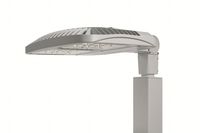
Cree’s high-performing LED technology plus an improved manufacturing process create the low-cost OSQ Area LED for parking, roads, and other uses.
When first introduced in the late 1990s, LED area lighting—for parking lots, office complexes, some roadways, and other uses—was expensive and out of reach for many, but over the past few years, the costs have continued to drop while efficacy has improved. We have previously highlighted top-performing outdoor lighting from Cree... Read more
Feature
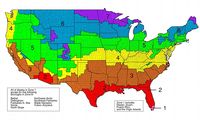
Roofing choices are complicated by heating tradeoffs, climate effects, and condensation, but proponents say reflective roofs still make sense in most climates.
Cool roofs—those with reflectance and emissivity that make them good at keeping out the sun’s heat—are recommended widely without much regard for climate or project specifics. They’ve been adopted into multiple energy codes, including ASHRAE 90.1, the International Energy Conservation Code, and California’s Title 24, not to... Read more
Product Review
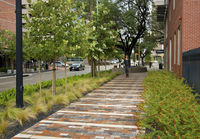
Maximizing principles of low-impact development, FocalPoint offers biological stormwater treatment for streetscapes, parking lots, and other tight spaces.
Raingardens, bioswales, and constructed wetlands are all hallmarks of low-impact development (LID), which mimics natural hydrology in order to manage stormwater quality and runoff rates. Since its development in the early 1990s in suburban Maryland, LID has been slowly gaining ground in green projects—and we mean that literally... Read more
Op-Ed

Collaboration skills and sustainability concepts are being “elevated” by the National Architectural Accrediting Board (NAAB)—but it’s really a demotion.
The National Architectural Accrediting Board (NAAB) is updating the criteria it uses to accredit degree-granting architecture schools in the U.S. It is accepting comments on the “First Reading” of its criteria through June 24, 2014.
BuildingGreen is concerned about some of these changes and has submitted... Read more
Product Review
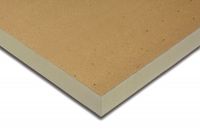
Johns Manville introduces a premium polyisocyanurate foam insulation that is free of toxic halogenated flame retardants.
In a December 2013 blog post, we presented a green wish list for 2014. The first of seven wishes was for rigid insulation with no flame retardants and insignificant global warming potential. Partly in response to our urging, tomorrow, insulation manufacturer Johns Manville (JM) will introduce ENRGY 3.E, a polyisocyanurate... Read more
News Brief

Research from University of Oldenburg biologists suggests that electromagnetic noise throws off birds’ internal compasses.
Electronics and AM radio signals might disrupt the internal magnetic compasses of migratory birds, suggests a study published in Nature. According to the magazine, decades of experimentation have shown that migratory birds orient themselves using an internal compass guided by Earth’s magnetic field. Cites, researchers conclude... Read more
News Brief
Ranking cities by danger to pedestrians, a new report says bad design causes 5,000 pedestrian fatalities each year.
Florida may be the most dangerous state in which to walk, a new report from Smart Growth America’s National Complete Streets Coalition (NCSC) suggests.
Dangerous by Design 2014 ranks U.S. cities according to a “pedestrian danger index” (the rate of pedestrian deaths compared with the number of... Read more
News Brief
The Sustainable Purchasing Leadership Council announces guiding principles and purchasing categories for its upcoming rating system.
The Sustainable Purchasing Leadership Council (SPLC), which plans to develop a rating system similar to LEED for sustainable purchasing and procurement policies, has taken one step closer to launch by releasing a set of guiding principles. The principles are meant to give companies an idea of what leadership in procurement... Read more
News Brief

New projects certified through International Living Future Institute suggest growing interest in verification of low-energy claims.
Five projects have achieved Net Zero Energy Building Certification recently through the International Living Future Institute (ILFI). ILFI offers the certification as a pared-down, more energy-focused version of its broader and extremely rigorous Living Building Challenge. The structures—two residences, a government office,... Read more
News Brief

A new standard for greener parking incentivizes site, energy, and resilience measures.
The Green Parking Council (GPC), an affiliate of the International Parking Institute, recently launched the Green Garage Certification Program. The program, according to GPC, is the parking industry’s equivalent of LEED certification—a rating system for sustainable parking facility design.
The idea of a... Read more
News Brief
A Healthy Building Network report reviews alternatives to standard plasticizers found in flexible PVC products and assesses their potential impact.
The Healthy Building Network (HBN) has released a research brief, Phthalate-free Plasticizers in PVC, that describes six alternatives to phthalate plasticizers. Phthalates are semi-volatile organic compounds used in PVC building products to provide flexibility and other performance characteristics (see The PVC Debate: A Fresh... Read more
Blog Post
Transitions.
... Read moreWebcast
Design simulation made easy
Kjell Anderson wants to change the way you think about computer simulation of buildings.
For a lot of people, computer modeling is synonymous with energy modeling, and climate data is something you just input to your energy model. Anderson wants you to do energy modeling for your buildings, and he wants... Read more
Blog Post
For me, the creative tension between beauty and green performance came to a head in 2006, when I began working with the staff of Architectural Record on their new magazine: GreenSource. (GreenSource is no longer a separate... Read more
News Analysis

Urban Green Council rolls out the green carpet and rewards exceptional achievements in energy, water, lighting, and more.
Urban Green Council has announced the winners of its third annual EBie awards, which celebrate the innovations and achievements of facility managers, building owners, and others responsible for the performance of existing buildings.
The All-RounderJohn Smith and Chris Pinelli shared the All-Rounder... Read more
News Brief
Neighborhoods with a mix of older, smaller buildings give rise to more diverse populations and more new businesses than those made up of newer, larger structures, according to a study released by the... Read more


