
News Brief
GSA is asking for advice on how it should use LEED and keep up with the marketplace.
Following its controversial choice to give equal status to LEED and Green Globes (Feds Put Green Globes on Pedestal with LEED), the U.S. General Services Administration (GSA) has completed a technical review of LEED v4 and is seeking public input on the results. The new review applies the methodology from a 2012 Pacific... Read more
Blog Post

Our recent webcast, Deep Material Vetting That Won’t Chew Through Your Design Budget, included a “homework” assignment: Chris and Scott of Re:Vision Architecture asked... Read more
Webcast
ON-DEMAND WEBCAST
Part 4 of Kjell Anderson's "Early-Design Modeling: New Tools and New Approaches"
Most whole building energy simulations require a mechanical system design, making them unsuitable for early-design modeling. In response, architects and energy modelers are turning to shoebox models, with one or just a few zones.... Read more
Product Review

We’ve been pleasantly surprised with recent green building innovations, but we can always dream of more. Here’s what’s on our wish list now.
About a year ago, I posted my green building products wish list. One of those wishes came true: introduction in June 2014 of a polyisocyanurate boardstock insulation containing no halogenated flame retardants from Johns Manville.
So what’s on my list now? Can concrete that sequesters carbon go to scale... Read more
News Brief

Smell no evil, see no evil: low counts of toxic fumes have been cited to argue turf fields with crumb rubber are safe, but a new bill calls for more study.
California Senator Jerry Hill is calling for crumb rubber—the ground pieces of old tire that are used for artificial turf fields—to again be put under the microscope amidst concerns that the material emits harmful compounds or acts as a carcinogen.
So far, the few risk evaluations that have been... Read more
Explainer
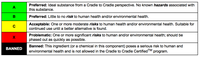
Having a short list of toxic chemicals to avoid is convenient, but nasty “alternatives” can sneak in the back door. Hazard screenings help solve this problem.
When two vowels go walking, the first one does the talking. Build tight; ventilate right. Thou shalt not steal.
Simple, memorable rules are great tools, but everyone knows they don’t apply in every situation: real life is confounding, complex, and context-bound. The cardinal rule of thumb is that there’s... Read more
Product Review

Created by a 14-year-old student for a science fair, Water Fence provides an innovative solution for storing large volumes of water.
With the local science fair coming up, 14-year-old high school freshman Steven McDowell told his teacher he planned to solve California’s current water crisis—one of the worst in the state’s history. The incredulous teacher had his doubts, but McDowell set out to prove him wrong and began tinkering with a system that combines... Read more
Feature

Need to streamline your product vetting process? These LBC project teams have it down to a science, and anyone can apply their methods.
It was a Living Building Challenge project team’s worst nightmare.
After months of vetting—most LBC teams report eight or more hours of research per product—to achieve the stringent rating system’s requirements, the team for the Bechtel Environmental Classroom at Smith College discovered a forbidden... Read more
News Analysis

LEED-EBOM project data confirm that how people get to the office has a greater impact than other green building efforts.
Note: The article has been corrected to express savings in metric tons.
Slight reductions in transportation energy can have massive carbon benefits for existing buildings, according to new research—much greater than similar reductions in building energy use.
The study, “... Read more
Webcast
ON-DEMAND WEBCAST
Part 3 of Kjell Anderson's "Early-Design Modeling: New Tools and New Approaches"
While airflow analysis isn't part of most building simulations today, it is part of nearly all low-energy buildings.
Unfortunately, many architects aren't well-positioned to take advantage of this opportunity because they aren... Read more
News Brief

From our bodies into wastewater, and back into our water supplies, pharmaceuticals are disrupting biological processes in plants and animals.
All that Advil we take for small aches and pains is adding up in our wastewater, says new research, and it’s affecting wildlife, the plants we eat, and even the water we drink.
Levels of ibuprofen currently found in the environment significantly hamper early root development of lettuce plants, according... Read more
News Analysis

U.S. production of next-generation HFO blowing agents signals a positive shift in the spray polyurethane foam (SPF) market.
Spray polyurethane foam (SPF) is a widely preferred high-performance product due to its impressive insulating value and air-sealing properties—yet the high global warming potential (GWP) of the standard SPF blowing agent (HFC-245fa) has seriously compromised its environmental performance. Now SPF manufacturers are adopting... Read more
News Brief
Sixteen major buyers, including tech firms, retailers, and U.S. cities, have pledged to purchase furniture containing no chemical flame retardants.
Facebook, Kaiser Permanente, and Autodesk are among major buyers that have pledged to purchase furniture that contains no chemical flame retardants. HDR Architecture and Perkins+Will have also signed the pledge.
Initiated by the Center for Environmental Health (CEH), the purchasers’ pledge currently... Read more
News Brief
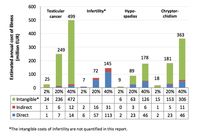
Europe could be losing 1,300 million euros a year dealing with male reproductive illnesses caused by endocrine disruptors. And that’s just the tip of the iceberg.
Chemicals ubiquitous in consumer products that interfere with human hormones are costing millions of dollars in direct and intangible health costs, according to an economic analysis—and that’s just based on estimates of the havoc they wreak on the male reproductive system.
A report funded by the Nordic... Read more
News Brief
Schools that have signed the Presidents’ Climate Commitment have had some success but still need to cut emissions in half by 2031.
Progress is being made at the 675 colleges and universities that have signed the American College & University Presidents’ Climate Commitment since its launch in 2007, according to an update from the organization. The pledge sets interim reduction targets to cut gross greenhouse gas emissions 14.4 million metric tons by... Read more
Explainer

Instead of making a big fat net-zero your goal, regenerative design encourages whole-systems thinking and projects that actually add benefit to the environment.
Use less energy and less water. Produce less waste. Avoid toxic chemicals.
Green building often sounds like a checklist of things not to do, which is not particularly inspiring, especially for creative professionals like architects, engineers, and interior designers. Often, the people who are talking... Read more
News Brief
An outcome-based approach assures that buildings actually achieve energy targets, while relieving technical pressures on code departments.
The 2015 International Green Construction Code (IgCC) will have a compliance option based on an outcome-based approach, officials announced recently.
Previously, building energy codes relied on two main pathways to demonstrate compliance: prescriptive measures, where individual building components met... Read more
Product Review
Whirlpool’s ventless hybrid heat-pump dryer technology promises substantial energy savings along with increased capacity and fast drying times.
Even as other household appliances have become more efficient, residential clothes dryers have been stuck in the past, with their decades-old electric-resistance heat and tumble-dry technology mostly unchanged for the last 40-plus years. Dryers are now the largest energy-consuming standard appliance in most U.S. homes, and they... Read more
Product Review

ECOS Paints ignored “trade secret” complaints made by other manufacturers and now makes the first paints designated Red List Free for the Living Building Challenge.
For a little while, zero-VOC paint was good enough for most green projects. Now, designers concerned about healthy products and trying to meet Living Building Challenge and LEED disclosure requirements are demanding deeper information on paint ingredients, and at least one manufacturer is providing it.
... Read more


